EV charging is not a single product. It behaves differently depending on property type, who uses the property, how long they stay, and what you are trying to accomplish. A hotel and an office building might both want chargers, but the business case, the utilization pattern, and the infrastructure approach are not the same. Mapping your property type to the right charging use case is the right starting point, before you talk to a single contractor.
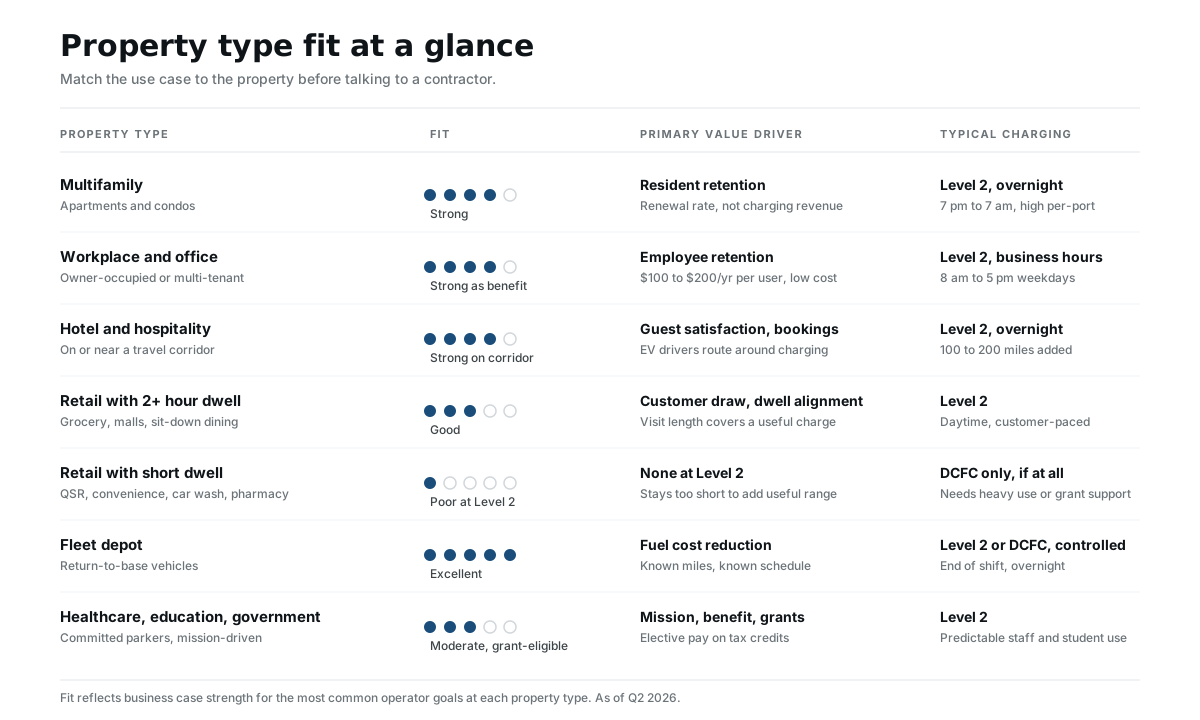
The chart below is the short version. The sections that follow explain the reasoning, the economics, and the questions to ask yourself for each type.
Multifamily residential: the strongest near-term case
Fit: Strong.
Residents who own EVs need to charge where they sleep. If your building cannot provide that, those residents either cobble together public charging or rule your building out entirely. In high-adoption markets, that filtering is already happening: apartment hunters screen listings for charging the way they screen for in-unit laundry.
Value driver: retention, not just attraction. A resident who relies on your charger for a daily commute has a real switching cost. The economic case rests on renewal rates among EV-owning residents, not on charging revenue, which is usually modest.
Utilization pattern: mostly overnight, roughly 7 pm to 7 am, predictable, and high per-charger because residents park in the same place every night.
Typical economics (illustrative, as of Q2 2026):
- 20-unit building, around 10 percent EV ownership today means roughly two residents need charging now
- The same building in three years at typical local growth might see four to six EV-owning residents
- Two Level 2 ports at modest pricing and 50 to 60 percent overnight utilization generate a few thousand dollars a year in net revenue, not enough to drive the decision by itself
- Make-ready approach: wire conduit and panel for four to eight ports, install two initially
Questions to ask yourself:
- What share of current residents own a plug-in vehicle? (Survey them; do not guess.)
- What is the local EV adoption rate in your county or metro?
- Is there a competing building within a few miles that already offers charging?
- Does your state or city impose EV-ready building code (California's CalGreen is the strictest)?
Key challenge: electrical infrastructure. Most older multifamily buildings were never wired for shared charging. Load management and phased deployment are almost always part of the answer.
Workplace and office: strong retention value, modest revenue
Fit: Strong as an employee benefit; weak for revenue-focused operators.
Employees who charge at work arrive home with a full battery and never think about range. The cost to provide it is low and the perceived value is high.
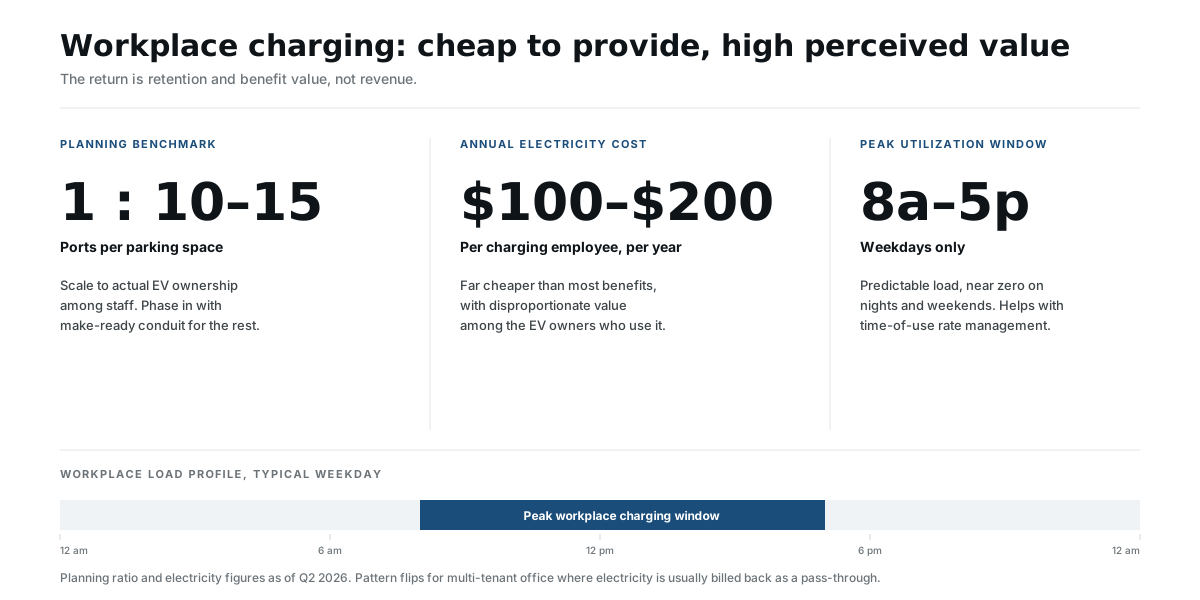
Value driver: satisfaction and retention. Workplace charging delivers disproportionate value among the EV owners who use it, at a per-employee cost well below most benefits.
Revenue model: usually none. Most workplace charging is employer-subsidized, free or flat-rate. The return is retention and benefit value, not revenue.
Questions to ask yourself:
- What share of employees own EVs today, and how fast is that growing?
- Is your lease term long enough to amortize the install?
- Is a utility make-ready program available to offset infrastructure cost?
- Is this owner-occupied or multi-tenant? Multi-tenant requires agreement on cost allocation.
For multi-tenant office, the more common model is offering charging as a lease amenity, billing electricity as a pass-through, and treating it as a premium building feature rather than a profit center.
Retail and hospitality: dwell time is everything
Fit: Good where dwell time aligns; poor for short-dwell retail.
The fundamental rule: Level 2 charging is useful only when people park long enough to add meaningful range.
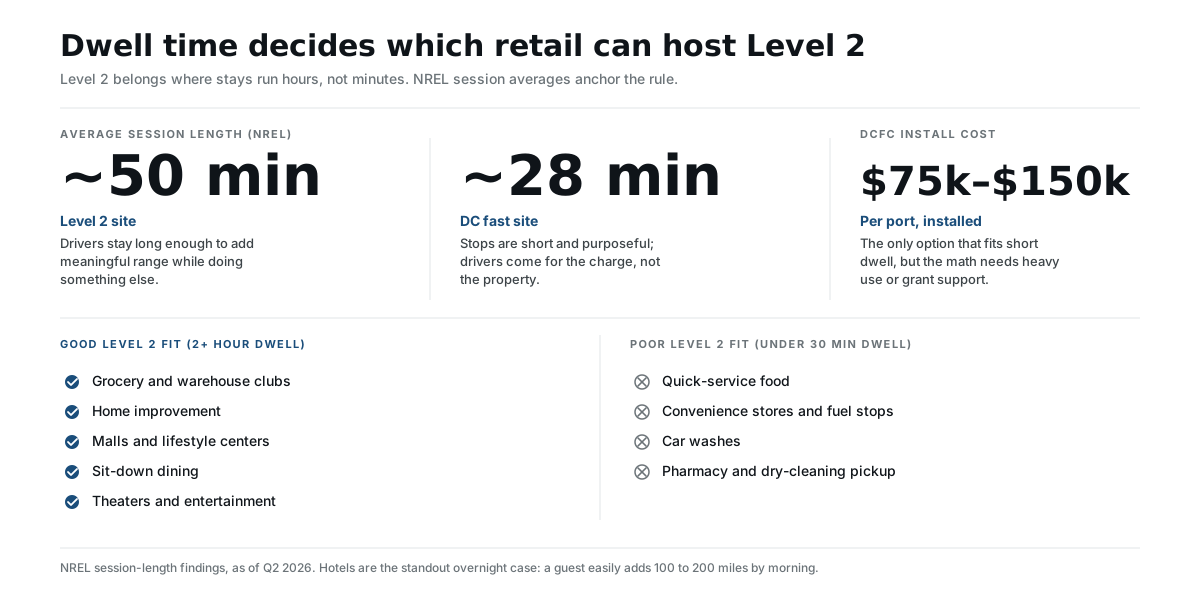
For short-dwell sites, DC fast charging is the only technology that adds useful range in the time available, and the install cost means the economics work only with very high utilization or significant grant support. The DCFC payback math (demand charges, NEVI dependency, worked examples) is in DC Fast Charging ROI: Why the Math Is Different.
Hotels are the standout. Overnight stays align perfectly with Level 2: a guest easily adds 100 to 200 miles overnight. Road-tripping EV drivers actively route around hotels with charging and are more likely to return. The catch is location. A hotel on a travel corridor has real road-trip relevance; a suburban property serving only local business travelers does not.
Questions to ask yourself (retail and hospitality):
- What is the median parking dwell time at your property?
- Is your parking visible and findable in apps like PlugShare and Google Maps?
- Are you on or near a travel corridor, or strictly a local-traffic site?
Fleet operations: the most predictable case
Fit: Excellent.
Fleets have everything that makes the math clean: known vehicles, known daily mileage, predictable overnight charging windows, and a single decision-maker. Unlike property charging, fleet charging does not depend on anyone else's behavior. You control the vehicles and the schedule.
Value driver: fuel cost reduction and operational predictability. Operators who move from diesel or gasoline to electric and install depot charging typically see large per-mile energy cost reductions (commonly cited as 60 to 80 percent, rule of thumb, varies with local fuel and electricity rates).
Utilization pattern: depot charging at end of shift, overnight, full by morning.
Key challenge: upfront capital for both depot infrastructure and vehicle acquisition. Federal and state fleet programs help with both, though available funding shifts year to year.
Questions to ask yourself:
- What is the daily mileage per vehicle? Most fleets under about 150 miles a day are fine on Level 2.
- Do vehicles return to a central depot nightly?
- What is your current annual fuel cost? That is the number the savings work against.
Healthcare, education, and government
Fit: Moderate, often grant-eligible.
These facilities have committed parkers (staff, students) on predictable routines, similar to office buildings. Charging can support sustainability commitments or serve as a benefit. The factor that most changes the math is grant eligibility: federal and state clean-transportation programs often prioritize public-sector and nonprofit applicants, and tax-exempt entities may access elective pay (direct pay) on energy credits, which private operators cannot.
Questions to ask yourself:
- Is your organization eligible for elective (direct) pay on energy tax credits?
- Do you have sustainability or emissions targets that charging supports?
- Is there an open grant window relevant to your project?
The core question across every property type
Three questions cut through every property type, regardless of vertical.
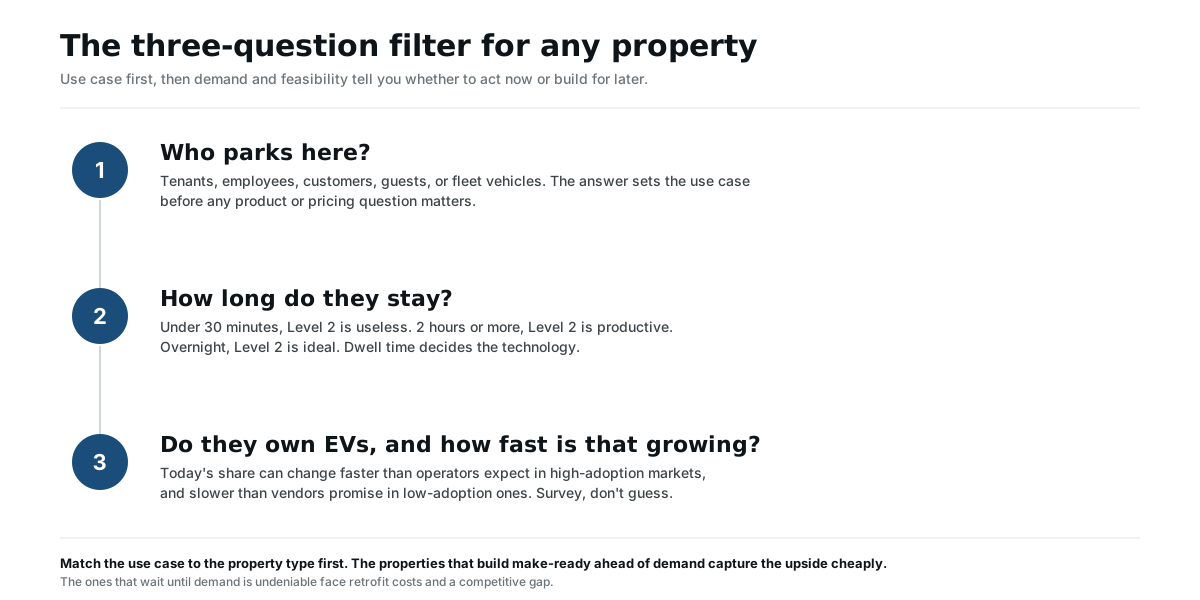
The properties that quietly build make-ready infrastructure ahead of demand capture the upside cheaply. The ones that wait until demand is undeniable face retrofit costs and a competitive gap.
Last factually verified: 2026-05-24 against NREL Level 2 and DCFC dwell-time findings, Qmerit and AmpUp 2026 commercial cost guides, ENERGY STAR EV charging benchmarks, and California Energy Commission ZEV statistics.