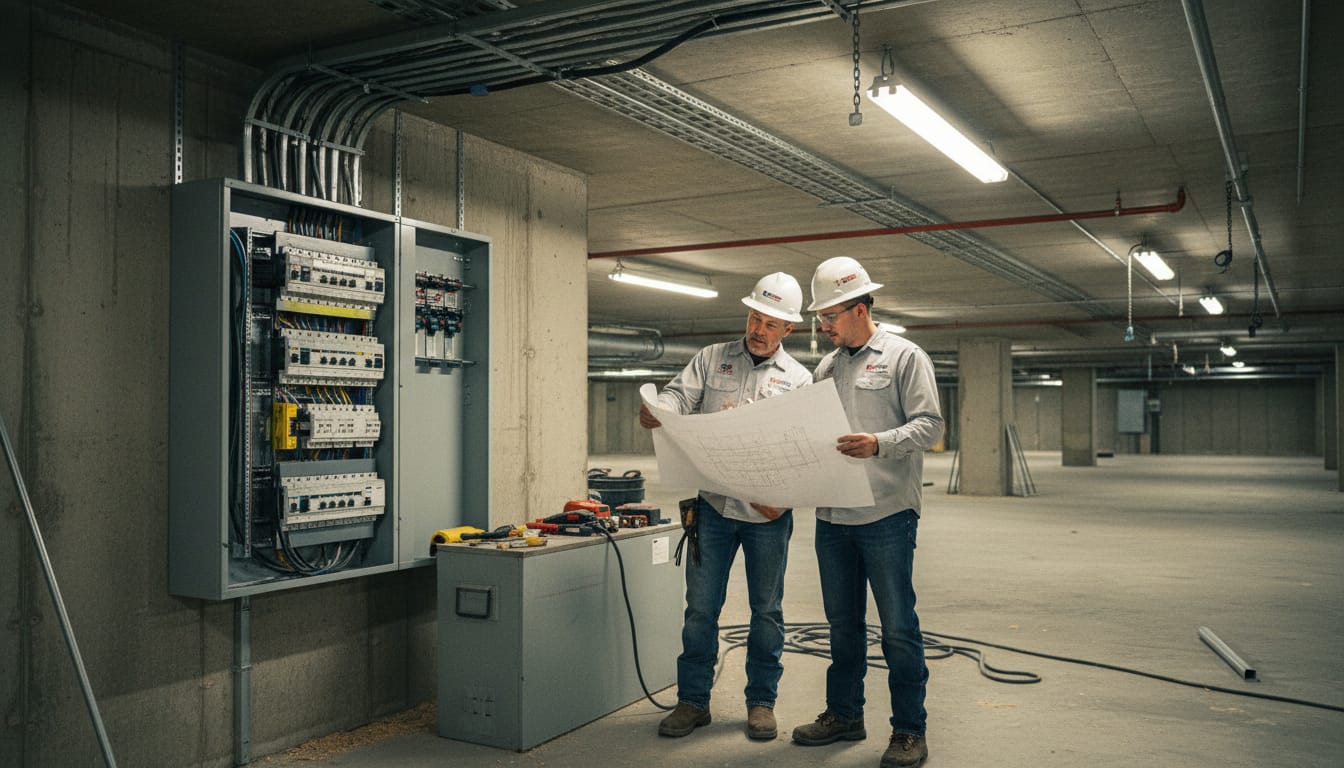
Your electric vehicle holds more usable energy than a typical home battery, often several times more. Bidirectional charging is the umbrella term for letting some of that energy flow back out: into an appliance, into your house, or onto the grid. The idea has been demonstrated for years. What changed recently is that you can now buy a complete, manufacturer-supported home setup off the shelf from more than one automaker.
This is a snapshot of where the technology stands as of Q2 2026. The hardware list and pricing here will date faster than the underlying concepts, so we flag what is current versus what is structural.
Three terms that get used interchangeably (and shouldn't)
People say "bidirectional charging" to mean very different things. The hardware, cost, and usefulness differ enormously depending on which one you mean.
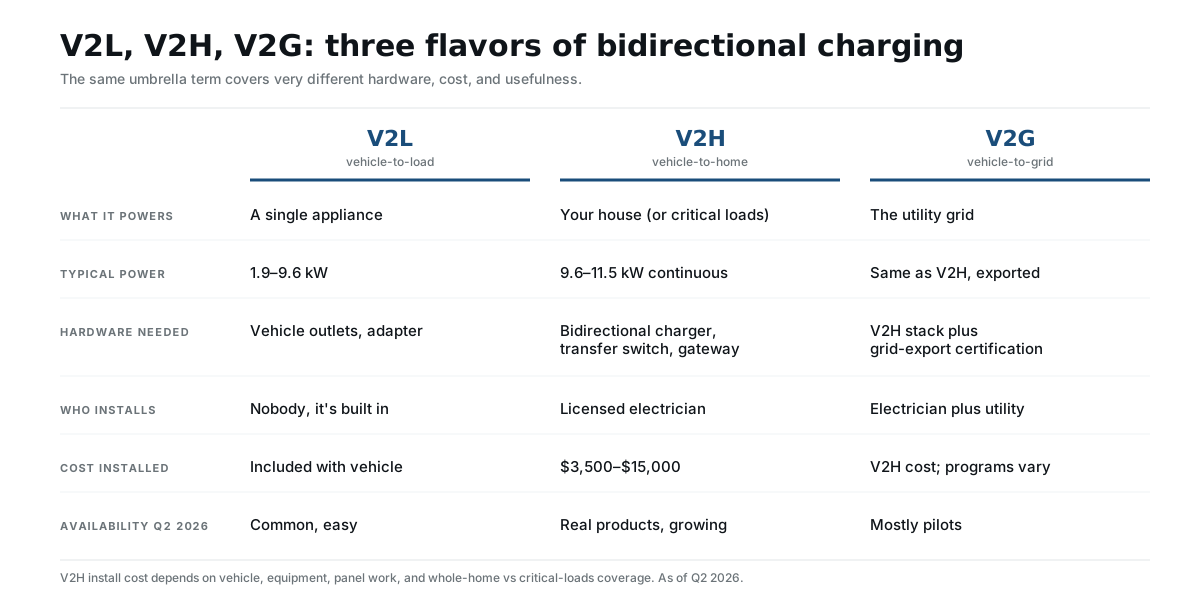
V2L is the easy one. Many EVs already ship with it, and it requires no electrician. V2H is the one most homeowners actually want, because it turns the car into backup power. V2G is the most talked-about and the least available, because it depends on your utility offering a program and approving the interconnection.
V2L: already here, already cheap
Vehicle-to-load is the most widely available form of bidirectional power. The Hyundai IONIQ 5 and IONIQ 6, Kia EV6 and EV9, Ford F-150 Lightning, Rivian models, and others can run external devices through an adapter or built-in outlets, typically delivering somewhere in the 1.9 kW to 9.6 kW range depending on the vehicle. Tesla added V2L capability with the redesigned Model Y Performance announced in late 2025, a notable shift for a brand that previously withheld the feature.
V2L will run a refrigerator, a few lights, a space heater, and device chargers. It will not run your central air conditioner or whole-home loads, and it does not connect to your electrical panel. Think of it as a very large, very quiet generator outlet.
V2H: the real story for homeowners in 2026
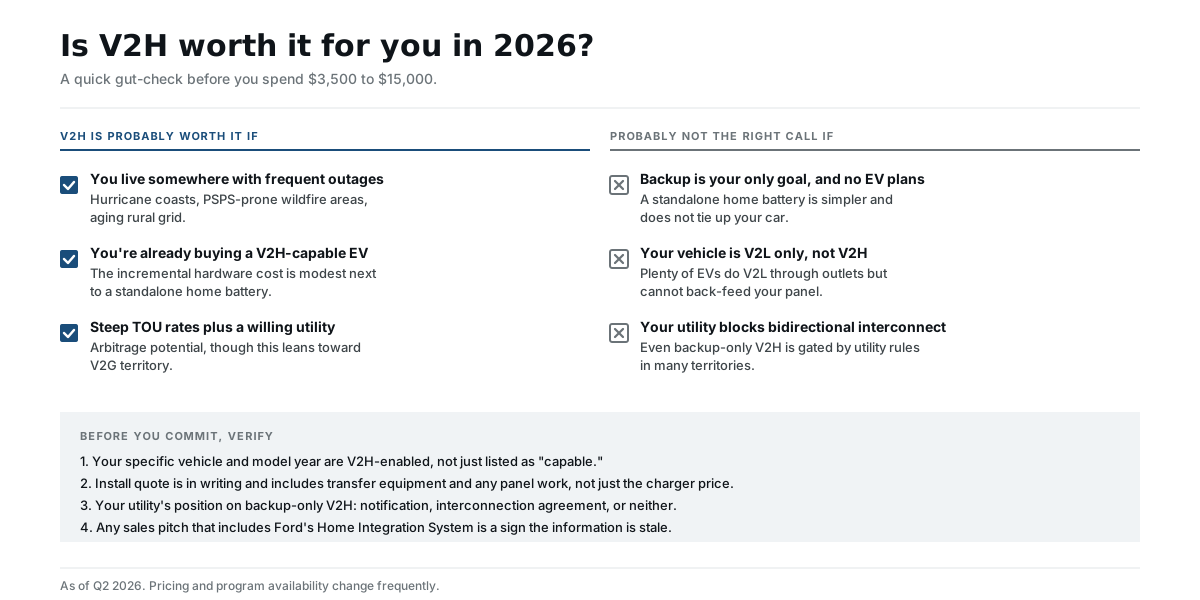
Vehicle-to-home is what lets the car back up your house through the panel when the grid goes down. As of Q2 2026, several systems are genuinely purchasable rather than promised, and one notable system just exited the market.
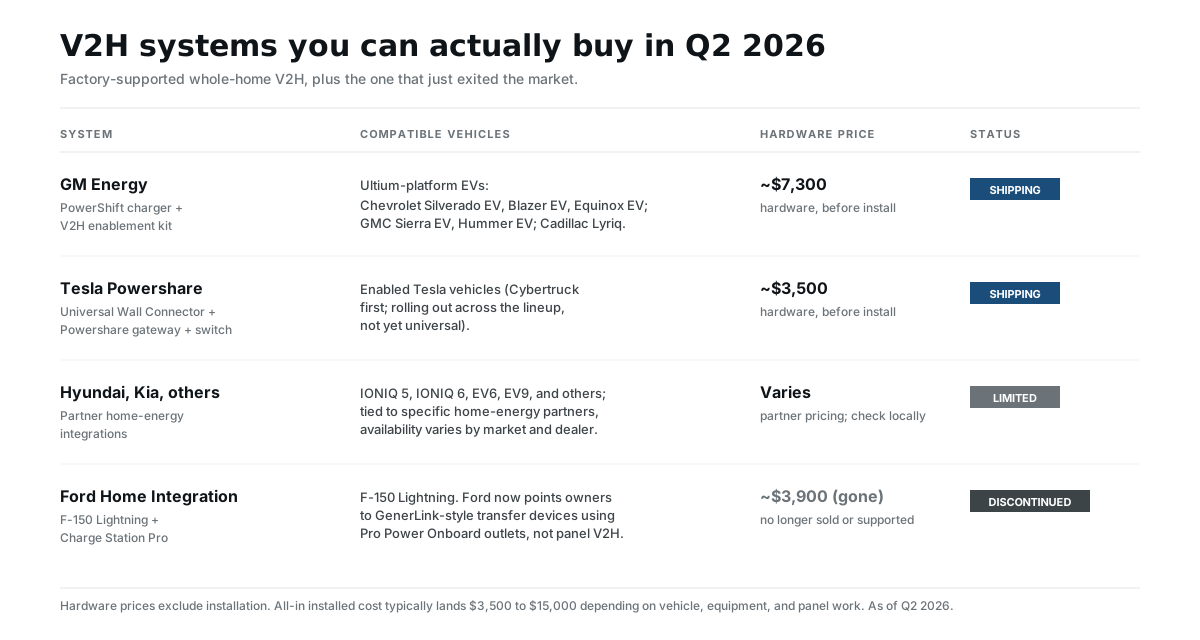
The Silverado EV, with its very large battery, can carry an average home's essential loads for several days. Tesla Powershare's lower price tag reflects tighter vehicle-system integration; availability is rolling out across the Tesla lineup rather than being universal. The F-150 Lightning, long the poster child for V2H, needs more careful framing: Ford's former Home Integration System should not be presented as a current off-the-shelf offering, but Ford still documents essential-home-backup capability for an equipped F-150 Lightning using Pro Power Onboard and a separately purchased, professionally installed GenerLink transfer switch. Ford does not describe that pathway as whole-home V2H.
What a V2H system actually requires
A compatible vehicle alone is never enough. Five pieces have to line up.
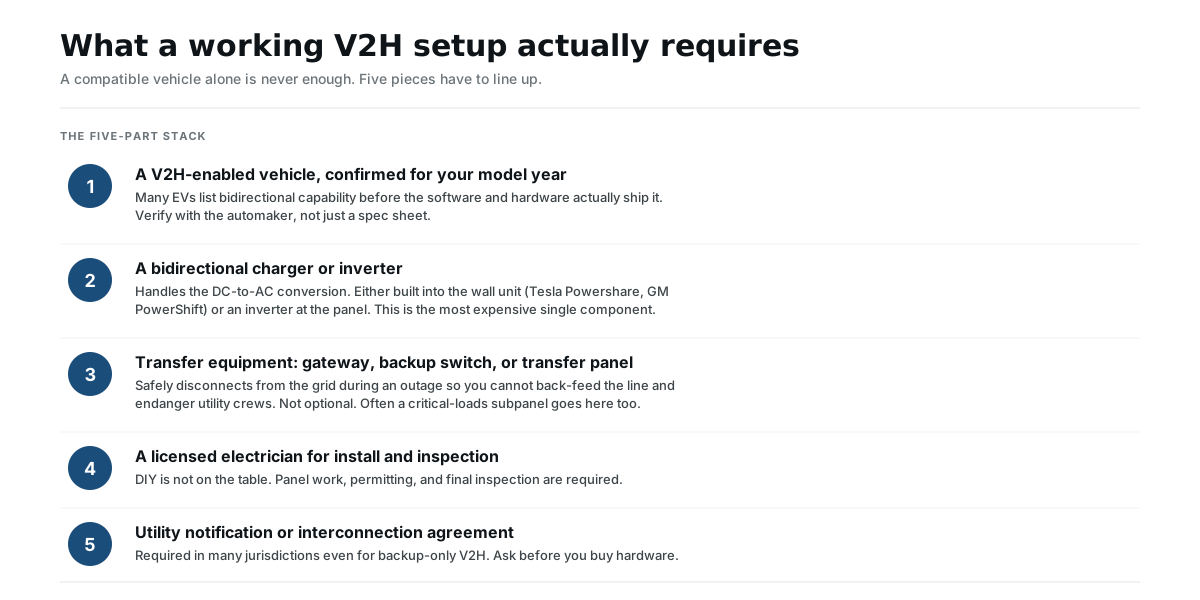
All-in installed cost typically lands between $3,500 and $15,000 (as of Q2 2026), depending on the vehicle, equipment, panel work, and whether you are backing up the whole home or a critical-loads subpanel. Most systems deliver continuous output in the 9.6 kW to 11.5 kW range, enough for essentials and moderate air-conditioning, not unlimited simultaneous loads.
V2G: promising, still mostly a pilot
Vehicle-to-grid sends energy back to the utility, ideally earning the owner credits or payments while helping balance the grid. The technology works, and pilots exist, but for most homeowners V2G is not something you can simply sign up for in 2026. It requires:
- A utility that offers an interconnection pathway and, ideally, a compensation program
- Approval to export power, which is a higher regulatory bar than backup-only V2H
- Hardware certified for grid export, not just islanded backup
Some utilities, including PG&E, have approved specific vehicle-and-charger combinations for bidirectional use, but program availability is patchy and the economics depend heavily on local rate structures. Treat V2G as a future upside, not a reason to buy today.
Who V2H actually makes sense for right now
V2H is still a premium add-on rather than a core reason to buy an EV. The strongest case is when you want backup power and already have a large battery sitting in the driveway most of the day. For everyone else, a standalone home battery may be simpler if backup is the only goal, since it does not tie up your car or depend on its state of charge.
Last factually verified: 2026-05-24 against InsideEVs reporting on Ford's Home Power Management and the discontinuation of the Home Integration System, GM Energy's V2H product pages, Tesla's Powershare and bidirectional charging documentation, and contemporaneous coverage of Tesla Model Y Performance V2L. Pricing and vehicle availability are point-in-time figures for Q2 2026 and change frequently. We do not have referral arrangements with any automaker or charger manufacturer; this reflects independent judgment.