The current wave of electric trucks, the Ford F-150 Lightning, Chevrolet Silverado EV, Rivian R1T, GMC Hummer EV, and Tesla Cybertruck, carries batteries that change the home charging math. A sedan-shaped EV and a full-size electric truck are not the same charging problem, and treating them the same is the most common planning mistake truck buyers make.
This piece is current as of Q2 2026. Manufacturers revise onboard charger hardware and trim specifications between model years, so confirm your specific vehicle's specs against the manufacturer's documentation before sizing a circuit.
The battery size problem for Level 1
Most EV sedans and crossovers carry usable batteries in the 60-80 kWh range. Level 1 charging, the standard 120-volt wall outlet, delivers roughly 3-5 miles of range per hour. That is marginal but workable for a sedan owner who drives under 40 miles a day and parks overnight.
Electric trucks are in a different category.
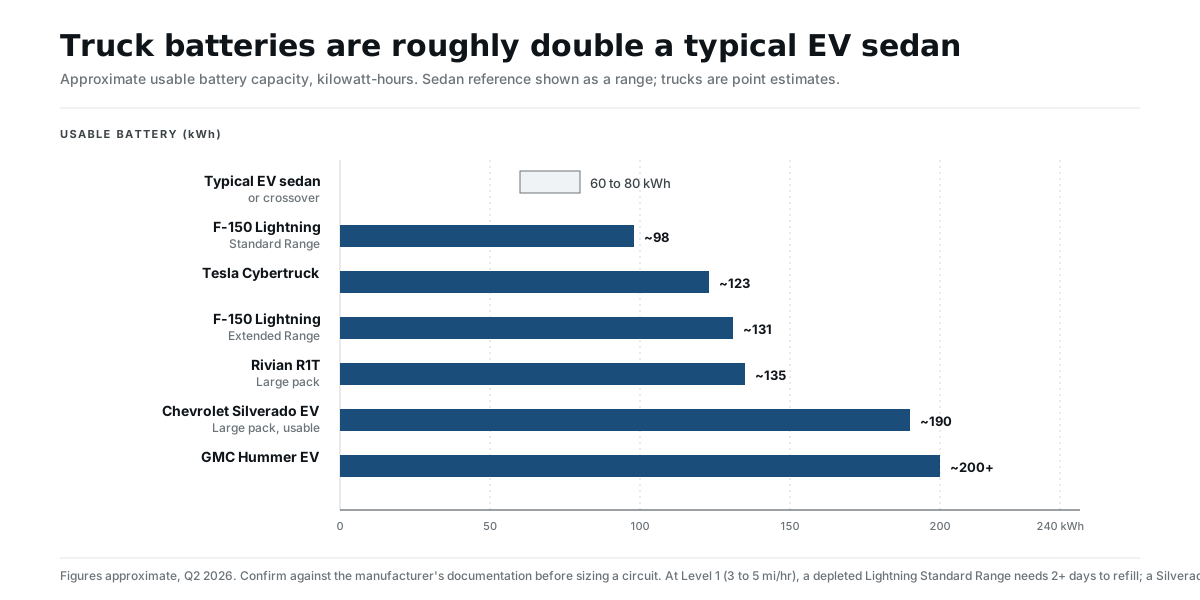
For a truck owner who runs the battery down on weekday use, Level 1 cannot restore enough range overnight to serve as the primary method. For trucks, Level 2 is not an upgrade. It is the baseline.
What "onboard charger" means and why it caps your speed
When a truck charges at home on AC power, the speed is limited by the smaller of two things: the circuit feeding the charger, and the vehicle's onboard charger, the component inside the truck that converts AC to DC for the battery.
This matters because the onboard charger sets a ceiling that no amount of home hardware can beat.
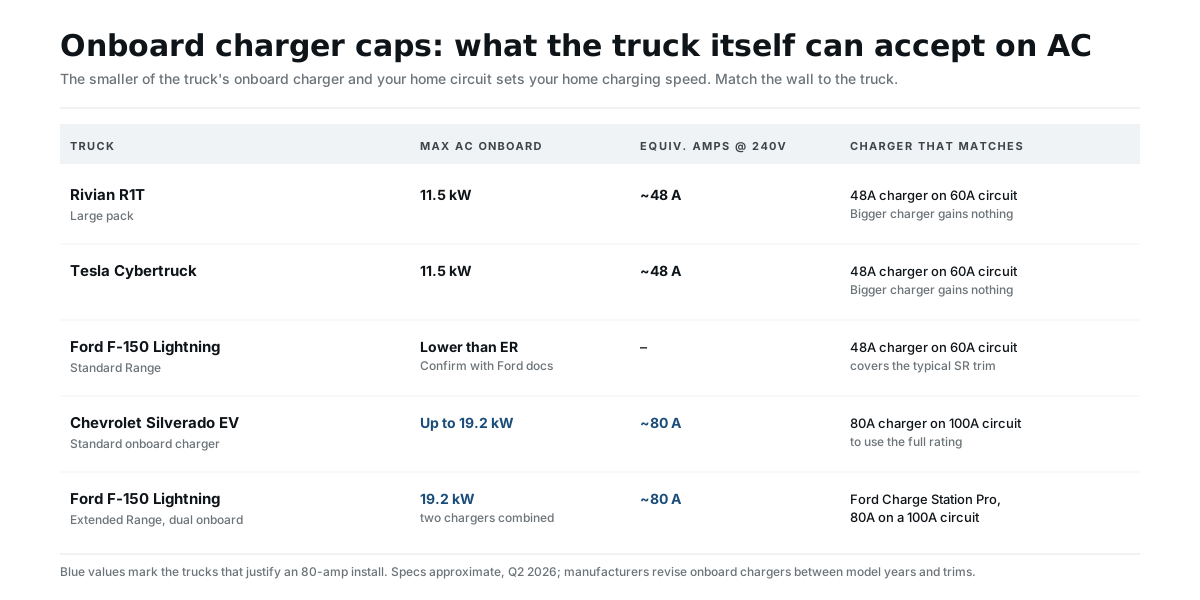
The practical takeaway: buying the biggest charger on the wall does nothing if the truck cannot accept the power. Match the charger to the vehicle, not to the marketing.
Why trucks push toward 48A and 60A circuits
A 48-amp Level 2 charger is the practical sweet spot for most truck households. It adds roughly 30-40 miles of range per hour, enough to refill 250-320 miles in an overnight window. That covers the way most people actually use a truck: commute, errands, the occasional loaded haul.
But amperage on the charger and amperage on the circuit are not the same number. The National Electrical Code treats EV charging as a continuous load, which means the circuit breaker must be rated at 125% of the charger's draw (the "80% rule," stated the other way around). The consequences are concrete.
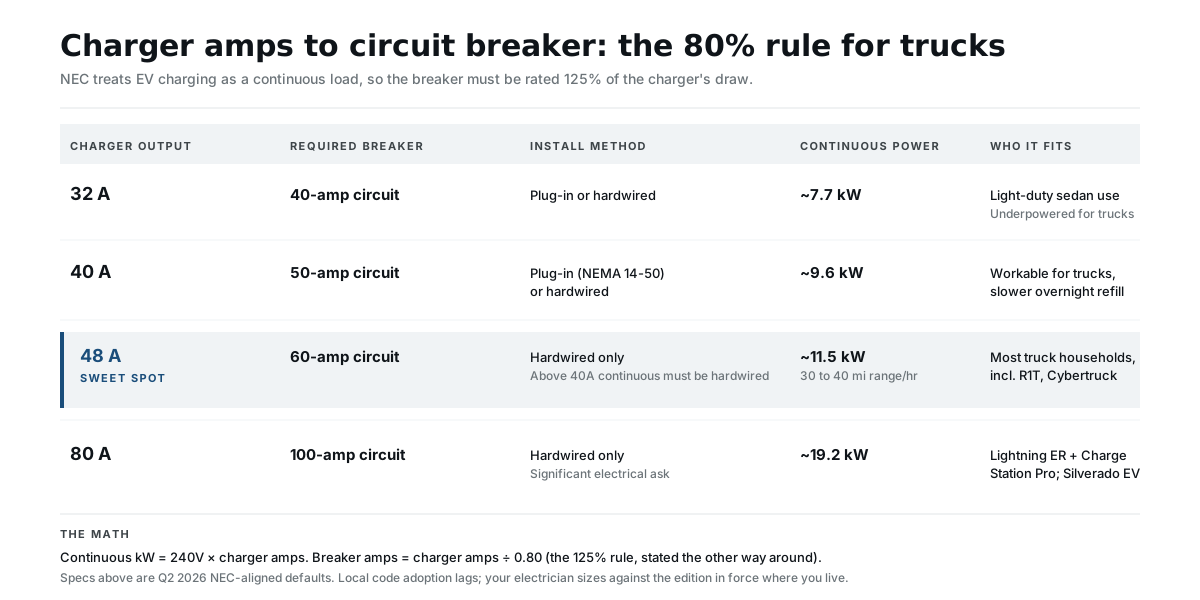
A common NEMA 14-50 installation limits continuous charging to 40 amps on a 50-amp circuit. Higher-power residential EVSE is commonly hardwired, but the applicable NEC edition, listing, receptacle type, circuit rating, and local amendments determine whether a cord-and-plug connection is permitted.
The 80-amp question: F-150 Lightning Charge Station Pro
The F-150 Lightning Extended Range is one of the few consumer trucks that can actually use 80 amps, because it has dual onboard chargers totaling 19.2 kW. Ford's Charge Station Pro is the 80-amp hardwired unit that delivers it, and it requires a dedicated 100-amp circuit to do so (as of Q2 2026).
That is a significant electrical ask. A 100-amp branch circuit for a single charger is more than many homes can spare on a 200-amp main panel without a load calculation, and homes on 100-amp or 125-amp service usually cannot support it without a service upgrade.
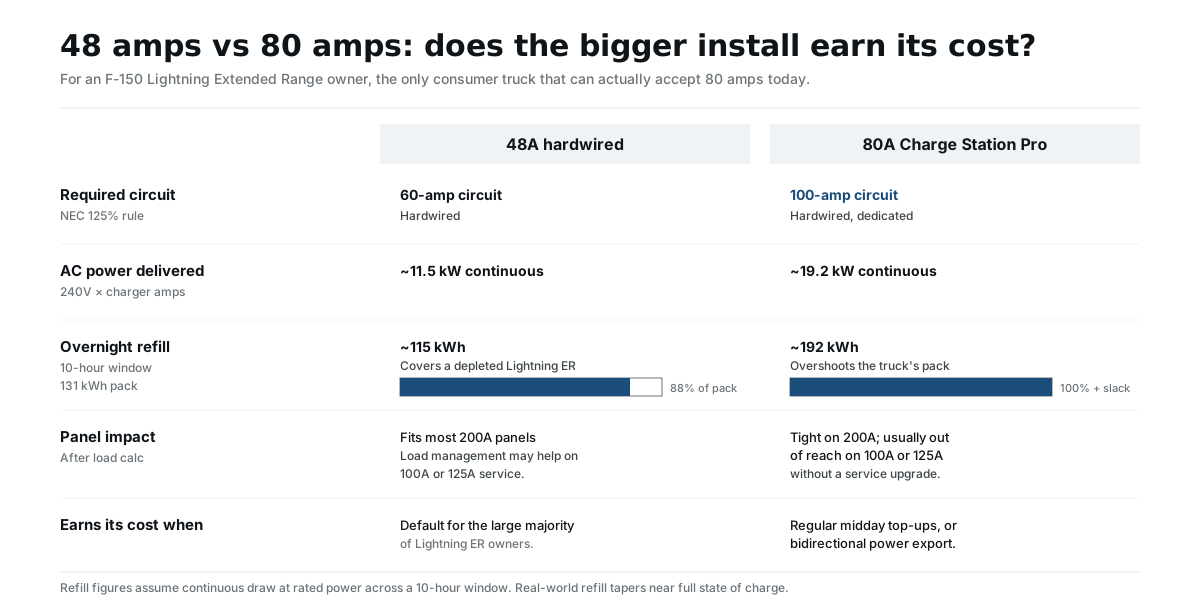
The honest answer for most Lightning Extended Range owners is that 48 amps refills the truck overnight anyway, so the 80-amp install only earns its cost if you regularly need a fast midday top-up or run the truck's bidirectional power-export features that depend on the Charge Station Pro hardware.
Load management often beats a bigger panel
Because trucks draw more, they are more likely to bump against a home's total electrical capacity. A 48-amp charger on a 60-amp breaker can tip a 100-amp or 125-amp service over its calculated limit, especially in a home with electric heat, a range, and a dryer.
The traditional fix is a panel or service upgrade, which can run from a few thousand dollars to well over $5,000 depending on the utility and the work involved. The newer fix is load management: a charger or energy-management device that monitors total household draw and throttles the charger down when other large loads turn on. Several truck-friendly chargers, including the systems Ford and others pair with their trucks, include this so the household can add a high-amperage charger without a service upgrade. If your electrician's load calculation comes back tight, ask about load management before you commit to a panel upgrade. It is frequently the cheaper and faster path.
What truck buyers should do
- Look up your specific trim's onboard charger capacity. If it tops out near 11.5 kW (Rivian R1T, Cybertruck), a 48-amp charger is the maximum useful hardware. Anything larger is wasted spend.
- Plan for a hardwired 48-amp charger on a 60-amp circuit as the default. This is the right answer for the large majority of truck households.
- Only consider an 80-amp install (F-150 Lightning Extended Range with Charge Station Pro) if you specifically need maximum AC speed or bidirectional power export, and your panel can support a 100-amp circuit.
- Get a load calculation before assuming you need a panel upgrade. Load management may let you avoid one.
- Budget the install alongside the truck. Most homes land in the $500-$1,500 range for a straightforward Level 2 install, though long wire runs, panel work, or a service upgrade push it higher. For more on what the work involves, see Home Charger Installation: What It Involves.
The short version: an electric truck makes Level 2 mandatory, makes 48 amps the practical default, and makes a careful load calculation worth doing before you spend money on either the biggest charger or the biggest panel.
Last factually verified: 2026-05-24 against Ford F-150 Lightning charging documentation (ford.com), Rivian onboard charger support documentation (rivian.com), published Chevrolet Silverado EV and Tesla Cybertruck specifications, and NEC continuous-load (125%) circuit-sizing guidance. Battery and onboard-charger figures are approximate and vary by model year and trim; confirm against the manufacturer's documentation for your specific vehicle before sizing a circuit.
Corrections (August 11, 2026): This article previously said chargers drawing more than 40 amps continuously must be hardwired by code; in fact NEC Article 625 permits specified cord-and-plug arrangements above 40 amps (up to 60 amps under stated conditions), the familiar 40-amp limit comes from a 50-amp circuit at 80 percent continuous load on a common NEMA 14-50 installation, and the applicable NEC edition, listing, receptacle type, circuit rating, and local amendments determine whether a cord-and-plug connection is permitted.