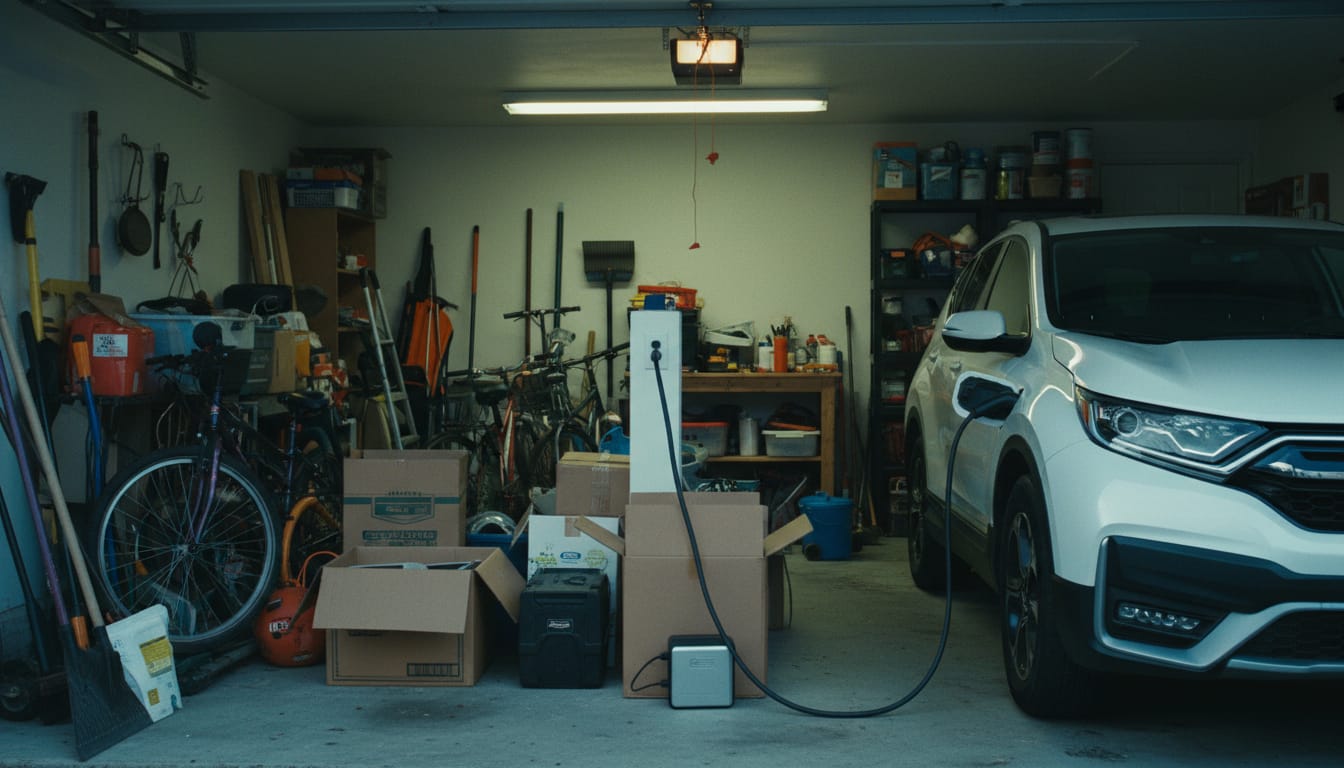
The EV charging industry has a clear incentive to sell you a Level 2 charger and an installation to go with it. Sometimes that is the right call. Often it is. But "everyone needs Level 2" is marketing, not analysis, and a meaningful minority of EV owners are perfectly well served by the cord that came in the trunk.
This piece is the honest version. It walks through the actual math of daily charging, tells you the four situations where Level 2 stops being optional, and gives you a two-week test that answers the question for your specific life better than any chart can.
What's near you? Public charging in your area changes the calculation. A dense pocket of nearby Level 2 and DC Fast gives you a real backup if Level 1 falls short, so the decision is less binary. Look up the public chargers within 10 miles →
The single number that decides it: your real daily mileage
Almost every charging decision traces back to one figure: how far you actually drive on a normal day. Not your worst day, not the road trip you take twice a year, but the median Tuesday.
The federal data is reassuring here. The average U.S. driver covers roughly 37 miles per day, and most drivers are under 40 miles per day on a typical day. (as of Q2 2026) That matters because home charging does not need to fill an empty battery overnight. It only needs to replace what you used that day.
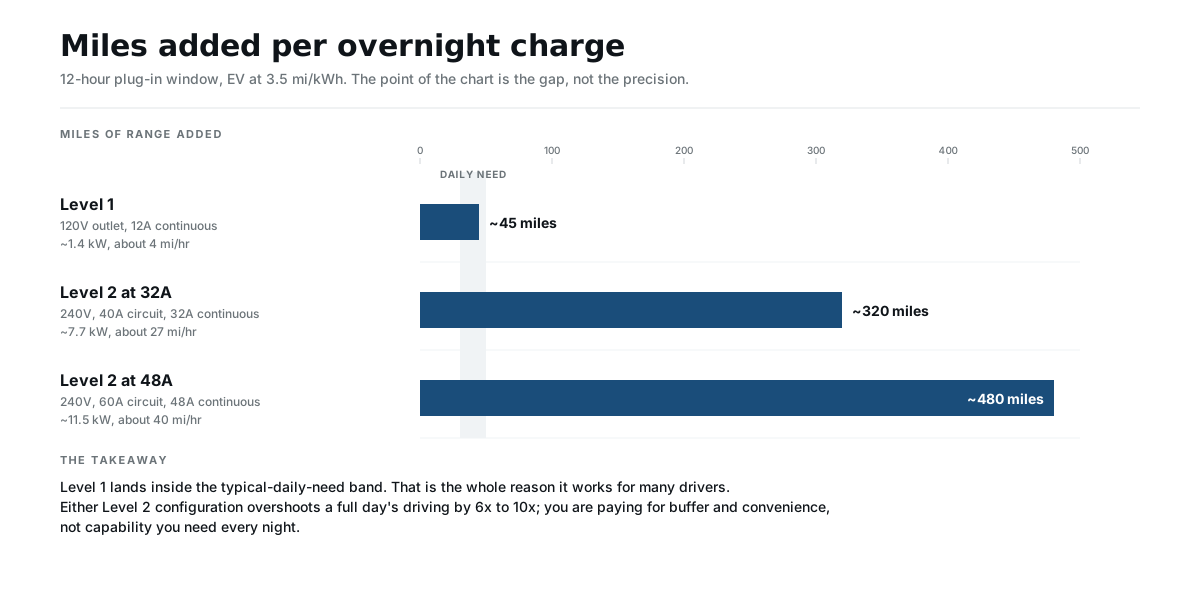
Level 1 charging, the standard 120V wall outlet your EV's included cable plugs into, delivers roughly 1.4 to 1.9 kW and adds about 3 to 5 miles of range per hour. (as of Q2 2026) Over a 10 to 12 hour overnight window, that is roughly 40 to 50 miles recovered.
Put those two facts side by side and the picture is clear: for a driver doing 30 to 35 miles on a typical day, Level 1 quietly keeps pace. You wake up each morning back where you started, give or take. The battery never fills completely, but it never needs to.
A quick worked example
Say you drive 28 miles on a normal weekday and plug in at 7pm, unplugging at 7am. That is 12 hours of charging at, say, 1.5 kW, recovering about 45 miles. You used 28; you regained 45. You are net positive by 17 miles every single day, which gives you a comfortable buffer for the occasional longer day. Level 1 is genuinely enough here, and spending $1,000 or more on a Level 2 install buys you convenience, not capability.
Now change one number. Say you drive 55 miles on a normal day. You use 55, regain 45, and fall behind by 10 miles every night. Within a week you are draining the buffer; within two you are charging at work or stopping at a public charger to cover the gap. That driver needs Level 2.
The four situations where Level 2 stops being optional
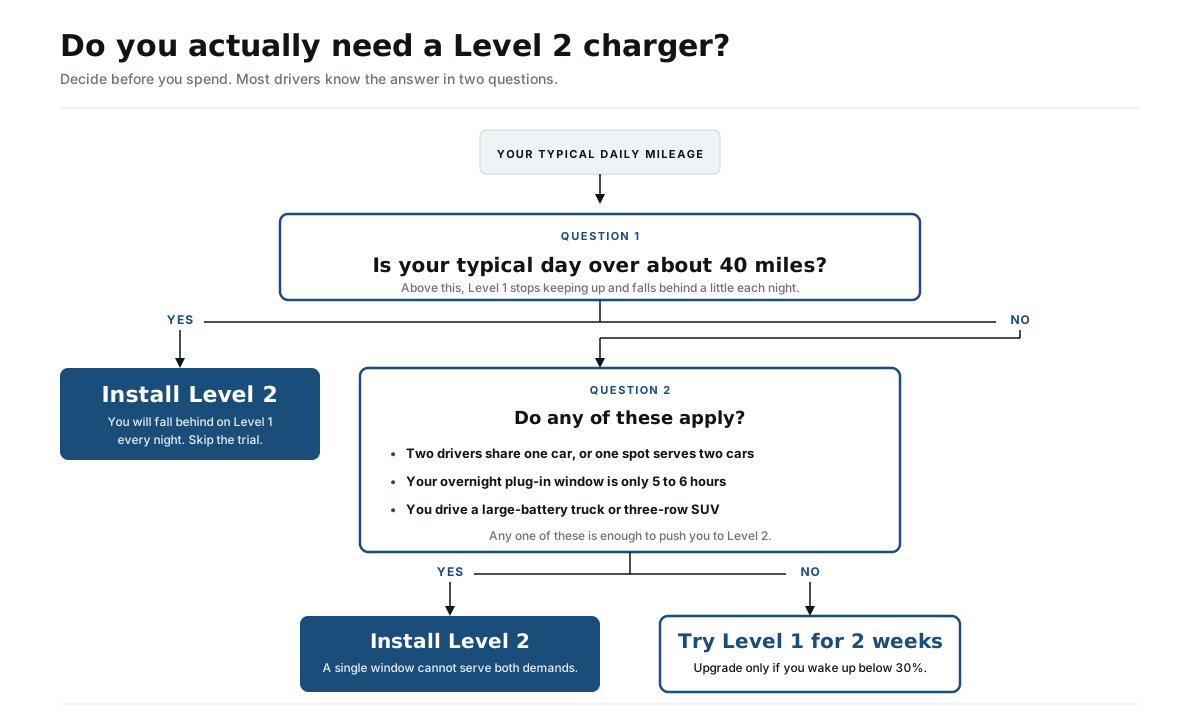
Level 1's ceiling is real. These are the situations where you should plan on Level 2 from the start rather than trying Level 1 first.
-
Your typical daily mileage is consistently over about 40 miles. Above this, Level 1 stops replacing what you use and starts falling behind a little each day. A 40A or 48A Level 2 unit adds roughly 25 to 37 miles per hour (as of Q2 2026), so it refills a daily deficit in a couple of hours rather than not at all.
-
Two drivers share one car, or one charging spot serves two cars. Two people's mileage stacks up fast, and a single overnight Level 1 window cannot serve two depleted batteries. The shared-spot case is the most common reason a household that "should" be fine on paper is not.
-
Your overnight charging window is short. Shift workers, people who get home late and leave early, and anyone whose car sits plugged in for only 5 or 6 hours lose much of Level 1's overnight advantage. Fewer hours times a slow rate equals not enough miles.
-
You drive a large-battery truck or SUV. A Ford F-150 Lightning, Rivian R1T, or large three-row electric SUV draws more energy per mile than a compact sedan. On Level 1, these vehicles barely tread water even at average mileage, because each mile costs more kWh to replace.
If none of these four describe you, Level 1 deserves a real trial before you spend. If one or more clearly applies, skip the trial and plan for Level 2; you will end up there anyway.
The two-week test (do this before spending a dollar)
The cleanest way to answer the question is to let your actual life answer it. The protocol is simple: plug in on Level 1 every night for two weeks using the cable that came with the car, note the morning state of charge before you leave, drive normally, and read the trend.
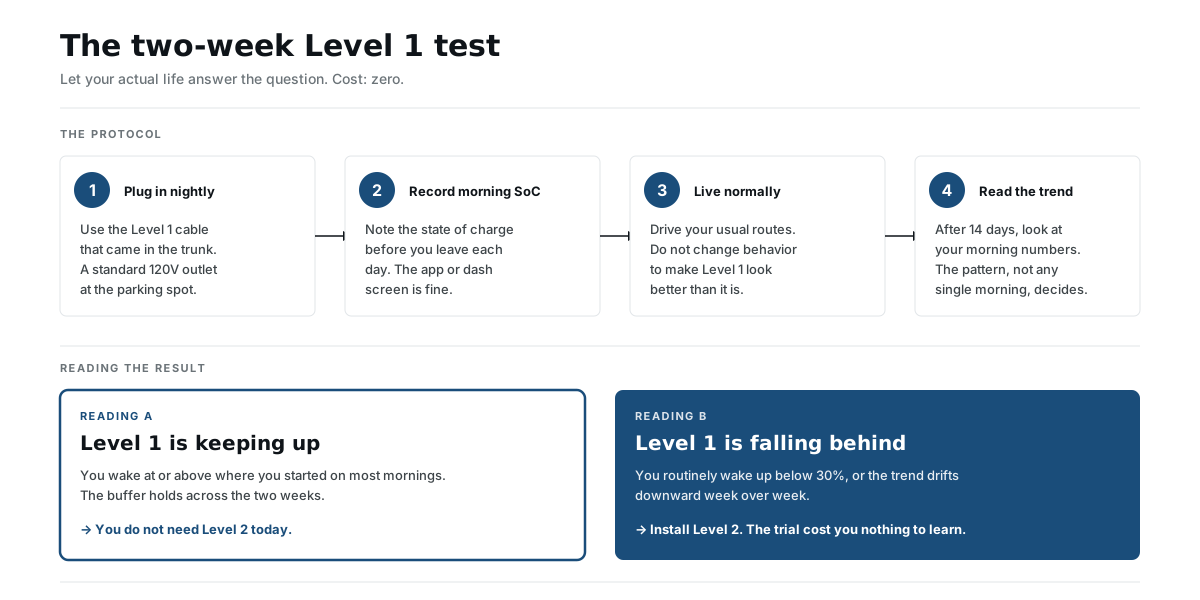
This test beats any rule of thumb because it captures the things charts miss: your specific car's efficiency, your climate (cold weather cuts range and slows charging), your real schedule, and how much buffer makes you comfortable.
What Level 2 actually buys you
It is worth being precise about what the upgrade delivers, because the honest pitch is not "you cannot drive an EV without it."
What Level 2 buys most households is the end of charging as a thing you think about. You plug in when you get home and wake up full, every day, the way you charge a phone. The mental load of tracking state of charge and planning around it disappears. For many people that convenience alone justifies the cost, even when Level 1 would technically suffice. That is a legitimate reason to install it. It is just a different reason than "I need it," and you should know which one applies to you.
What Level 2 costs
For most homes, a complete Level 2 installation runs roughly $800 to $2,200 (as of Q2 2026). The Level 1 alternative, by contrast, costs $0: the cable ships with the car and reuses a standard outlet.
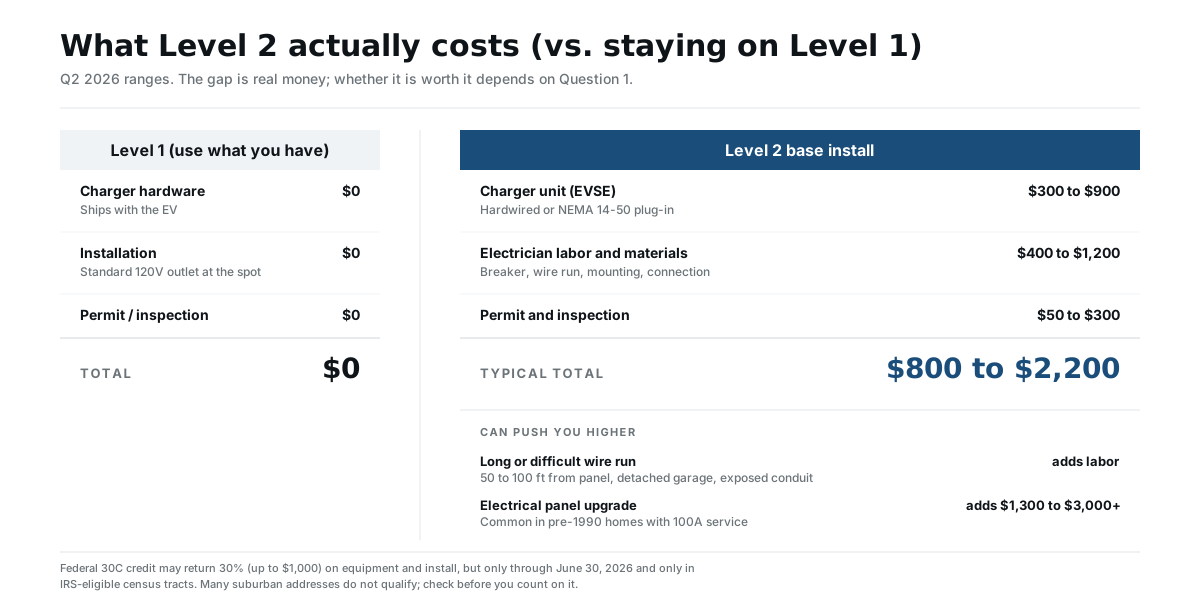
Two things can push you well above the base range. A long or difficult wire run from your panel to the parking spot adds labor. And if your electrical panel lacks capacity for a new 40A to 60A circuit, common in homes with 100A service built before 1990, a panel upgrade can add roughly $1,300 to $3,000, sometimes more if the meter base or service cable also needs work. Get this assessed before you commit, so quote day holds no surprises.
The incentive worth checking (briefly)
The federal 30C tax credit returned 30% of equipment and installation cost, up to $1,000 per item, but it ended June 30, 2026 and is no longer available. It applied only to property placed in service by that date, and only if the home sat in an IRS-eligible census tract. Because the deadline has passed, plan on the real out-of-pocket cost. See our dedicated 30C article for the historical eligibility rules.
A note for California drivers
California has both the highest EV adoption and the most developed time-of-use (TOU) electricity pricing, which changes the calculus slightly. On an EV TOU plan from PG&E, SCE, or SDG&E, overnight electricity is dramatically cheaper than daytime power. (as of Q2 2026) That makes overnight home charging, on either level, the cheapest fuel you will buy.
The wrinkle: those plans reward charging in a specific overnight window. Level 1's slow rate may not finish within the cheapest hours if you have a lot to replace, whereas Level 2 can complete a full charge inside the low-price window. For a higher-mileage California driver, Level 2 is not only about capability; it is about capturing the cheap-rate window cleanly. Confirm your utility's current EV rate schedule before deciding, since these structures change (PG&E's EV2-A pricing shifted in March 2026, for example).
The bottom line
Most homeowners who drive more than a short commute end up on Level 2, and for them the convenience is worth it. But "most" is not "all." If you drive modestly, can plug in nightly, and pass the two-week test, the cord in your trunk is a complete charging solution and the upgrade is optional. Decide based on your real mileage and your real schedule, not on a default recommendation that happens to align with selling you hardware.
For a deeper comparison of all three charging levels and what each costs to run, see Level 1 vs. Level 2 vs. DC Fast Charging.
Last factually verified: 2026-05-24 against U.S. DOT and FHWA average daily mileage data, U.S. Department of Transportation EV charging-speed guidance, 2026 Level 2 installation and electrical panel upgrade cost surveys, and California utility (PG&E/SCE/SDG&E) EV rate information.