EV Charging Help

Smart Load Management Is Making Panel Upgrades Optional for Many EV Owners

Smart panels and load management devices let homes with limited electrical capacity add EV charging without a full panel upgrade by monitoring total household load in real time and throttling the charger when other big appliances run. The 2026 National Electrical Code formally recognizes these systems (Article 625.42 and the energy management rules in 625.48), which lets installers size circuits to the managed load instead of the charger's full nameplate rating.

May 1, 2026Updated May 24, 20267 min read
For homeownersNews & Insights

One of the most common reasons people stall on home EV charging is the fear of an electrical panel upgrade, a job that commonly runs $1,500 to $4,000 (as of Q2 2026) and sometimes far more if the utility service drop or meter also has to change. The good news, and the reason this keeps coming up as news, is that load management technology now lets a large share of homes skip that upgrade entirely. The 2026 National Electrical Code update has made the regulatory path for it clearer than it has ever been.

The core idea: your peak load is not your nameplate load

A home's electrical draw fluctuates constantly. The air conditioner cycles on for twenty minutes, then off. The dryer runs for an hour, then stops. The electric range spikes for a few minutes during dinner. Your panel is sized for the worst-case sum of those loads, but that worst case rarely happens, and almost never happens at the exact moment you want to charge the car.

Load management exploits that gap. If your charger can sense when the big appliances kick on and reduce its draw, then ramp back up when they finish, your total peak stays under the panel's safe ceiling.
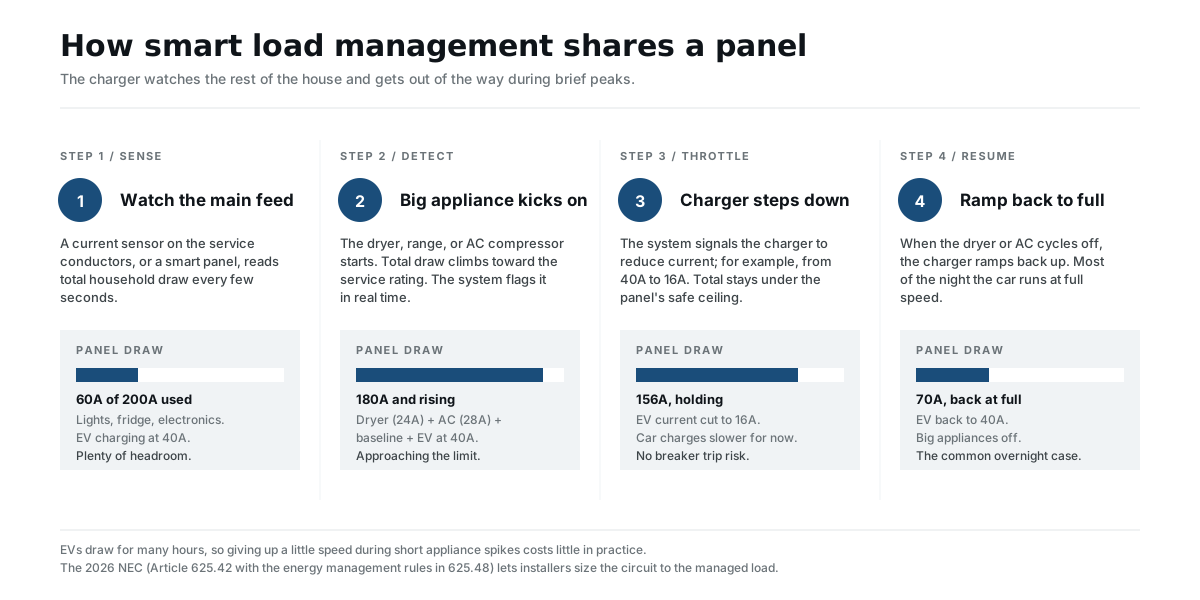
Four-step diagram showing how an energy management system shares panel capacity between household loads and an EV charger. Step 1, a current sensor (clamp-on CT or smart panel) watches the main service feed in real time. Step 2, when the dryer, range, or air conditioner kick on and total household draw climbs toward the service rating, the system signals the EV charger. Step 3, the charger throttles down (for example, from 40 amps to 16 amps) so total load stays under the panel's safe ceiling. Step 4, when the big appliance cycles off, the charger ramps back up to full rate.

The binding constraint is the brief peak, not the total energy. EVs draw for many hours, so giving up a little speed during short appliance spikes costs you very little in practice.

What the 2026 code change actually did

This is the genuinely new development. The 2026 National Electrical Code formally recognizes energy management systems for EV charging. Under the relevant rules in Article 625 (notably 625.42 and the energy management system provisions in 625.48), where an approved system actively limits the EV load, installers may size the feeder and branch circuit to the maximum load the management system permits rather than to the charger's full nameplate rating.

In plainer terms: the code now lets the math be based on what the charger is actually allowed to pull, not what it could theoretically pull at full tilt. Combined with the standard continuous-load rules, that often means an existing service has enough headroom on paper, where before it appeared maxed out. This is what turns "you need a panel upgrade" into "you can add a managed charger" for many homes. Local adoption of the 2026 code varies by jurisdiction, so confirm what your local inspector is enforcing.

The two ways load management is done

There are two broad approaches, and they differ a lot in cost and disruption.
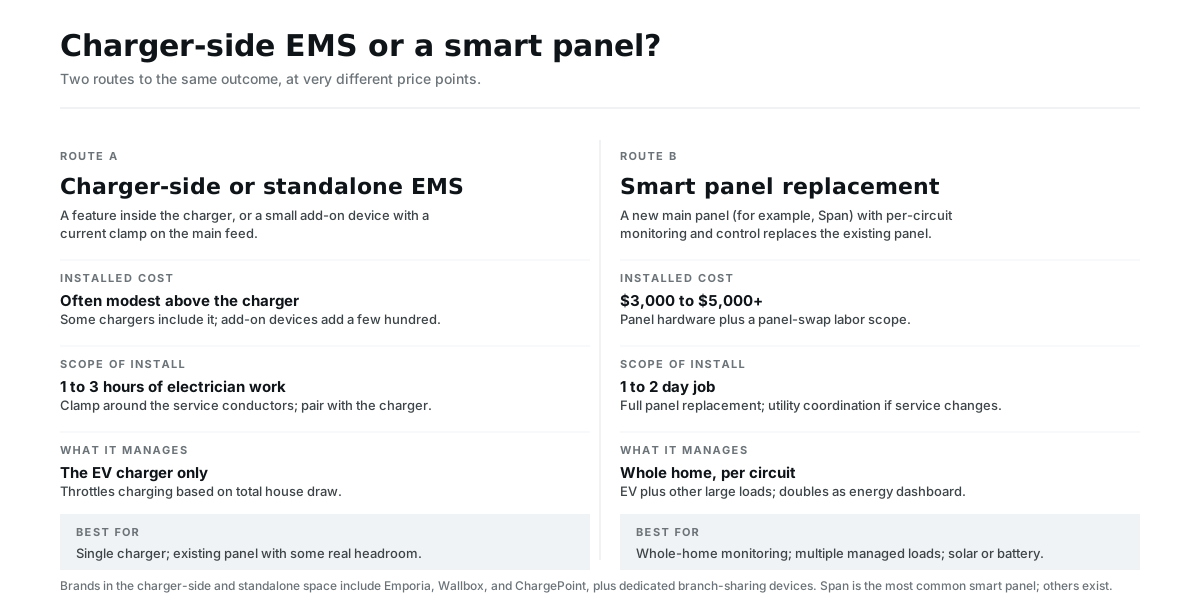
Side-by-side comparison of charger-side or standalone energy management against a smart panel replacement. Charger-side EMS: a feature inside the charger or a small add-on with a current clamp on the main feed; installed cost often modest above the charger cost; 1 to 3 hours of electrician work; covers the EV charger only; best for a single charger on an existing panel with some headroom. Smart panel replacement, for example Span: a new main panel with per-circuit monitoring and control; installed cost $3,000 to $5,000 or more; a 1 to 2 day install; covers whole-home monitoring and multiple managed loads; best for homes wanting an energy dashboard, multiple managed loads, or solar and battery integration.

Charger-side and standalone devices are the cheaper, less invasive route and often all a single-charger home needs. Many Level 2 chargers now include built-in current sensing or pair with a clamp on the main feed; brands include Emporia, Wallbox, and ChargePoint, plus dedicated branch-circuit-sharing devices used where a single circuit must serve more than one charger.

A smart panel such as Span goes further: it replaces the main panel, adds per-circuit monitoring and control, prioritizes charging during low-demand periods, and doubles as an energy dashboard and a backup-power management hub for homes with solar or a battery. It costs more and is a bigger job, but it does more than EV load management alone.
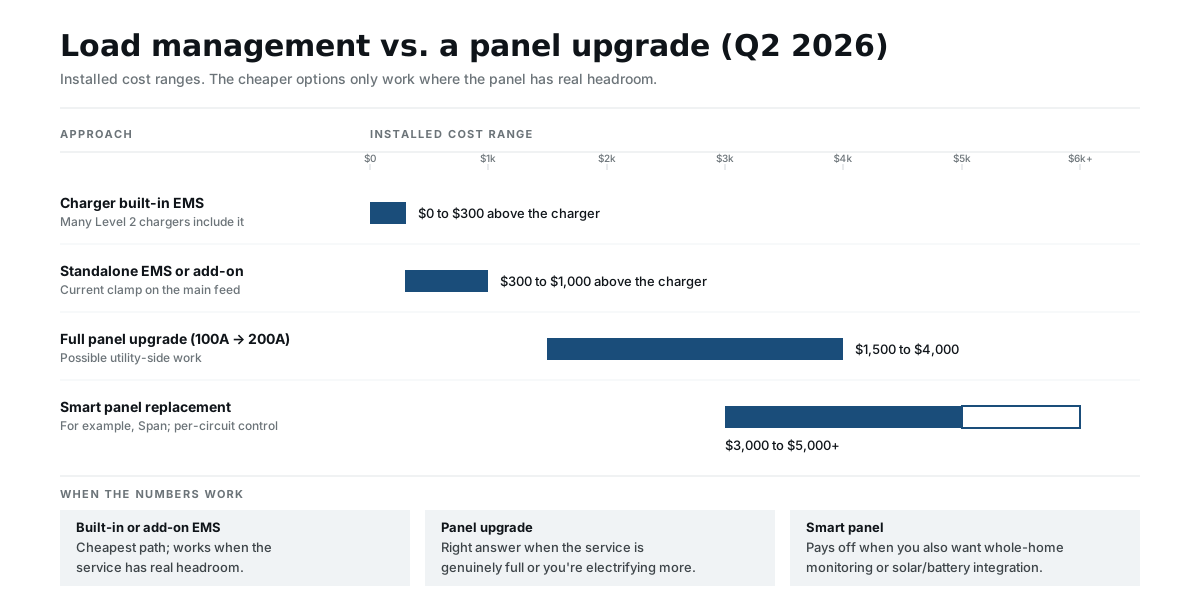
Installed cost ranges for four ways to add EV charging when a panel looks tight, shown as horizontal bars from zero to six thousand dollars or more. Charger built-in EMS: zero to about three hundred dollars above the charger. Standalone EMS or current-sensing add-on: about three hundred to one thousand dollars above the charger. Full 100A to 200A panel upgrade: one thousand five hundred to four thousand dollars, with possible utility-side work. Smart panel replacement, for example a Span panel: three thousand to five thousand dollars or more. Load management is usually a fraction of the cost of a panel upgrade, but only when the existing service has real headroom.

When load management is the right answer, and when it is not
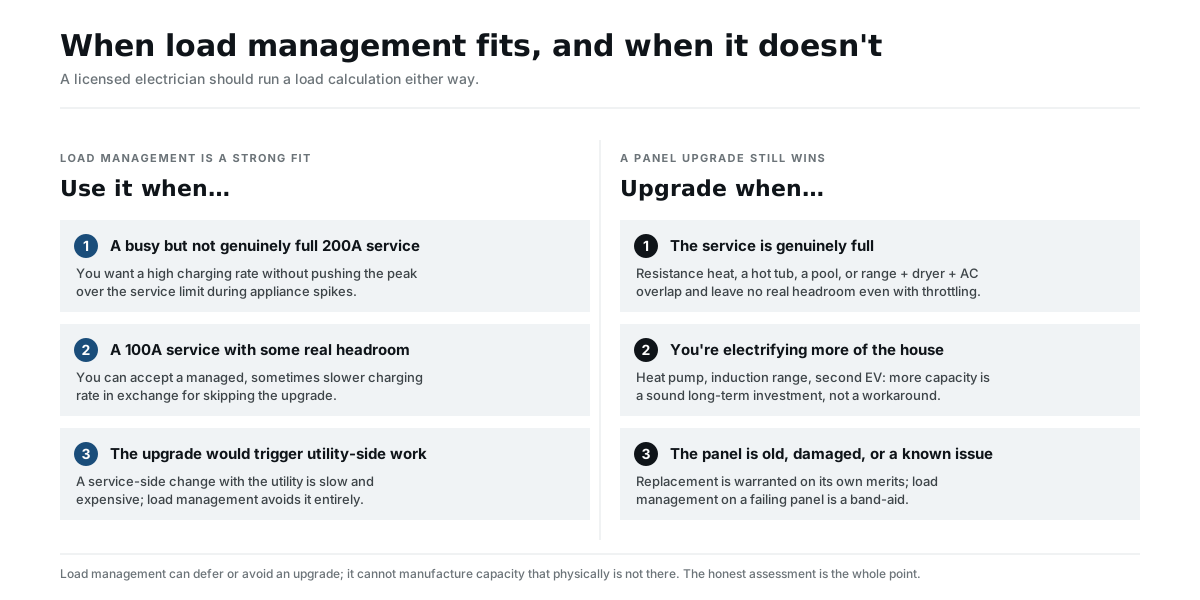
Two-column decision matrix. Load management is a strong fit when: you have a 200A service that is busy but not genuinely full and want a high charging rate without pushing peak demand over the limit; you have a 100A or smaller service with some real headroom and accept a managed, sometimes slower charging rate; the alternative panel or service upgrade is expensive because it would trigger utility-side work. A panel upgrade is still the better answer when: your existing service is genuinely full with large overlapping loads such as resistance heat, a hot tub, a pool, or simultaneous electric range, dryer, and AC; you are electrifying more of the house (heat pump, induction range, second EV) and more capacity is a sound long-term investment; the panel is old, damaged, or already a known problem where replacement is warranted on its own merits.

A licensed electrician should run a load calculation either way. The honest assessment is the whole point: load management can defer or avoid an upgrade, but it cannot manufacture capacity that physically is not there. See Do You Need a Panel Upgrade? for how that calculation works.

What to ask your installer

  • Will the proposed system be evaluated under the 2026 NEC energy management rules, and does our local jurisdiction enforce the 2026 code yet?
  • What charging rate will I actually get during peak household use versus overnight?
  • Is the load management charger-side, or does it require a panel replacement, and what is each option's installed cost?
  • If I add another large electric load later, does this approach still hold, or does it push me toward an upgrade anyway?

Load management does not make panel upgrades obsolete. It makes them optional for the substantial slice of homes whose panels look full on a worksheet but have plenty of real-world headroom most of the time.


Last factually verified: 2026-05-24 against published summaries of the 2026 National Electrical Code Article 625 changes (625.42 and 625.48 energy management provisions) from SparkShift and ECalPro, manufacturer descriptions of Span, Emporia, Wallbox, and ChargePoint load management features, and AmpControl's explanation of the NEC continuous-load rule. Pricing figures are point-in-time estimates for Q2 2026. We do not have referral arrangements with any charger or panel manufacturer; this reflects independent judgment.
Last updated May 24, 2026. We refresh this article when incentive amounts, regulations, or product availability changes.

Share:Email
For homeowners

Bidirectional Charging in 2026: What V2H, V2G, and V2L Actually Mean for Homeowners

Bidirectional charging covers three distinct things: V2L (run appliances from the car), V2H (power your house through a backup panel), and V2G (sell energy back to the grid). As of Q2 2026, V2H is genuinely buyable from GM, Tesla, and a handful of others, but Ford has discontinued its Home Integration System. V2L is common and cheap. V2G remains rare and depends on your utility. Expect $3,500 to $15,000 installed for a real V2H setup.

Updated May 20267 min read
For both

Federal 30C EV Charger Tax Credit Expires June 30, 2026: What to Do With 55 Days Left

The 30C credit terminates June 30, 2026 under the One Big Beautiful Bill Act. Residential: 30% up to $1,000. Commercial: 6% base or 30% with prevailing wage, up to $100,000 per port. Tax-exempt entities including churches and nonprofits claim via elective pay. Two disqualifiers kill most claims: eligible census tract requirement and 'placed in service' means operational, not contracted.

Updated May 202611 min read
For homeowners

NACS Is the Standard Now: What Connector Unification Means for EV Buyers

The North American Charging Standard (NACS), originally Tesla's proprietary connector, is now the open SAE J3400 standard. As of Q2 2026, essentially every automaker selling EVs in North America has adopted it, and the major non-Tesla brands have shipped NACS adapters that open the Supercharger network to their owners. For home charging, this barely matters: Level 2 at home is unchanged, and adapters bridge the gap in both directions.

Updated May 20267 min read

Want the complete homeowner's guide?

The Complete Homeowner's Guide to EV Charging covers everything from whether you need Level 2 to installation, incentives, and the best brands. Free — just enter your email.

The Weekly EV Charging Briefing

One email a week. Just EV news that matters.

By subscribing you agree to our Privacy Policy. Unsubscribe any time.