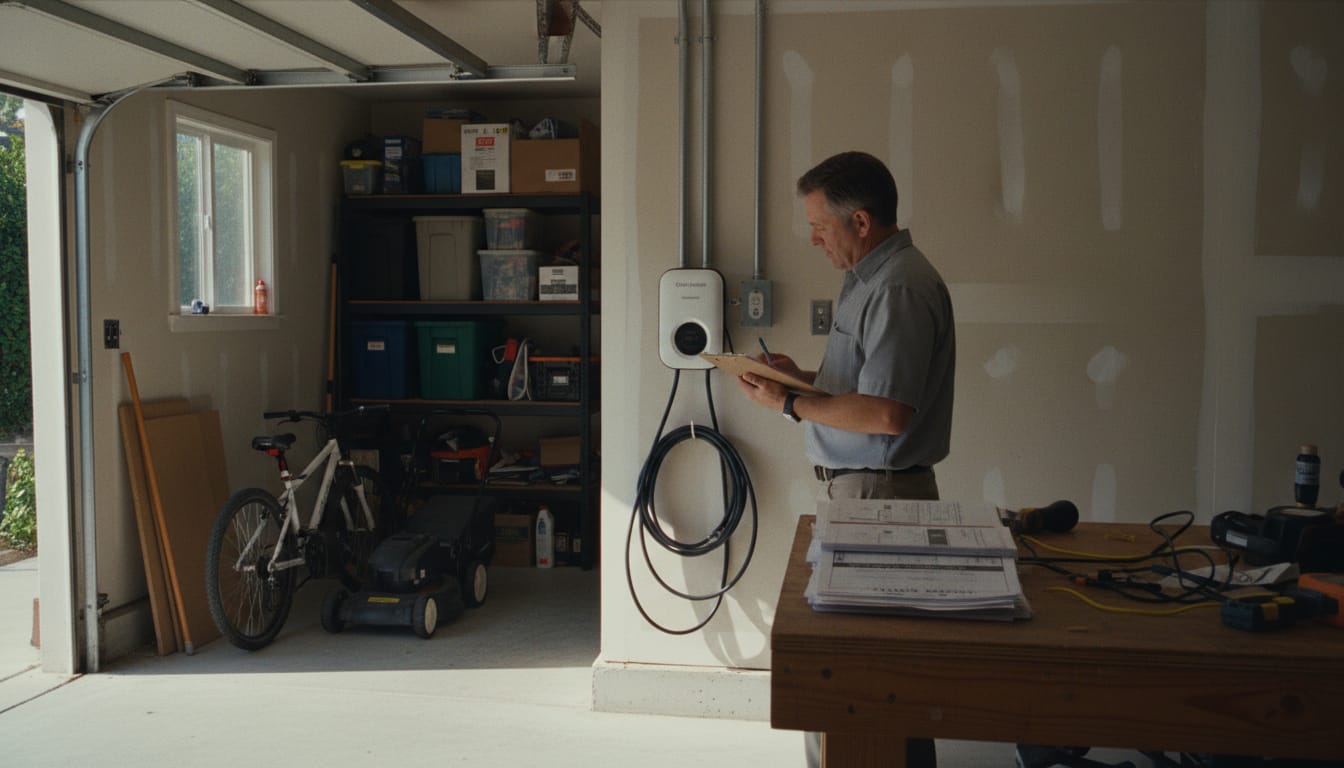
The fear of a panel upgrade stops some homeowners from moving forward with EV charging. It shouldn't. Most homes either don't need one, or there is a workaround that costs less than a full upgrade. Here is how to think about it systematically, including the actual code calculation an electrician uses to decide.
The short version
A Level 2 charger adds a continuous load to your electrical service. Whether your panel can take that load is not a matter of opinion or rule of thumb; it is a calculation defined by the National Electrical Code (NEC). The relevant question is not "what amperage is my panel?" alone, but "how much of that panel's capacity is already spoken for, and how much is left for a charger?"
Three outcomes are possible:
- You have headroom. Add the circuit, no upgrade needed. This is the most common result for 200A panels and many 100A panels with gas appliances.
- You are close. A load-management device or a right-sized charger fits without touching the service. Usually cheaper than an upgrade.
- You are genuinely out of capacity. A panel or service upgrade is the honest answer, and trying to dodge it costs more in workarounds.
The only way to know which bucket you are in is the load calculation below.
The NEC load calculation: how the decision is actually made
Electricians size new loads against existing service using NEC Article 220. For an existing home, most use the optional method in Article 220.83, which is built specifically for adding a load (like an EV circuit) to a dwelling that already exists. It uses demand factors, meaning it does not assume every appliance runs at full power at the same time, which is why a panel that looks "full" of breakers can still have real capacity.
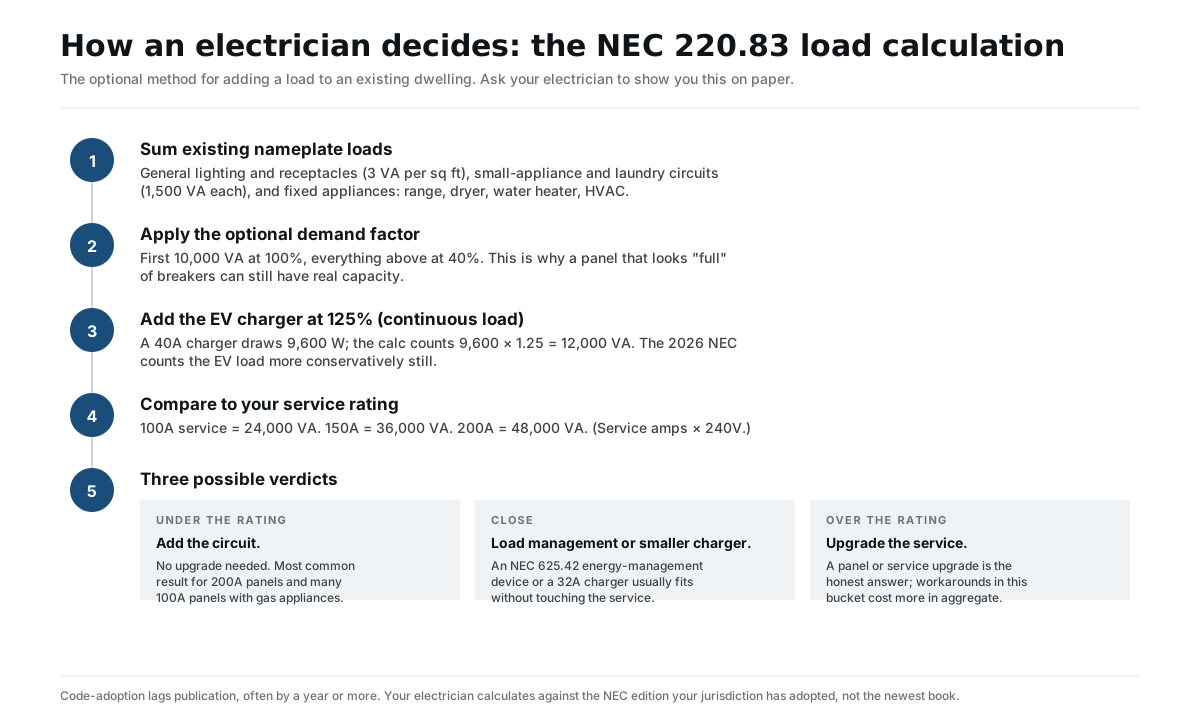
If the calculated demand stays under the service rating, you are clear. If it exceeds it, you need either a smaller charger, load management, or more service.
A worked 220.83 example
Numbers make this concrete. Take a 1,800-square-foot home on 100A service, gas heat and gas water heater, with an electric range and electric dryer.
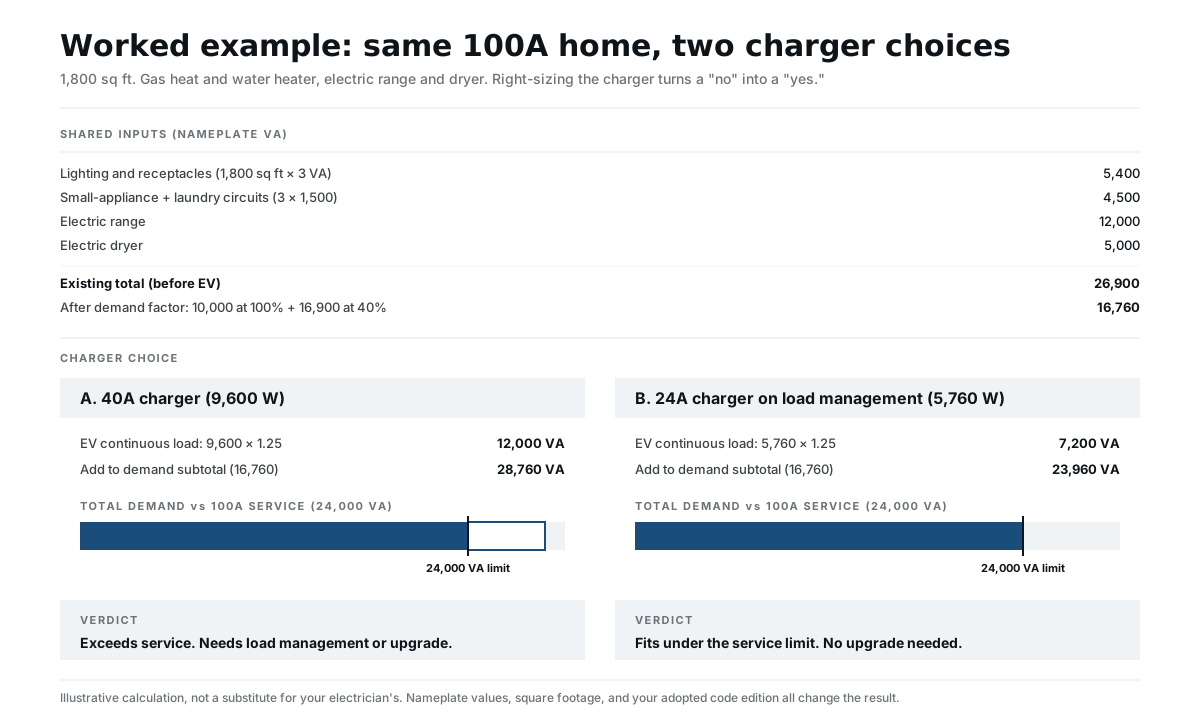
That is the difference a right-sized charger or a load manager can make. Total demand of 28,760 VA at 240V is about 120A, which exceeds 100A service, so the 40A charger cannot land here without help. The 24A version brings the calc to 23,960 VA, a hair under the 24,000 VA service ceiling. Treat this as an illustration, not a substitute for your electrician's calc: nameplate values, square footage, and your adopted code edition all change the result.
A practical note for 2026: the National Electrical Code is revised on a three-year cycle, and the 2026 edition reworks the residential load calculation, even renumbering Article 220 to Article 120. In the 2026 existing-dwelling optional method, new EVSE is assigned an 80 percent factor in the published Table 120.83 framework; other EVSE load provisions and local amendments may still affect the calculation, and the edition trims some other assumptions such as the general-lighting figure. Which edition applies to you depends on what your state and local jurisdiction have adopted; adoption lags publication, often by a year or more. Have your electrician calculate against the exact locally adopted edition, not the newest book.
Ask your electrician to show you the 220.83 calculation. A good one will have it on paper or in software. If they cannot produce one and are working from a glance at the panel, they are guessing.
Self-assessment: what you can check before you call
You cannot run a code calculation yourself reliably, but you can gather the inputs and form a rough expectation. Go to your panel: the metal box where the breakers live, usually in a garage, utility room, basement, or hallway closet.
Main breaker rating (stamped on the main breaker or panel door):
- 200A: modern, full-capacity service. Most likely to have headroom.
- 150A: common in 1970s to 1990s homes. May or may not have room.
- 100A: older service. Often workable with gas appliances; tight with all-electric.
- 60A: very old. Almost certainly needs upgrading regardless of EV plans.
Breaker slots: Open slots mean physical room for a new breaker. A panel with every slot filled (including skinny tandem breakers crammed in) is a sign capacity is tight, though slot count and electrical capacity are not the same thing.
Panel brand (door sticker): Federal Pacific Stab-Lok and Zinsco/Sylvania panels have documented safety problems and should be replaced regardless of EV charging. Square D, Eaton, Siemens, Leviton, and GE are sound brands; assess them on capacity alone.
Likely outcomes by scenario:
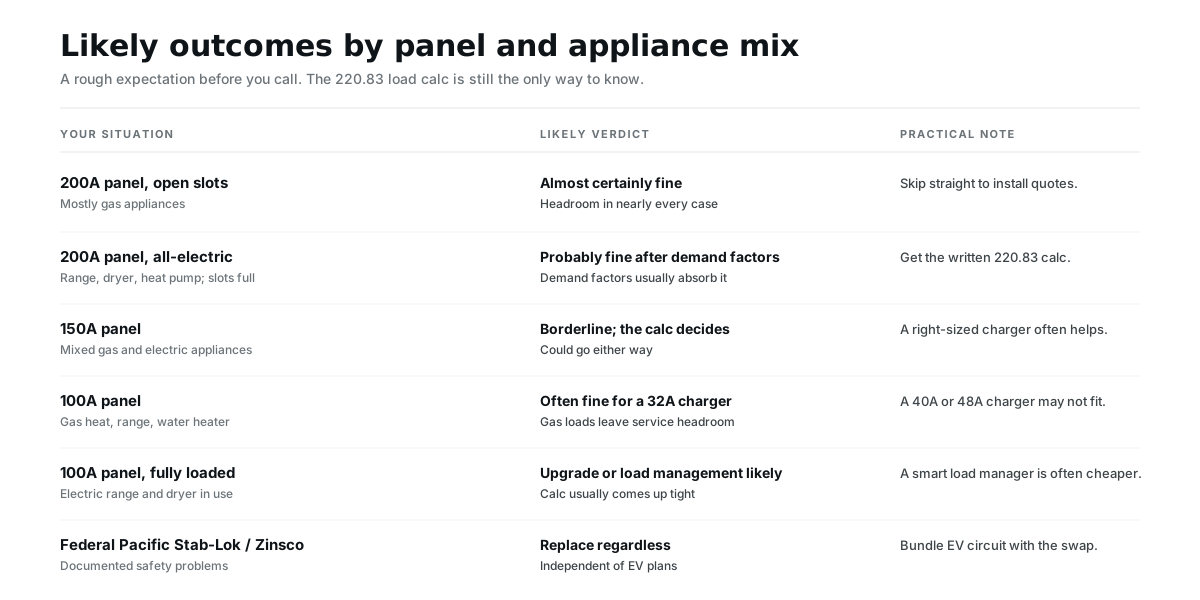
These are starting points, not verdicts. Two homes with identical 200A panels can land in different buckets depending on what is installed inside.
Alternatives to a full panel upgrade
If the calculation comes up tight, you usually have options short of replacing the service.
Option 1: Right-size the charger
A 48A charger needs a 60A circuit and delivers roughly 35 to 40 miles of range per hour. A 32A charger needs a 40A circuit and delivers roughly 25 miles per hour. A 24A charger needs a 30A circuit and delivers around 18 miles per hour.
For a driver covering under 40 to 50 miles a day, a 32A charger fully refills overnight with hours to spare. Stepping down from 48A to 32A meaningfully reduces the load the calculation has to absorb, and for many homes it turns a "no" into a "yes" with no other change.
Option 2: Load management (NEC 625.42)
The NEC explicitly allows an energy management system to control EV charging current so the total load never exceeds the circuit or service rating. Under Section 625.42, an EVSE that can have its current actively limited by such a system is sized on its adjusted load rather than its maximum, which can keep a home under its service limit without an upgrade. The 2023 NEC expanded this provision, and it is now a recognized alternative to upsizing service.
In practice this takes a few forms:
- A smart charger with an adjustable amperage cap, set during commissioning to the value the load calc allows.
- A current-sensing load manager that watches whole-home draw and throttles the charger down when the dryer, oven, or heat pump kicks on, then restores full speed afterward.
- A "smart splitter" that lets the charger share an existing 240V circuit (commonly the dryer's) and never energizes both at once.
- A smart panel (for example, a circuit-managing load center) that prioritizes loads dynamically.
Costs vary widely by product and complexity, from a couple hundred dollars for a simple splitter to a few thousand for a smart panel installed. The appeal is that you keep a higher-power charger and avoid utility coordination. Confirm with your electrician that the specific device satisfies your local code edition's 625.42 / energy-management provisions.
Option 3: Sub-panel from a spare slot
If your 200A main has one or two open slots but sits far from the parking area, an electrician can feed a small sub-panel near the garage and land the charger there. This adds dedicated local capacity without replacing the main panel. It does not add service capacity, so it only helps when the load calc already shows headroom; it is a wiring-convenience solution, not a capacity solution.
Two code details that affect the circuit, not the panel
While you are confirming capacity, two NEC 625 details are worth understanding because they change what the circuit looks like and, indirectly, what the job costs.
GFCI protection (NEC 625.54). A 240V charger drawing real current is exactly the kind of circuit ground-fault protection exists for, but the requirement depends on how the charger connects. Receptacles serving EVSE, such as a NEMA 14-50 outlet feeding a plug-in charger, require GFCI protection under Article 625.54, and GFCI breakers cost more than standard ones. Outdoor hardwired outlets also fall under 210.8(F), and the 2026 NEC extends that rule through 60A. Confirm the locally adopted edition and the manufacturer's listing before selecting the breaker.
Disconnecting means (NEC 625.43). Fixed EVSE rated more than 60A, or more than 150V to ground, requires the applicable disconnecting means under NEC 625.43. The threshold keys on the equipment's rating, not the breaker feeding it, and most residential Level 2 chargers are rated well under 60A, so this usually does not apply. Push to higher-rated equipment and you may add a disconnect, and its cost, to the job. Check the exact language in your locally adopted code edition.
What a panel or service upgrade costs
When an upgrade genuinely is the answer, here is the range to expect (as of Q2 2026). Costs vary by region, panel brand, and how much the utility has to get involved.
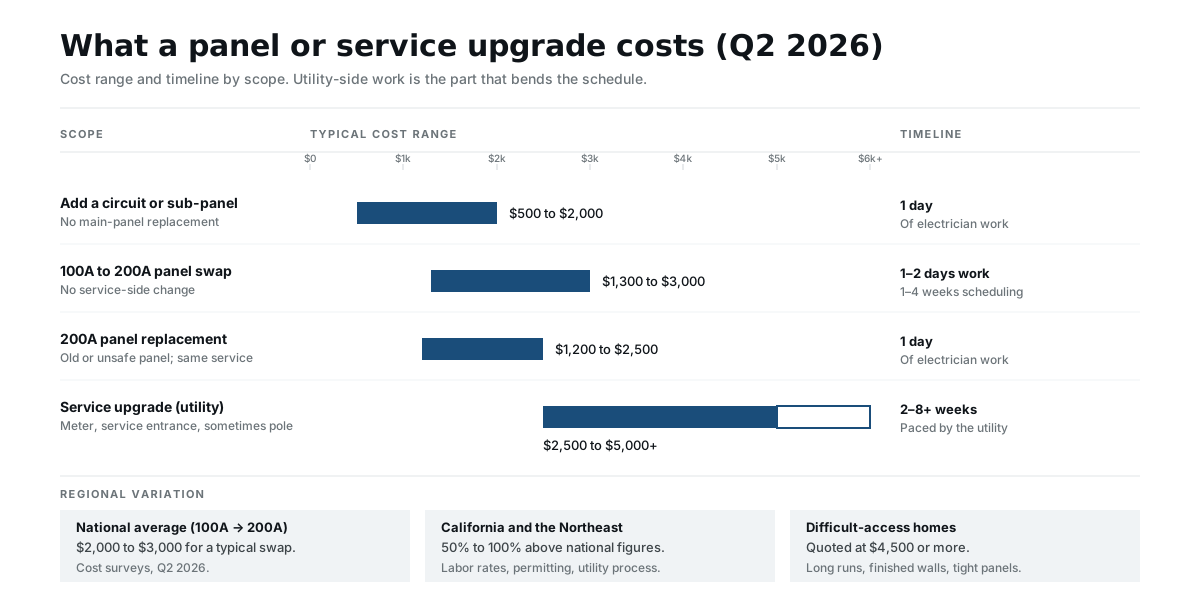
The wide top end on service upgrades reflects cases where the utility must replace conductors from the pole or transformer, or upsize the meter. Those are utility-paced and outside your electrician's control.
One small saving worth asking about: many electricians offer a bundled price for the panel upgrade plus the EV circuit, which often runs a few hundred dollars less than buying the two jobs separately.
The big takeaway from cost surveys is that a large majority of homeowners adding a charger do not end up needing a full service upgrade at all. Get the load calc before you assume you are in the expensive bucket.
California note. California's adoption of the energy code (Title 24) and aggressive electrification policy mean many newer homes already carry 200A service, but it also means more all-electric homes (heat pump, induction range, heat-pump water heater) where the load calc is genuinely tighter. If you are in a California utility territory (PG&E, SCE, SDG&E), check your utility's EV programs before upgrading: some offer panel or make-ready support, and utility-side service work is paced by the utility, not your electrician.
When an upgrade is genuinely the right call
Spend the money on the upgrade, rather than a workaround, when:
- You have a 100A all-electric home that is already near capacity and you want a 48A charger.
- Your panel is a known-defective brand (Stab-Lok, Zinsco) that needs replacing anyway.
- You are stacking multiple new loads at once (charger plus heat pump, plus induction range, plus another EV).
- You are mid-way through a whole-home electrification plan; do the service once, correctly.
In those cases, workarounds tend to cost more in aggregate than just upgrading, and you will need the capacity eventually.
Timing if the utility is involved
If the upgrade touches the service entrance, the utility must approve the new service and schedule a disconnect/reconnect. Timelines vary: some utilities turn this around in 2 to 3 weeks; many take 4 to 8 weeks; congested urban utilities can run longer. Ask your electrician directly: "Does this require a utility service call or service-entrance upgrade?" If yes, start that process before your EV arrives so you are not stuck on Level 1 charging for weeks.
The 30C tax credit has ended. The federal 30C credit returned 30% of your charger-and-installation cost, capped at $1,000, but it ended for property placed in service after June 30, 2026 (OBBBA, Public Law 119-21). Panel and service-upgrade costs directly tied to the charger could count toward the basis, but only if the home sat in an IRS eligible census tract. For federal timing, the charger generally had to be ready and available for use, that is, operational, by June 30, 2026, not merely contracted or paid for; local permits and inspections still applied where required. Because the deadline has now passed, a project starting today cannot claim it; budget the upgrade as a full out-of-pocket cost. See our dedicated 30C article for the historical eligibility rules and the census-tract lookup.
The bottom line
Do not let the word "upgrade" scare you off. The honest answer for most homes is either "no upgrade needed" or "a load-management device solves it for less than an upgrade." Get a written NEC 220.83 load calculation, ask whether load management is an option for your home, and only commit to a service upgrade once the math actually requires it.
Last factually verified: 2026-05-24 against NEC Article 220.82/220.83 (optional load-calculation method) and Article 625.42/625.43/625.54 (EVSE energy management, disconnect, and GFCI) as summarized by electrical continuing-education references (ExpertCE, ElectricalLicenseRenewal), EC&M's NEC 625 code-basics guidance, ChargeRight and SparkShift NEC summaries, IRS 30C "placed in service" and eligible-census-tract guidance, and 2026 panel-upgrade and Level 2 installation cost surveys (Ecostify, AskDoss, Qmerit, EcoFlow). Cost and timeline figures are typical ranges and vary by region, utility, and adopted code edition.
Corrections (August 11, 2026): This article previously said a 60A hardwired feed typically does not require GFCI protection and a 50A hardwired feed requires it only outdoors; in fact receptacles serving EVSE require GFCI under Article 625.54, outdoor hardwired outlets fall under 210.8(F), and the 2026 NEC extends that outdoor rule through 60A. It also previously said the 2026 NEC counts EV charger loads at 100 percent in the optional load calculation; the published 2026 existing-dwelling optional method assigns new EVSE an 80 percent factor in the Table 120.83 framework.