EV Charging Help

Utility EV Charger Rebates: A Growing Incentive Layer for Homeowners

US electric utilities increasingly offer rebates, bill credits, and managed-charging payments for home EV charging. Programs vary widely by utility but commonly add $100-$1,500 in value on top of federal and state incentives, with extra amounts often available in disadvantaged communities. The driver is straightforward: utilities want EV load, but they want it overnight and off-peak, and paying for managed charging is cheaper than building peak capacity. This layer is growing in importance as the federal 30C credit nears its June 2026 expiration.

May 1, 2026Updated May 24, 20267 min read
For homeownersNews & Insights

Of the three layers of EV charging incentives, federal, state, and utility, the utility layer is the one most people overlook and the one expanding fastest. Electric utilities have a direct financial interest in EV adoption: more EVs mean more electricity sold. But they also have a grid-management problem, and the shape of their rebate programs reflects both motives at once.

This piece is current as of Q2 2026. Utility program amounts, eligibility, and funding windows change frequently, often mid-year as budgets are exhausted, so treat every dollar figure below as illustrative and verify directly with the utility before relying on it.

What utility programs typically offer

Utility EV programs cluster into four types. A single utility may offer one, several, or none.
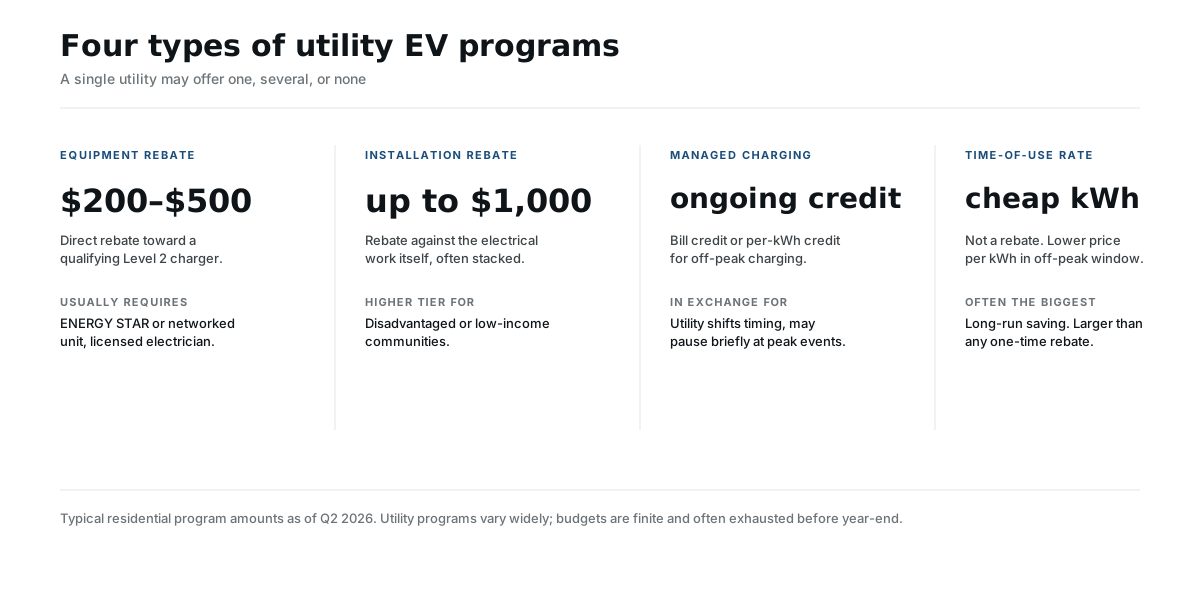
Four types of utility EV programs at a glance. Equipment rebates typically pay $200 to $500 toward a qualifying Level 2 charger and usually require an ENERGY STAR-certified or networked unit installed by a licensed electrician. Installation rebates can reach roughly $1,000 against the electrical work itself, with higher amounts in disadvantaged or low-income communities. Managed charging and demand-response programs pay an ongoing bill credit or per-kWh credit in exchange for letting the utility shift your charging to off-peak hours or pause it briefly during peak events. Time-of-use rate plans are not a rebate but charge much less per kWh in an overnight window, and often deliver the largest long-run saving.

Equipment rebates. A direct rebate toward the purchase of a qualifying Level 2 charger, commonly in the $200-$500 range. These usually require an ENERGY STAR-certified or networked unit and installation by a licensed electrician.

Installation rebates. A rebate against the electrical work itself, sometimes stacked on top of the equipment rebate. In utilities with strong funding these can reach roughly $1,000, and amounts are frequently higher in designated disadvantaged or low-income communities.

Managed charging and demand-response payments. The utility pays an ongoing bill credit, or a per-kWh credit, in exchange for letting it shift your charging to off-peak hours or pause it briefly during peak events. You plug in normally; the software handles timing. Payments are typically modest but recurring.

Time-of-use (TOU) rate plans. Not a rebate, but a rate structure that charges much less for overnight electricity. An EV owner who schedules charging into the cheap window can cut cost per mile substantially. This is often the single largest long-run saving, larger than any one-time rebate.

Real example programs (as of Q2 2026)

These are named programs we confirmed from utility and program sources. Amounts and availability change; verify current terms directly.
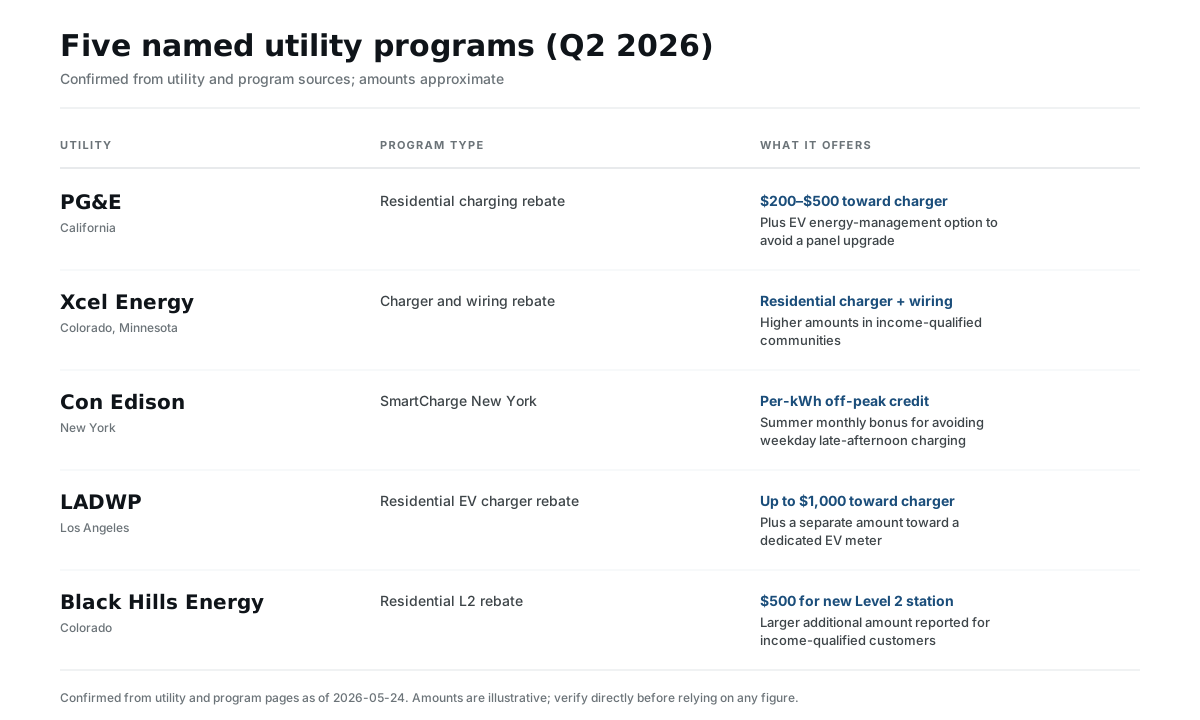
Five named residential utility EV programs as of Q2 2026. PG&E in California offers a residential charging rebate in the $200 to $500 range plus an EV energy-management option that balances charger and home load to help avoid a panel upgrade. Xcel Energy in Colorado and Minnesota offers a residential charger and wiring rebate with substantially higher amounts in income-qualified communities. Con Edison in New York runs SmartCharge New York, paying a per-kWh credit for off-peak charging plus a summer monthly bonus for avoiding weekday late-afternoon charging. LADWP in Los Angeles offers a residential EV charger rebate up to $1,000 plus a separate amount toward a dedicated EV meter. Black Hills Energy in Colorado offers a $500 rebate for a new Level 2 station with a larger additional amount reported for income-qualified customers. Amounts are approximate and illustrative; verify directly with the utility before relying on any figure.

The pattern across these is consistent: a one-time hardware or install rebate, plus an ongoing incentive to charge off-peak, plus extra money for lower-income or disadvantaged-community customers. That last point matters; the largest utility incentives are frequently reserved for income-qualified households or designated communities, so it is always worth checking whether you qualify for the higher tier.

Why utilities are investing

Utilities want EV charging load, but unmanaged load is a problem. If every EV in a neighborhood begins charging at 6 p.m. when people get home, that simultaneous draw stacks on top of the existing evening peak, the most expensive and most strained part of the day for the grid. Meeting that peak means building or buying additional generation and distribution capacity, which is costly.

Off-peak charging is the opposite: it fills the overnight valley when demand is low and capacity sits idle. Paying customers a modest incentive to shift charging into that window is far cheaper than building peak capacity to handle unmanaged charging. That is why so many programs reward timing and enrollment in managed charging rather than just handing out hardware rebates. The utility is buying predictability.
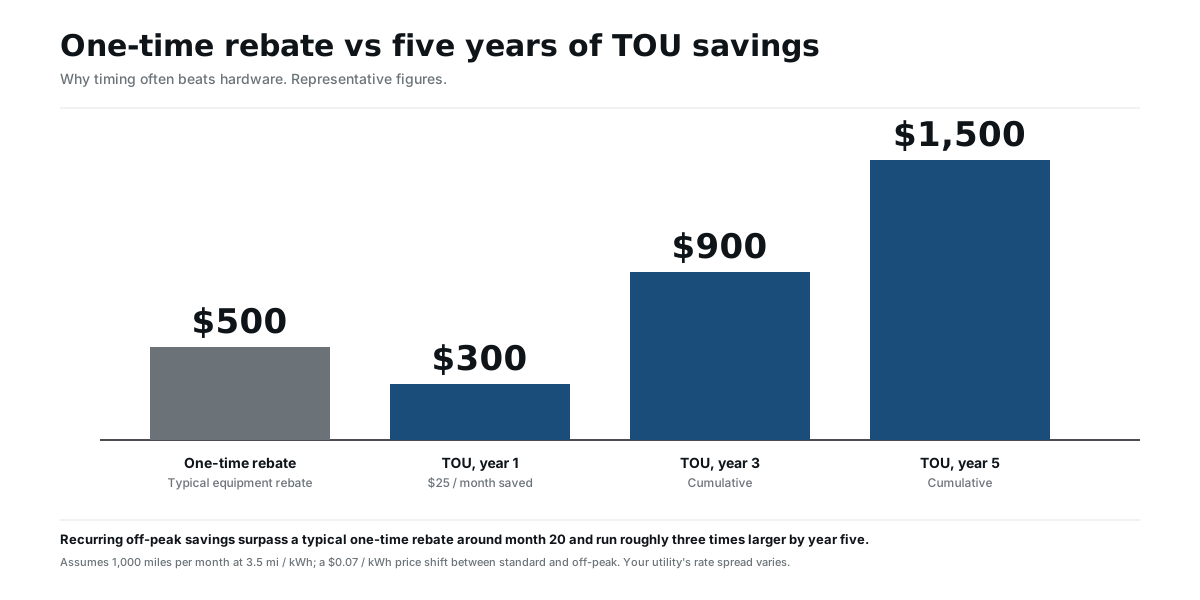
A representative comparison of a single $500 one-time utility rebate against the cumulative value of a time-of-use rate plan that saves roughly $25 per month on EV charging electricity. The rebate is $500 paid once. The TOU plan yields $300 by year one, $900 by year three, and $1,500 by year five. Recurring off-peak savings surpass a typical one-time rebate around month 20 and run roughly three times larger by year five. Assumes 1,000 miles per month at 3.5 miles per kWh and a $0.07 per kWh shift between standard and off-peak rates; your utility's spread varies.

That math is why the time-of-use rate, not the hardware rebate, is usually the most valuable thing your utility offers an EV owner. It is also the one most people forget to ask for.

How this layer interacts with federal and state incentives

Utility rebates generally stack with the federal 30C tax credit and any state program, but with an important catch: a rebate you receive reduces the cost basis used to calculate the federal credit. If a utility covers part of your equipment or install cost, the 30% federal credit applies only to what you actually paid out of pocket, not to the portion the utility covered. Claiming the federal credit on costs someone else paid is the most common stacking error.

The federal 30C residential credit (30% of cost, up to $1,000, gated to eligible census tracts) is scheduled to terminate for property placed in service after June 30, 2026 under the One Big Beautiful Bill Act. As that federal layer goes away, utility programs become a larger share of the available incentive. For the full federal picture and the eligibility gotchas, see our dedicated article, Federal 30C EV Charger Tax Credit Expires June 30, 2026.

How to find your utility's programs
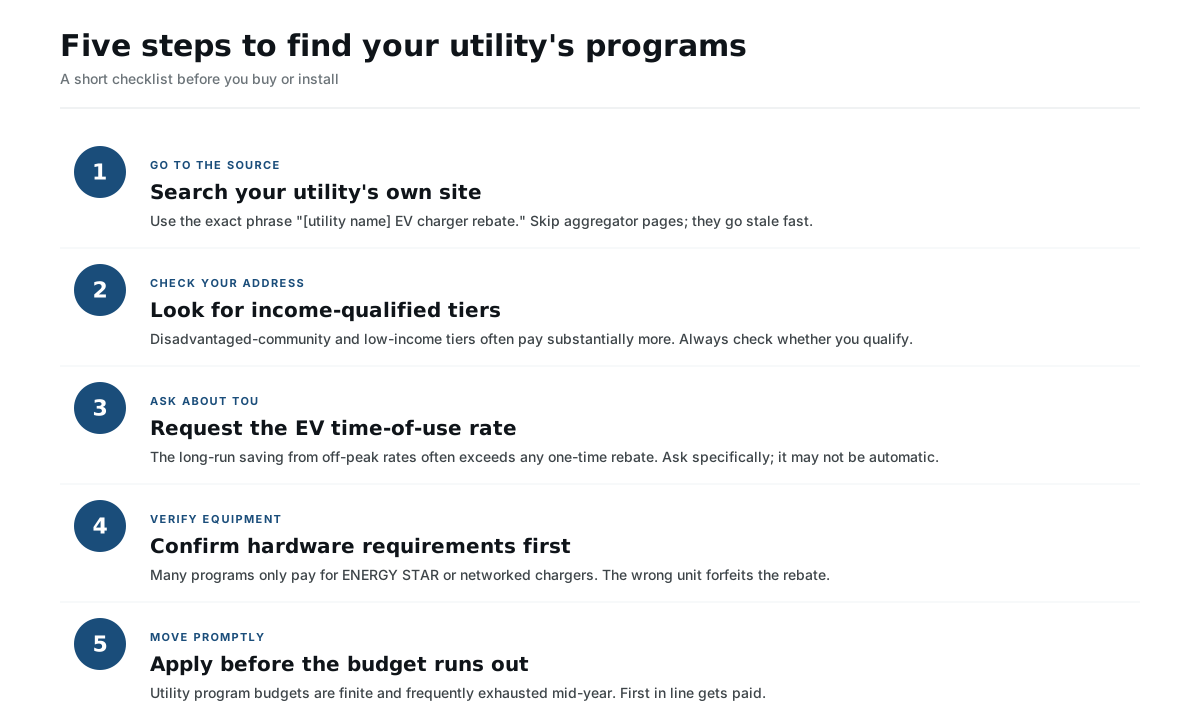
A five-step checklist for finding your utility's EV charging programs. Step 1, go to the source: search the exact phrase your utility name plus EV charger rebate and use the utility's own site, not an aggregator, because aggregator pages go stale fast. Step 2, check your address: look for income-qualified tiers, since disadvantaged-community and low-income tiers often pay substantially more. Step 3, ask about TOU: request the EV time-of-use rate, because the long-run saving from off-peak rates often exceeds any one-time rebate and it may not be automatic. Step 4, verify equipment: confirm hardware requirements first, since many programs only pay for ENERGY STAR or networked chargers and the wrong unit forfeits the rebate. Step 5, move promptly: apply before the budget runs out, because utility program budgets are finite and frequently exhausted mid-year.

  1. Go to the source. Search the exact phrase "[your utility name] EV charger rebate" and use the utility's own site, not an aggregator. Aggregator pages go stale fast.
  2. Check your address. Disadvantaged or income-qualified community tiers often pay substantially more; always check whether you qualify for the higher tier.
  3. Ask about TOU. Request the EV time-of-use rate. The long-run saving from off-peak rates often exceeds any one-time rebate.
  4. Verify equipment. Confirm hardware requirements before you buy. Many programs only pay for ENERGY STAR-certified or networked chargers, and the wrong unit forfeits the rebate.
  5. Move promptly. Utility program budgets are finite and frequently exhausted before year-end.

For the full research process across all three incentive layers, see How to Find State and Utility Incentives.


Last factually verified: 2026-05-24 against program pages and descriptions from PG&E, Xcel Energy, Con Edison (SmartCharge New York), LADWP, and Black Hills Energy. Utility rebate amounts and eligibility change frequently, often mid-year; figures here are approximate and illustrative. Verify current terms directly with your utility before relying on any amount.
Last updated May 24, 2026. We refresh this article when incentive amounts, regulations, or product availability changes.

Share:Email
For homeowners

Bidirectional Charging in 2026: What V2H, V2G, and V2L Actually Mean for Homeowners

Bidirectional charging covers three distinct things: V2L (run appliances from the car), V2H (power your house through a backup panel), and V2G (sell energy back to the grid). As of Q2 2026, V2H is genuinely buyable from GM, Tesla, and a handful of others, but Ford has discontinued its Home Integration System. V2L is common and cheap. V2G remains rare and depends on your utility. Expect $3,500 to $15,000 installed for a real V2H setup.

Updated May 20267 min read
For both

Federal 30C EV Charger Tax Credit Expires June 30, 2026: What to Do With 55 Days Left

The 30C credit terminates June 30, 2026 under the One Big Beautiful Bill Act. Residential: 30% up to $1,000. Commercial: 6% base or 30% with prevailing wage, up to $100,000 per port. Tax-exempt entities including churches and nonprofits claim via elective pay. Two disqualifiers kill most claims: eligible census tract requirement and 'placed in service' means operational, not contracted.

Updated May 202611 min read
For homeowners

NACS Is the Standard Now: What Connector Unification Means for EV Buyers

The North American Charging Standard (NACS), originally Tesla's proprietary connector, is now the open SAE J3400 standard. As of Q2 2026, essentially every automaker selling EVs in North America has adopted it, and the major non-Tesla brands have shipped NACS adapters that open the Supercharger network to their owners. For home charging, this barely matters: Level 2 at home is unchanged, and adapters bridge the gap in both directions.

Updated May 20267 min read

Want the complete homeowner's guide?

The Complete Homeowner's Guide to EV Charging covers everything from whether you need Level 2 to installation, incentives, and the best brands. Free — just enter your email.

The Weekly EV Charging Briefing

One email a week. Just EV news that matters.

By subscribing you agree to our Privacy Policy. Unsubscribe any time.