The federal 30C tax credit used to be one layer, but it ended June 30, 2026. Depending on where you live, your state and your utility may still offer rebates, bill credits, or demand-response payments, and those local programs are now the ones worth chasing. The hard part is not that the money is hidden; it is that programs come and go, run out of funding mid-year, and bury the eligibility rules that decide whether you actually qualify. This is a method for finding what applies to you and confirming it is real before you spend anything.
A note up front on the federal piece, because it changes what is left below.
The federal 30C credit has ended. The Section 30C federal tax credit for home EV charger installation ended June 30, 2026 under the One Big Beautiful Bill Act (Public Law 119-21). Equipment had to be placed in service (ready and available for use) by that date; passing a local inspection is a local-law matter, not part of the federal definition, and the credit applied only if the home was in an IRS-designated eligible census tract. It is no longer available for a project starting now. The state and utility programs below have their own, separate timelines and did not expire with the federal credit. See our federal 30C explainer for the details.
The four types of incentive worth chasing
1. State rebates for charger purchase or installation
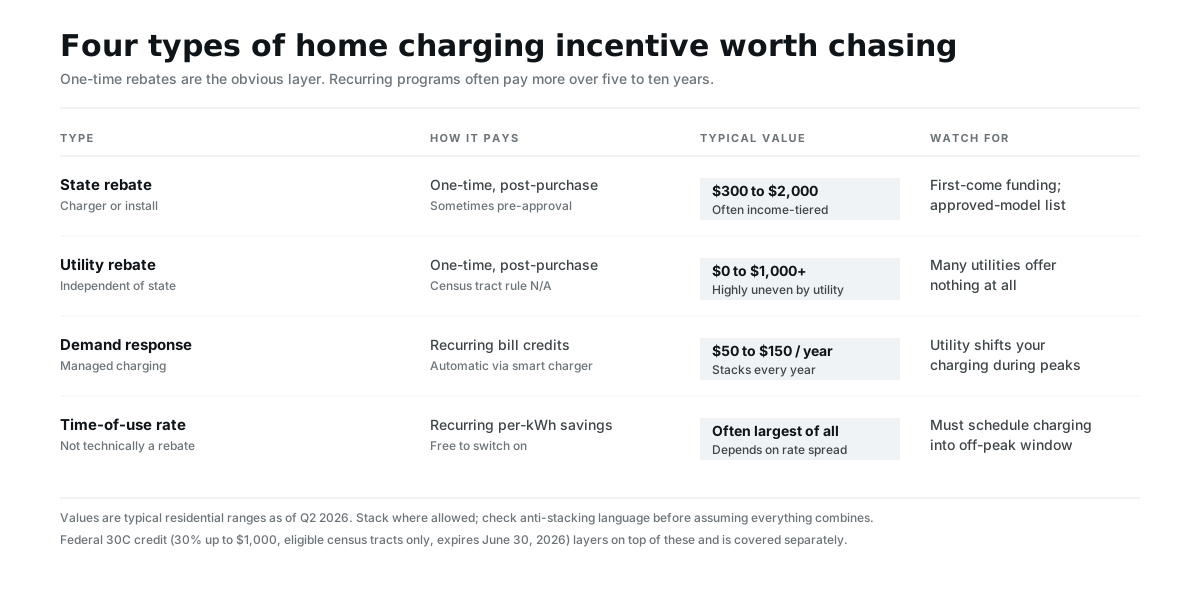
Some states offer direct rebates for buying or installing a home Level 2 charger. Where they exist, they commonly run a few hundred dollars to a couple thousand, and they usually carry one or more of these conditions:
- Income-qualified tiers, with larger amounts for lower-income households
- Equipment requirements, such as ENERGY STAR certification or an approved-model list
- First-come, first-served funding that can be exhausted partway through a program year
State programs change often, sometimes pause between funding cycles, and differ enormously across states. Rather than quote specific amounts that may be stale by the time you read this, the method below points you to the live databases that track them. Do not assume a program you read about last year is still open.
2. Utility rebates
Your electric utility may offer rebates independent of anything the state does. This is the most uneven category in the country: some utilities offer generous one-time rebates on the charger, the installation, or both, and many offer nothing at all. Utility EV programs never carried the federal census tract restriction, so they remain available now that the federal credit has ended. Many California utilities, for example, offer a few hundred dollars off a qualifying Level 2 charger (as of Q2 2026), but the specific amount and whether it is open varies by utility and by month.
3. Demand-response and managed-charging programs
These pay you for letting the utility shift your charging during high-demand periods. You plug in as usual; the utility may delay the start of a charge or briefly reduce the rate during a peak event. In exchange you get bill credits, commonly in the range of $50 to $150 per year (as of Q2 2026). Many smart chargers (ChargePoint, Emporia, and others) and many EVs enroll and respond automatically, so once you are set up the credits accrue without effort. Recurring money over several years can outweigh a modest one-time rebate.
4. Time-of-use rate plans
Not a rebate, but often the largest dollar effect of all. Utilities with time-of-use pricing charge much less for electricity during overnight off-peak hours than during the evening peak. An EV owner who schedules charging into the off-peak window can cut the electricity cost of driving substantially. We cover the rate math in detail in what home charging actually costs; for now, treat your utility's EV rate plan as part of the incentive picture, because switching to it is usually free and often saves more per year than a one-time rebate.
Where to look, in order
Step 1: The AFDC Laws and Incentives database
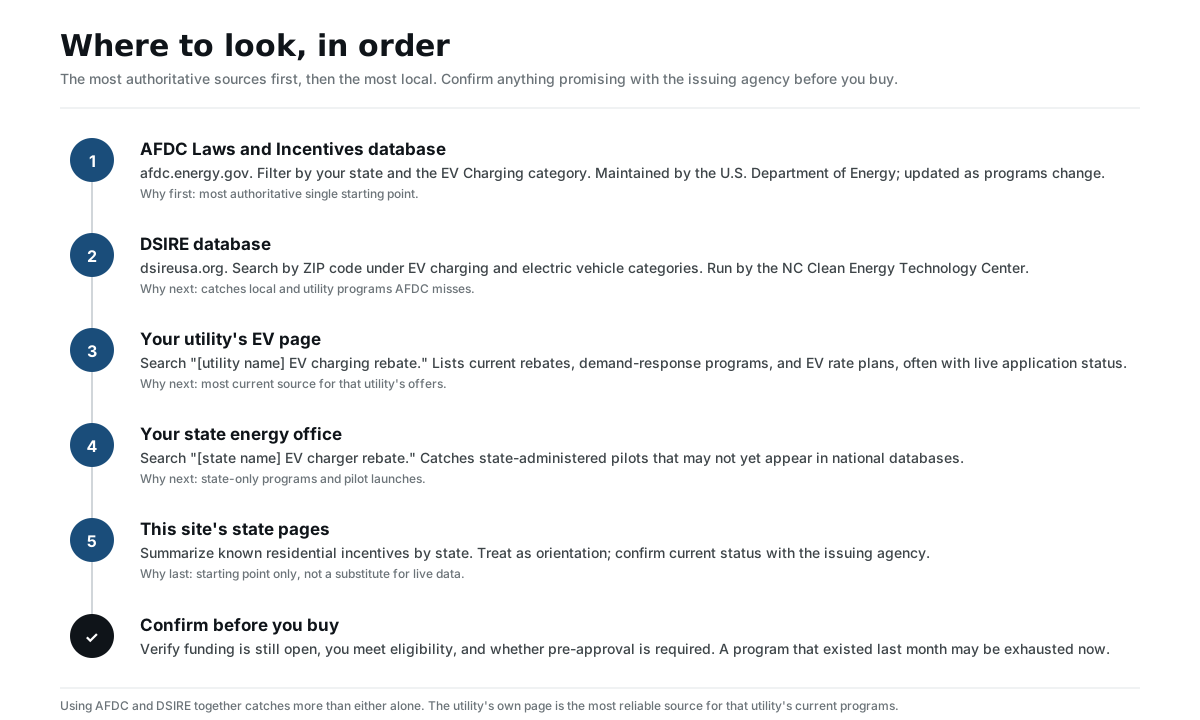
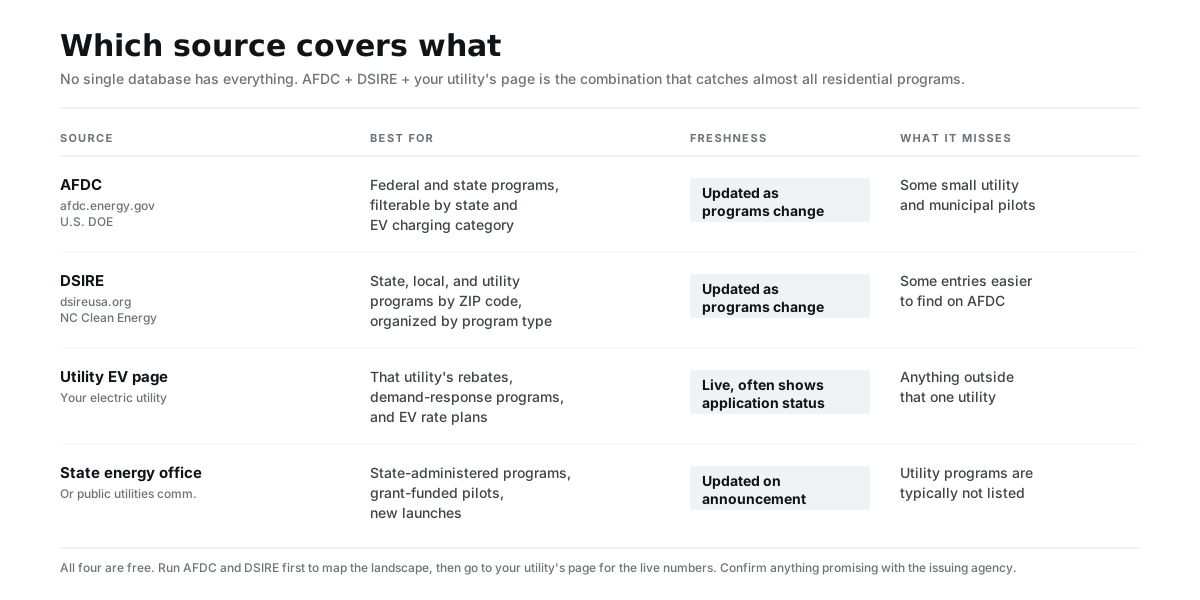
The U.S. Department of Energy's Alternative Fuels Data Center maintains a searchable, filterable database of federal and state EV laws and incentives. Go to afdc.energy.gov, open the Laws and Incentives tool, and filter by your state and by the "EV Charging" or "Charging Infrastructure" category. This is the most authoritative single starting point because it is maintained by a federal agency and is updated as programs change. It will surface state programs and many utility programs you would not find by guessing.
Step 2: The DSIRE database
DSIRE (the Database of State Incentives for Renewables and Efficiency), operated by the North Carolina Clean Energy Technology Center, is the other comprehensive national database. It overlaps with the AFDC but is organized differently and sometimes lists local and utility programs the AFDC misses. Search dsireusa.org by your ZIP code and look under EV charging and electric vehicle categories. Using both databases catches more than either alone.
Step 3: Your utility's EV page
Search "[your utility name] EV charging rebate" or "[your utility name] electric vehicles." Most utilities with a program maintain a dedicated EV page that lists current rebates, demand-response programs, and EV rate plans in one place, often with the live application status. If you are not sure which utility serves you, the EIA maintains a utility territory lookup, or check a recent bill. The utility's own page is the most current source for that utility's offers, more so than any third-party aggregator.
Step 4: Your state energy office
States with active programs usually list them on the state energy office or public utilities commission website. Search "[state name] EV charger rebate" or "[state name] electric vehicle incentives." This catches state-administered programs and grant-funded pilots that may not yet appear in the national databases.
Step 5: This site's state pages
The state pages on this site summarize known residential and commercial EV incentives by state. They are a useful orientation, but program details change frequently, so treat them as a starting point and always confirm current status with the issuing agency or utility before relying on a number. For the structural overview of utility-side EV programs specifically (rebates, managed-charging credits, EV-specific tariffs, demand-response credits), see Utility EV Charger Rebates: A Growing Incentive Layer.
What to verify before you apply or buy
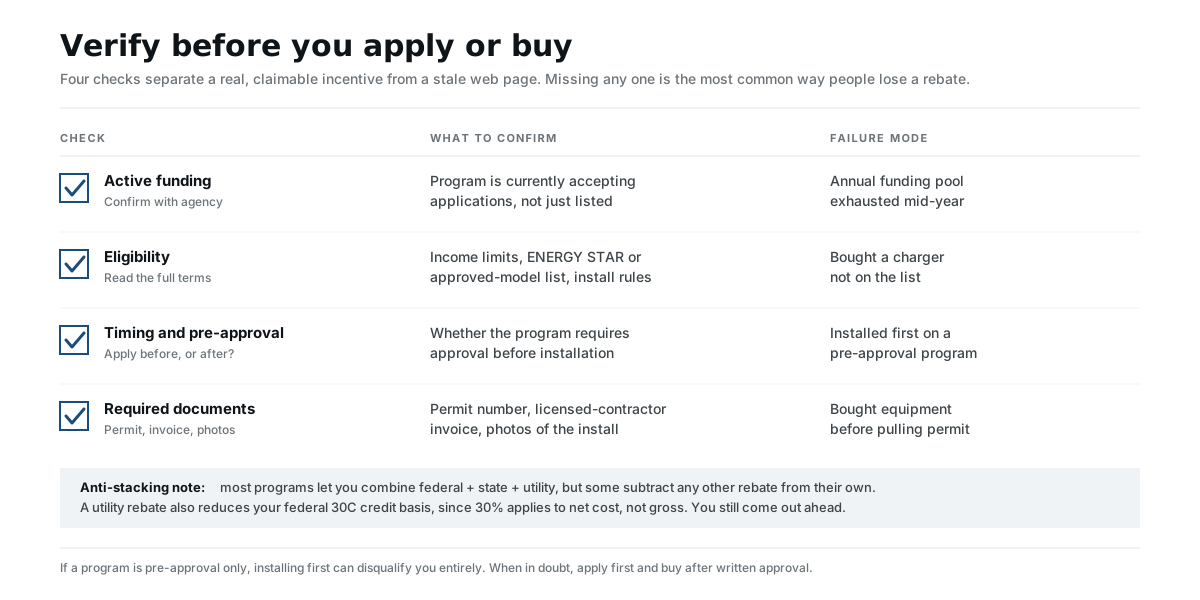
Four checks separate a real, claimable incentive from a stale web page.
How these incentives stack
Multiple incentives can often be combined: a state rebate, a utility rebate, and enrollment in a demand-response program and a TOU rate are not mutually exclusive in most markets. (The federal 30C credit used to stack here too, but it ended June 30, 2026 and is no longer part of the stack.)
Two rules govern the stack:
- Some programs have anti-stacking provisions. The most common is a requirement that you subtract any other rebate you have already received for the same equipment. Read each program's terms; do not assume everything stacks freely.
- A rebate can reduce another program's basis. While the federal 30C credit was available, it was calculated on what you actually paid, so a utility rebate that covered part of the charger reduced the federal basis. The same logic applies to some state programs: if one incentive is calculated on net cost, another rebate lowers the amount it applies to, so the combined total is less than simply adding the two headline numbers together.
California note: California has the most active set of utility EV programs in the country alongside some of the highest electricity rates, which makes the utility layer and the EV rate plan especially valuable here. Major utilities (PG&E, SCE, SDG&E) run EV-specific rate plans and various rebate or managed-charging programs that change on regulatory schedules. Note that some widely cited California "clean energy" rebates, such as TECH Clean California, fund heat pumps rather than EV chargers; do not assume a program name implies charger eligibility. Confirm the specific program covers home EV charging before you count on it. (The federal 30C credit, which had its own eligible census tract rule, ended June 30, 2026, so the California utility programs now stand on their own.)
The realistic picture
For a homeowner in a state with active programs, stacking a state and utility rebate can bring a typical $1,200 to $1,500 installation down by several hundred dollars (as of Q2 2026). With the federal 30C credit gone, the state and utility layer now does all the work. For a homeowner in a state with minimal programs, the realistic outcome may be a single utility rebate, a TOU rate plan, or nothing beyond the base cost. Both outcomes are common. The only way to know which one is yours is to run the search above for your specific address and utility.
Start with the AFDC and DSIRE databases, confirm anything promising with the issuing agency or your utility, and verify funding is still open before you buy.
Last factually verified: 2026-05-24 against the U.S. Department of Energy Alternative Fuels Data Center (AFDC) Laws and Incentives database, the DSIRE database operated by the North Carolina Clean Energy Technology Center, California utility EV program pages (PG&E, SCE, SDG&E), the TECH Clean California program scope, and the verified federal 30C facts in our dedicated 30C deadline article. Program specifics change frequently; we log the verification date so you know whether this is current research or a stale page.