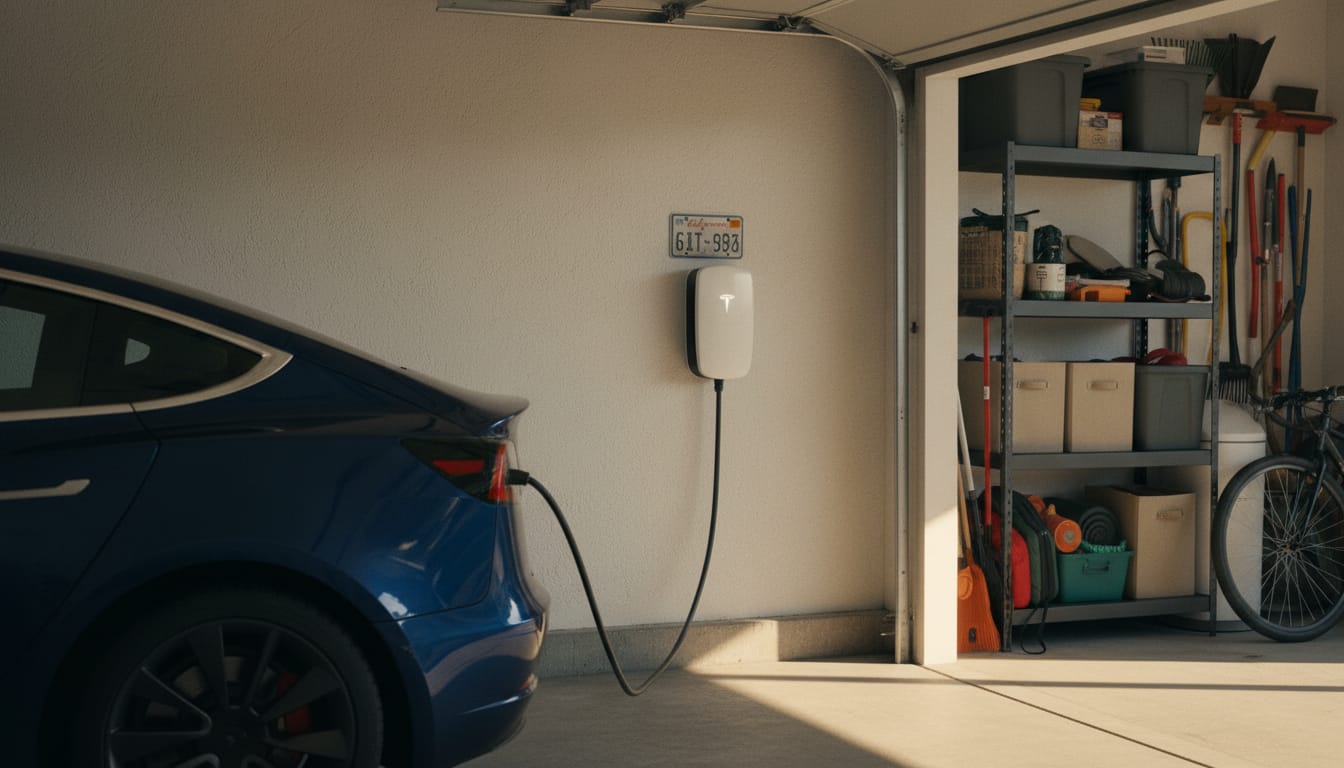
The home EV charger market has matured. Most chargers from established brands work reliably, and the differences between them have less to do with raw charging speed than with features, connector type, app quality, and which company you trust to keep its software running. This is an honest, independent look at the options worth considering in 2026.
We have no affiliate or referral relationship with any manufacturer here. We do not rank products by who pays us, and no one does, because we take no such arrangements. The specs below were verified against primary sources in May 2026. Prices move constantly, so we date our figures and tell you to check current pricing rather than pretend a number is fixed.
What to settle before you compare brands
Brand matters less than fit. Six questions narrow the field before the model names matter:
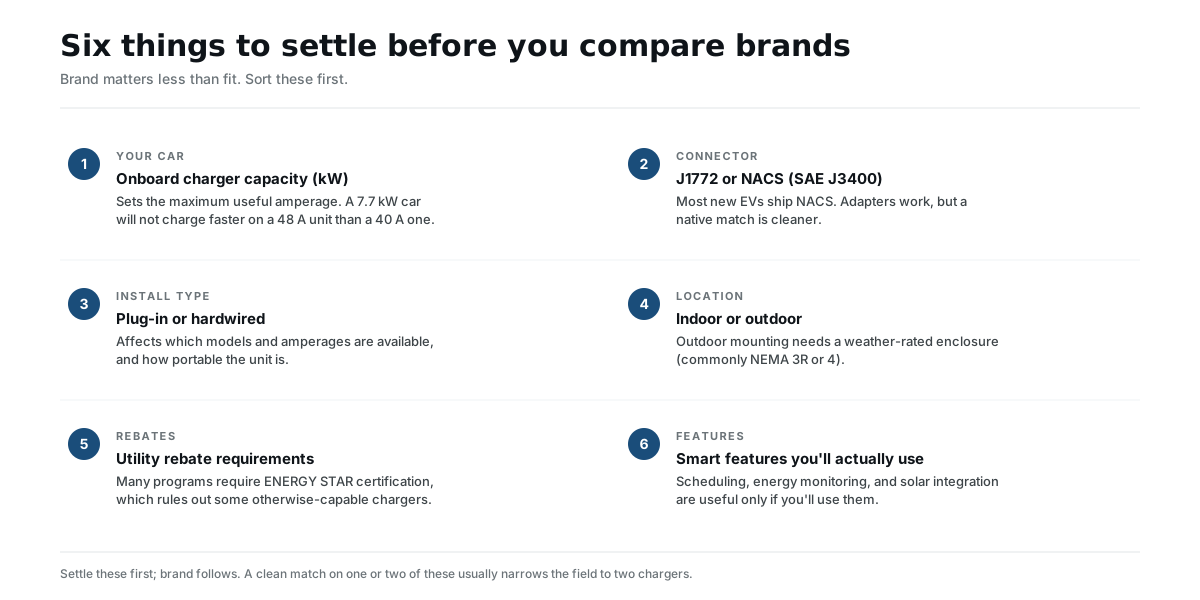
The NACS-versus-J1772 question is the one most likely to evolve over the next two or three years; see the NACS note below. With these settled, here are the chargers worth a look.
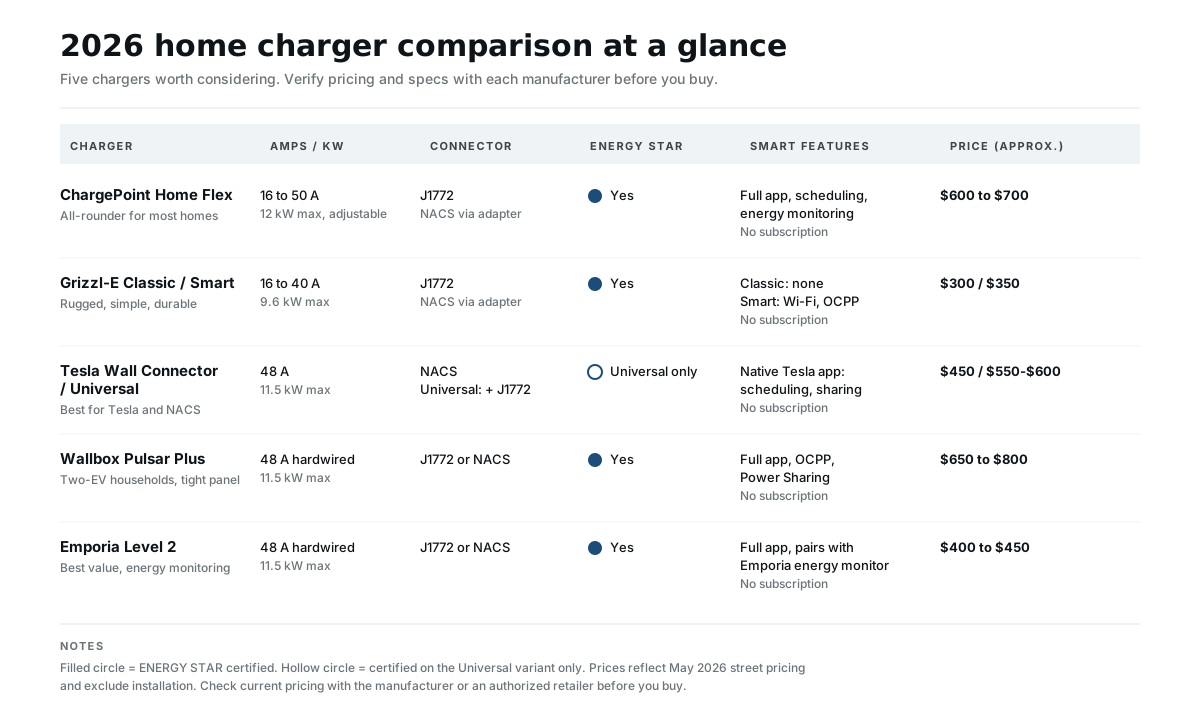
The profiles below add the context the table cannot: where each charger earns its place, where it falls short, and who it actually fits.
ChargePoint Home Flex
Best for: most homeowners who want a reliable, fully featured charger.
Adjustable amperage (16 to 50 amps, with selectable steps), 12 kW maximum, ENERGY STAR certified, indoor/outdoor rated, with a mature app for scheduling and energy monitoring and no subscription for home features. It is offered in both J1772 and NACS versions, and ChargePoint offers a conversion kit for eligible existing units, so NACS cars are covered without an adapter. The adjustable amperage is genuinely useful: you match the charger to your circuit rather than forcing a service upgrade.
What it lacks: built-in cable management, and the app has occasionally shown false offline status. Pricing has historically run in the $600 to $700 range; check current pricing. Full write-up: see our ChargePoint Home Flex review.
Grizzl-E Classic and Smart
Best for: buyers who want simplicity and durability without paying for features they will not use.
The Classic is a rugged 40-amp hardwired or plug-in unit (adjustable down to 16 amps) built to survive harsh conditions, with no app and no subscription. The Smart and Classic Connect variants add Wi-Fi, scheduling, energy monitoring, and OCPP support, still with no subscription. Both are outdoor rated. Pricing has run roughly $300 for the Classic and around $350 for the connected versions; check current pricing.
The open OCPP support on the smart models is a quiet strength: it reduces the risk of being stranded if a vendor changes its software strategy.
Tesla Wall Connector and Universal Wall Connector
Best for: Tesla and NACS households.
The Wall Connector is a 48-amp (11.5 kW) hardwired unit that integrates natively with Tesla vehicles and the Tesla app: scheduling, charge limits, and energy tracking all run through the app you already use, with no separate account. It supports power sharing across up to six units on one circuit, carries a four-year residential warranty, and has a 24-foot cable.
There are two models. The standard Wall Connector is NACS-only and not ENERGY STAR certified, so non-NACS cars need an adapter and some rebates may not apply. The newer Universal Wall Connector adds a built-in J1772 connector and is ENERGY STAR certified, which makes it a real option for mixed-brand households. Tesla lists the Wall Connector at $535 and the Universal Wall Connector at $600 (as checked August 11, 2026); check current pricing. Full write-up: see our Tesla Wall Connector review.
Wallbox Pulsar Plus
Best for: households with two EVs or limited panel capacity.
The Pulsar Plus is compact and supports Power Sharing, so two units on one circuit automatically balance load between two cars. For a two-EV household on a tight panel, that can avoid a costly electrical upgrade. The current unit reaches 48 amps (11.5 kW) when hardwired, is ENERGY STAR certified, supports OCPP, and is now available with either a J1772 or a NACS connector.
The app has had occasional firmware update issues, and a power-sharing setup means buying two units, so price the full configuration. Pricing has run roughly $650 to $800 per unit; check current pricing. Full write-up: see our piece on Wallbox, JuiceBox, and the rest.
Emporia Level 2 EV Charger
Best for: buyers who want whole-home energy monitoring, or strong specs at a lower price.
Emporia's charger reaches 48 amps (11.5 kW) when hardwired, is ENERGY STAR and UL listed, and comes in J1772 or NACS versions. It pairs with Emporia's home energy monitor, so if you already track solar and household loads on that system, charging data joins the same dashboard. It has historically undercut the Home Flex and Wallbox on price while matching their core capabilities. Pricing has run around $400 to $450; check current pricing.
Lined up on a single dollar axis, the price spread across these five contenders is wider than it first looks.
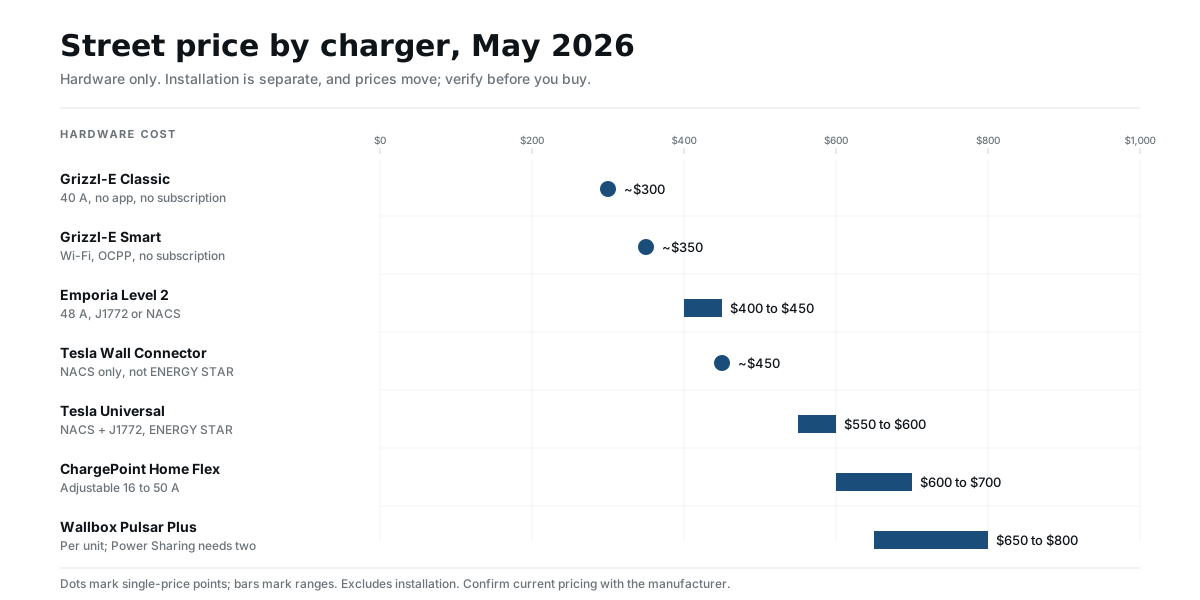
The cheapest credible Level 2 option is roughly half the price of the most expensive one, and the gap is mostly about features, not capability. The 48-amp chargers all hit the same ceiling.
The 2026 NACS decision tree: native charger, Wall Connector, or adapter
By 2026, most new EV models sold in North America (Ford, GM, Rivian, Hyundai, Kia, and nearly every other major automaker) ship with a native NACS (SAE J3400) port instead of J1772. That has created a real question for anyone shopping for a home charger this year: do you need NACS-specific hardware, or does your existing (or planned) J1772 charger still work?
Some of the confusion traces to a different adapter entirely. The free NACS adapters automakers handed out over the past two years let non-Tesla drivers use Tesla Superchargers on road trips: a DC fast-charging adapter, increasingly a paid accessory rather than a freebie as that novelty period ends. See our connector unification piece for how that policy has shifted. That is a public fast-charging problem. It has nothing to do with what charger belongs on your garage wall, where you are pairing one car with one AC charger for years at a time.
For home charging, the actual decision comes down to three paths:
You are an all-Tesla household. Buy the standard Tesla Wall Connector. It is NACS-only, cheaper than the Universal version, and there is no reason to pay for a J1772 port you will not use.
You have a Tesla plus a non-Tesla EV, or you expect to add one. Buy the Tesla Universal Wall Connector, or a NACS-connector version of the ChargePoint Home Flex, Wallbox Pulsar Plus, or Emporia Level 2. All four now ship in dedicated NACS versions at little or no price premium over their J1772 counterparts, so there is no adapter to manage day to day.
You drive a non-Tesla NACS car (a 2025-or-newer Ford, GM, Rivian, Hyundai, or similar) and have no Tesla in the household. This is where most of the 2026 confusion lands, and the honest answer is that a J1772 charger works fine. A J1772-to-NACS AC adapter is a small, inexpensive piece of hardware that plugs in once and stays in place, not something you carry around or swap per session, and it costs roughly $40 to $160 depending on amperage and brand. That is a different product from the pricier, higher-stakes DC fast-charging adapters covered above; the AC version has no meaningful reliability downside for stationary home use, as long as you buy a UL- or ETL-listed adapter rather than the cheapest unlisted option, the same rule that applies to the chargers themselves. Buying a J1772 unit (the Grizzl-E Classic, for instance, at roughly $300) and adding an adapter is usually the cheapest path to a working setup. If you would rather skip the adapter entirely, the NACS-native version of any charger in this guide does the same job without it, typically for about the same money as the J1772 version.
You drive an older CCS1 or J1772-port EV. NACS is not a factor. Buy any J1772 charger from this list and ignore the connector question.
The only genuine trade-off is upfront hardware cost versus a one-time adapter purchase; charging speed and reliability are identical either way once the adapter is seated. Buy for the car you have, and if you are choosing between an otherwise-equal J1772 and NACS version of the same charger, pick the one that matches your primary car's port today rather than guessing at what you will drive in three years.
What to avoid
- Generic or unbranded chargers from unknown makers. Many fail UL listing requirements and may not pass inspection.
- Discontinued or unsupported models. App and firmware support vanish when a brand exits. The clearest cautionary tale is the Enel X JuiceBox, below.
- Chargers that gate basic features behind a subscription. Read the fine print before buying.
Why the Enel X JuiceBox is no longer on this list
Older buying guides, including an earlier version of this one, recommended the JuiceBox for its app and utility demand-response partnerships. That advice is now obsolete. Enel X Way wound down its North American operations (effective in late 2024), and the connected services behind the JuiceBox were shut off; the companion app stopped working for most users in 2025. The hardware still charges a car as a basic Level 2 unit, but the smart features and support are gone. We no longer recommend buying one. If you already own a JuiceBox, treat it as a basic charger. We cover the details in our Wallbox, JuiceBox, and the rest write-up.
The bottom line
There is no single right charger for everyone. The right one usually follows from one of five household situations.
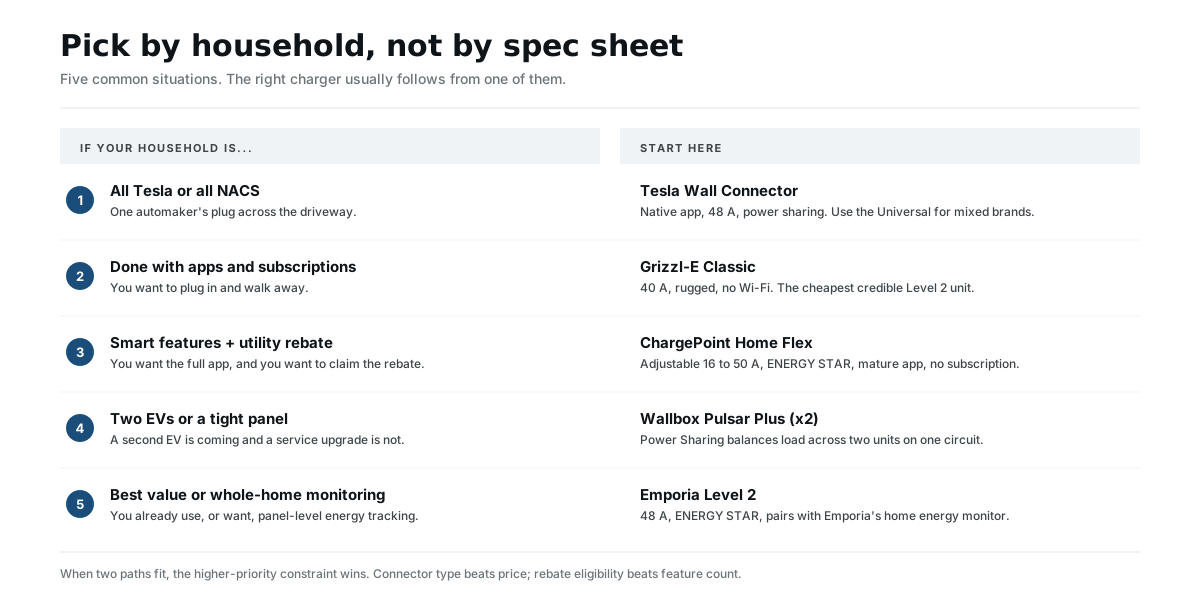
When two of these paths fit at once, sort by the constraint that's hardest to change later: connector type beats price, and rebate eligibility beats feature count. Confirm current pricing and the latest specifications with the manufacturer before you buy. For deeper detail on the top picks, see our reviews of the ChargePoint Home Flex, the Tesla Wall Connector, and the broader Wallbox, JuiceBox, and the rest field.
Last factually verified: 2026-09-02 against ChargePoint, Tesla, Wallbox, Grizzl-E, and Emporia product and support documentation, plus reporting on the Enel X Way North American shutdown (InsideEVs, Consumer Reports) and current J1772-to-NACS adapter pricing (9to5Toys, EV Digest, multiple adapter retailers). Pricing changes frequently; verify current pricing directly with each manufacturer or an authorized retailer. We have no affiliate or referral relationship with any charger manufacturer; recommendations reflect independent judgment.