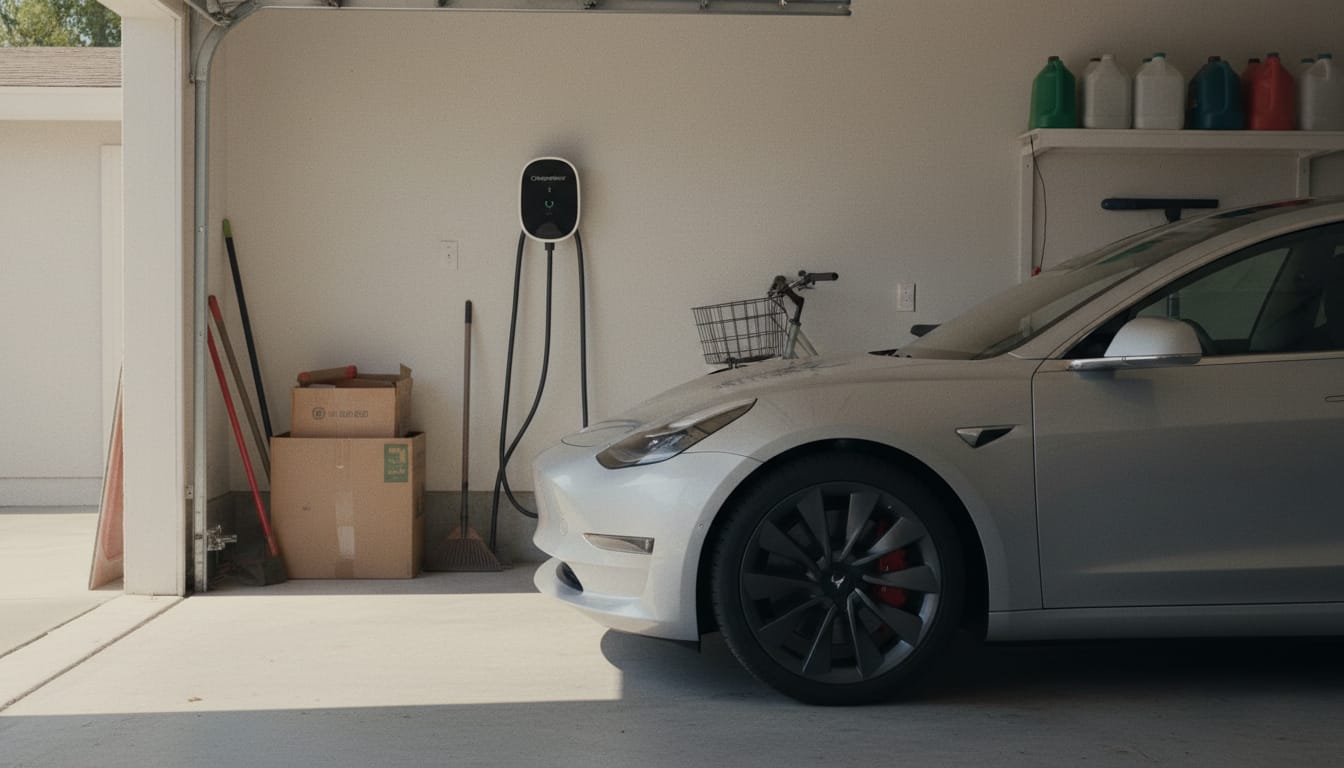
The Tesla Wall Connector is a 48-amp Level 2 hardwired charger built to integrate with Tesla vehicles and the Tesla app. For Tesla owners, it is the natural pick. For everyone else, the answer has gotten more interesting, because Tesla now sells two distinct products under similar names, and the difference matters.
This is an independent review. We have no affiliate or referral relationship with Tesla or any other manufacturer, and the specs below were verified against Tesla's own documentation in May 2026.
Two products, one name to watch
There are two current home units:
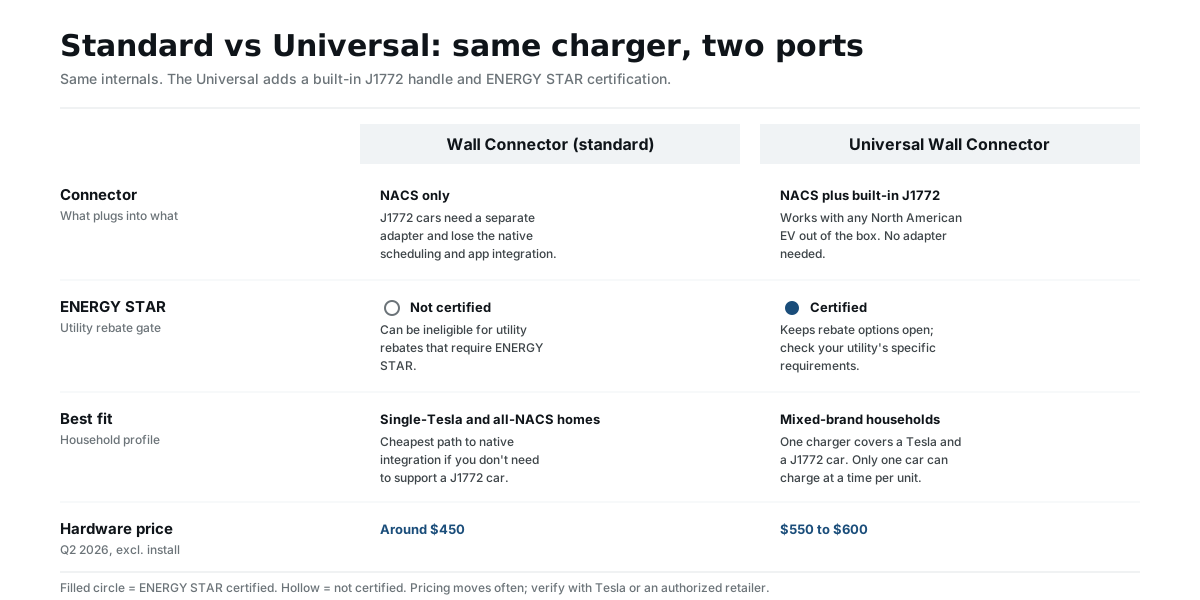
- The Wall Connector (Gen 3): a NACS-only charger. This is the long-standing model.
- The Universal Wall Connector: the same charger with a built-in J1772 connector alongside the NACS handle, so it works with any North American EV without a separate adapter. It is also ENERGY STAR certified, which the standard model is not.
If you have a mixed-brand household or expect to, the Universal model is the one to look at. If you are all-Tesla or all-NACS, the standard Wall Connector is cheaper and does everything you need.
What works well for Tesla and NACS owners
App integration is the biggest advantage. The Wall Connector connects to home Wi-Fi and ties into your Tesla account. Charge scheduling, charge limits, and energy tracking live in the Tesla app you already use. There is no second charger app to install, no extra account, and no subscription.
Scheduling coordinated from the car. When you set a departure time in a Tesla, the car and charger can coordinate to finish charging shortly before you leave, which is easier on the battery and lets you target off-peak rates. This works more reliably with the Wall Connector than with third-party hardware because the communication is native.
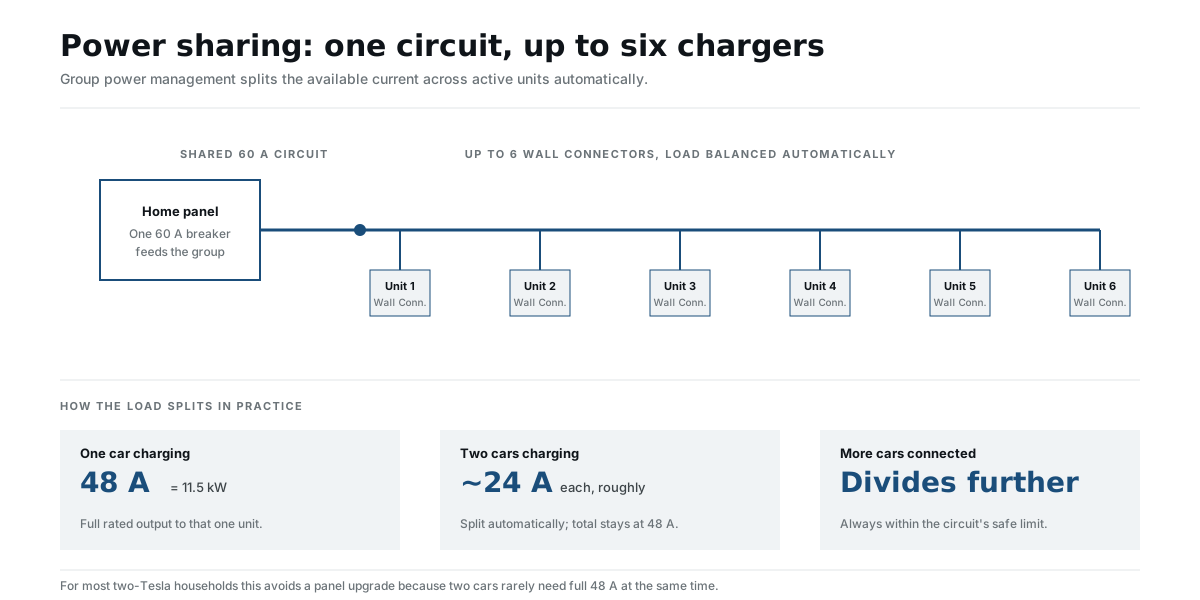
Power sharing across multiple units. Tesla's group power management lets up to six Wall Connectors share a single circuit, automatically balancing load so the total draw stays within safe limits. For a two-Tesla household, or a household adding a second NACS vehicle, this avoids a panel or service upgrade.
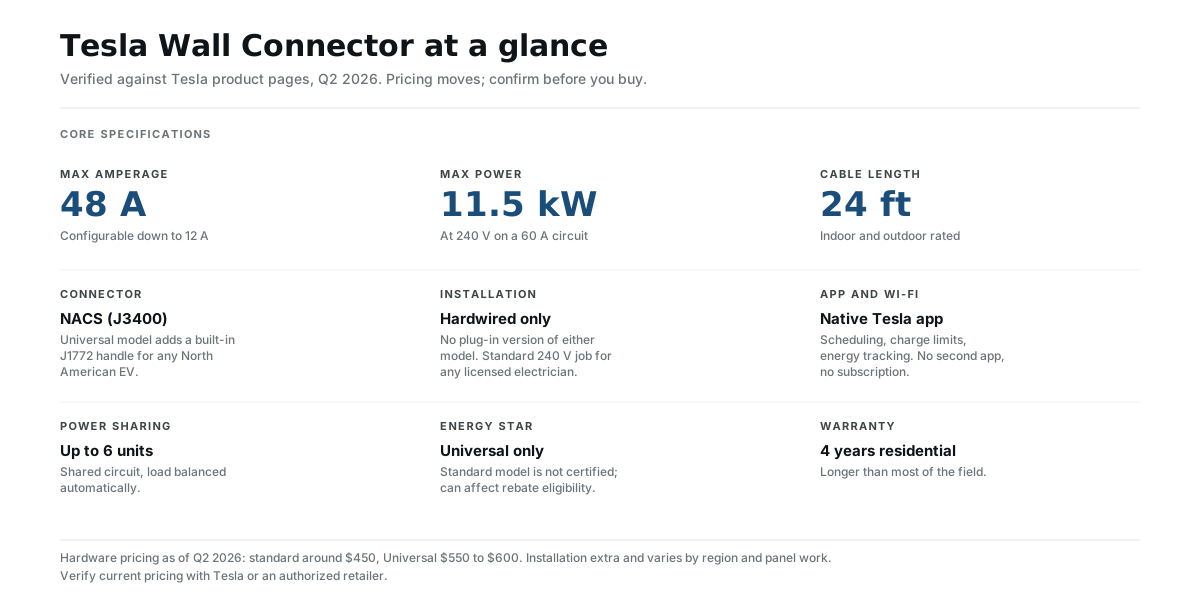
Solid build and a generous warranty. The unit is rated for indoor and outdoor installation, the cable is 24 feet (longer than many competitors), and the residential warranty runs four years, which is longer than most of the field.
The NACS transition works in its favor. Nearly every major automaker has moved to the NACS (SAE J3400) port, and most new EVs now ship with it. A NACS charger that was once a Tesla-only proposition is increasingly a mainstream one.
Specifications
| Spec | Value (as of Q2 2026) |
|---|
| Max amperage | 48A (configurable down to 12A) |
| Max power | 11.5 kW (240V) |
| Connector | NACS (J3400); Universal model adds built-in J1772 |
| Installation | Hardwired (no plug-in version) |
| Cable length | 24 feet |
| Outdoor rating | Indoor/outdoor rated |
| Wi-Fi / app | Yes, via Tesla app, no subscription |
| Power sharing | Up to 6 units on a shared circuit |
| ENERGY STAR | No (standard); Yes (Universal model) |
| Warranty | 4 years (residential) |
As checked August 11, 2026, Tesla lists the Wall Connector at $535 and the Universal Wall Connector at $600. Installation is extra and varies widely by region and panel work. Charger prices change often, so confirm the current figure at Tesla or an authorized retailer before you buy.
What works less well
The standard model needs an adapter for non-NACS cars. If you buy the standard Wall Connector and own a J1772 vehicle, you need a NACS-to-J1772 adapter (sold separately). The car charges fine, but you lose the native scheduling and integration that justify the unit. At that point you have paid for a Tesla charger and get a generic experience. The Universal model solves this with its built-in J1772 connector.
Mixed households still take some thought. If you own a Tesla and a J1772 vehicle, you can cover both with a single Universal Wall Connector, but you cannot charge both cars at once from one connector, and the deeper app integration only applies to the Tesla. Two cars charging simultaneously means a second charger or a power-sharing pair.
Integration is tied to a Tesla account. The app features that make the standard Wall Connector valuable depend on a Tesla owner account. If a future homeowner inherits the charger with a non-Tesla EV, they get a capable charger without the premium software experience.
No plug-in version. Both models are hardwired only. If you wanted the portability of a plug-in unit, this is not it.
ENERGY STAR only on the Universal model. Some utility rebates require ENERGY STAR certification. The standard Wall Connector does not carry it, so it can be ineligible for certain incentives. The Universal model is certified. Check your utility's requirements before buying.
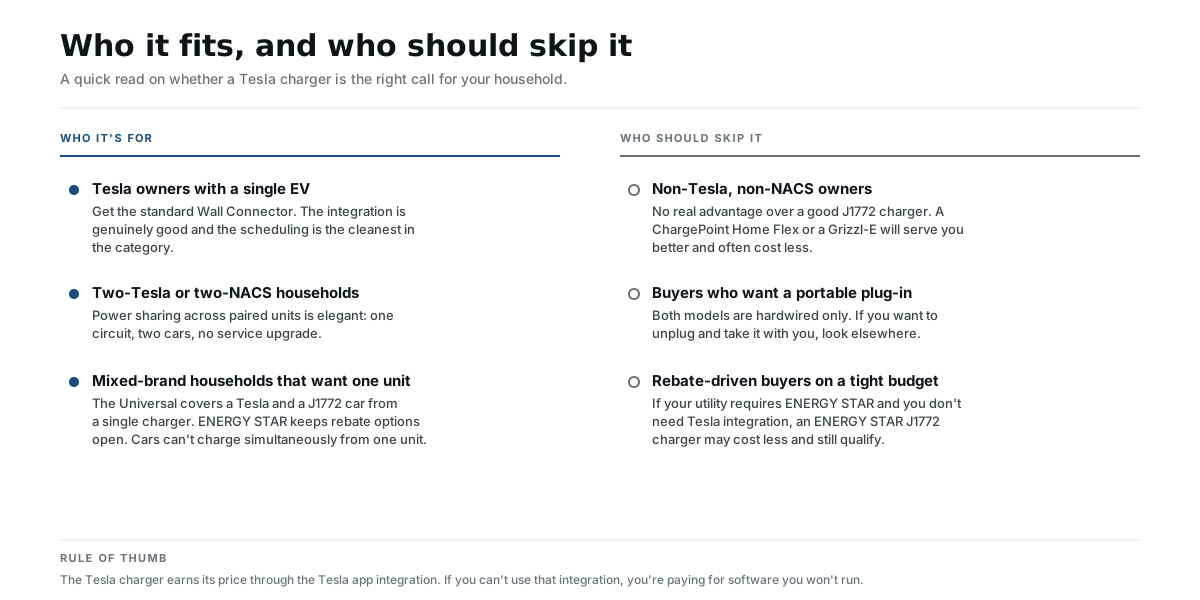
Who it's for
Tesla owners with a single EV. Get the standard Wall Connector. The integration is genuinely good and the scheduling is the cleanest in the category.
Two-Tesla or two-NACS households. Power sharing across paired units is elegant: one circuit, two cars, no service upgrade.
Mixed-brand households that want one unit. The Universal Wall Connector covers a Tesla and a J1772 car from a single charger, and its ENERGY STAR certification keeps rebate options open. You will still want a second charger or a power-sharing arrangement if both cars need to charge at the same time.
Who should skip it
Non-Tesla, non-NACS owners with no Tesla in the household. The standard Wall Connector offers no real advantage over a good J1772 charger, and you would be paying for integration you cannot use. A ChargePoint Home Flex or a Grizzl-E will serve you better and often cost less.
Buyers who want a plug-in, portable charger. Neither model offers that.
Rebate-driven buyers on a tight budget. If your utility requires ENERGY STAR and you do not need Tesla integration, an ENERGY STAR J1772 charger may cost less and still qualify.
Availability and installation
Both models are sold through Tesla and through electricians and retailers that handle Tesla equipment. Installation is a standard hardwired 240V job that any licensed electrician can do; you do not need a Tesla-certified installer. Because there is no plug-in option, budget for a dedicated circuit and any panel work your home needs.
For how this stacks up against the rest of the field, see our overview of home EV chargers worth considering, plus our reviews of the ChargePoint Home Flex and the Wallbox, JuiceBox, and others lineup.
Last factually verified: 2026-05-24 against Tesla Wall Connector and Universal Wall Connector product pages and support documentation (tesla.com), Tesla's charging equipment limited warranty (energylibrary.tesla.com), and Tesla's Wall Connector power sharing documentation. Pricing changes frequently; verify current pricing directly with the manufacturer or an authorized retailer. We have no affiliate or referral relationship with any charger manufacturer; this assessment reflects independent judgment.