The home charger market has dozens of brands, and most buyers are well served by a feature-rich all-rounder like the ChargePoint Home Flex or a simple, durable unit like the Grizzl-E Classic. But a few other brands solve specific problems those two do not, and at least one former favorite has fallen off the list entirely. Here is when to look further, and where not to.
This is an independent guide. We have no affiliate or referral relationship with any manufacturer named here, and the specs below were verified against primary sources in May 2026.
Wallbox Pulsar Plus
Best for: two-EV households, or buyers with limited panel capacity who want power sharing.
The Pulsar Plus is compact, roughly the size of a large book, and it supports Wallbox's Power Sharing and Dynamic Power Management. Power Sharing lets two units on the same circuit automatically balance load between two vehicles: when one car needs more, the other draws less. That lets a two-EV household charge both cars from a single circuit that would otherwise support only one.
Why this matters: a typical Level 2 circuit is 50 amps, supporting a 40-amp charger. Two separate 40-amp chargers would need 80 amps, which usually means a new circuit and often a panel upgrade. With power sharing, both cars share the available capacity, slowing overnight charging but avoiding an electrical upgrade that can run well into four figures.
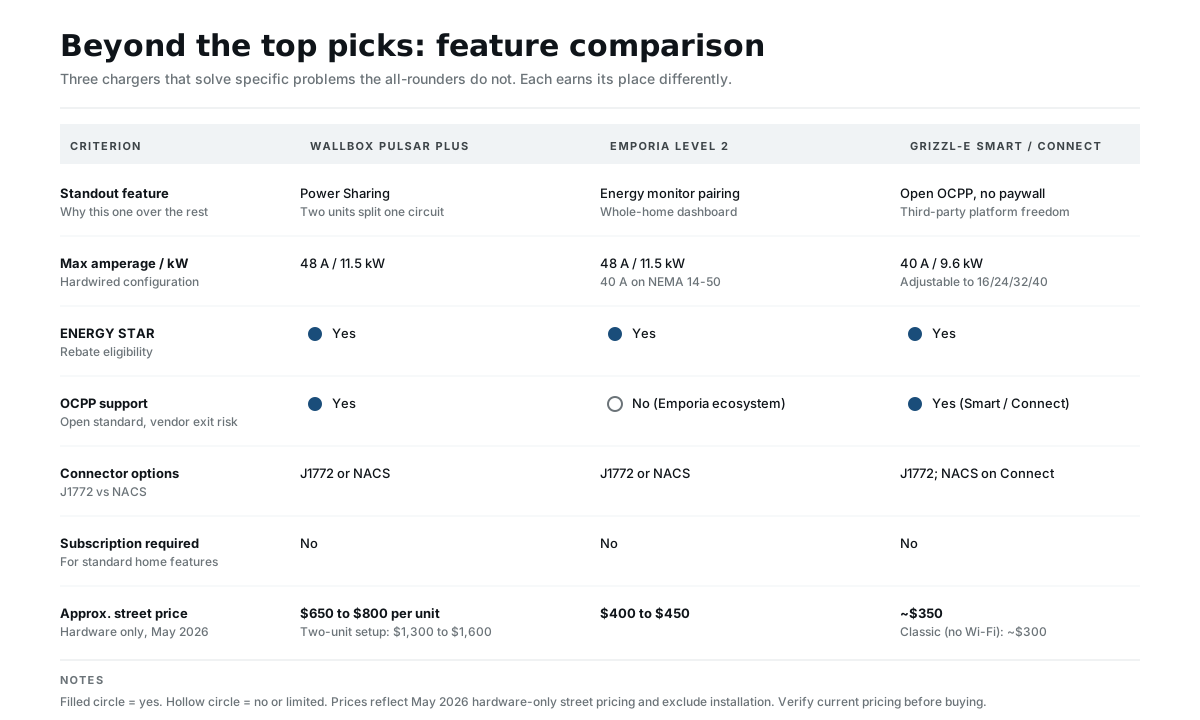
The current Pulsar Plus reaches 48 amps (11.5 kW) when hardwired, a step up from older 40-amp units, and Wallbox now offers it with either a J1772 or a NACS connector, so you can match your vehicle without an adapter. It is ENERGY STAR certified, which keeps utility rebates in play, and it supports OCPP for connecting to third-party energy platforms. (Specs as of Q2 2026.)
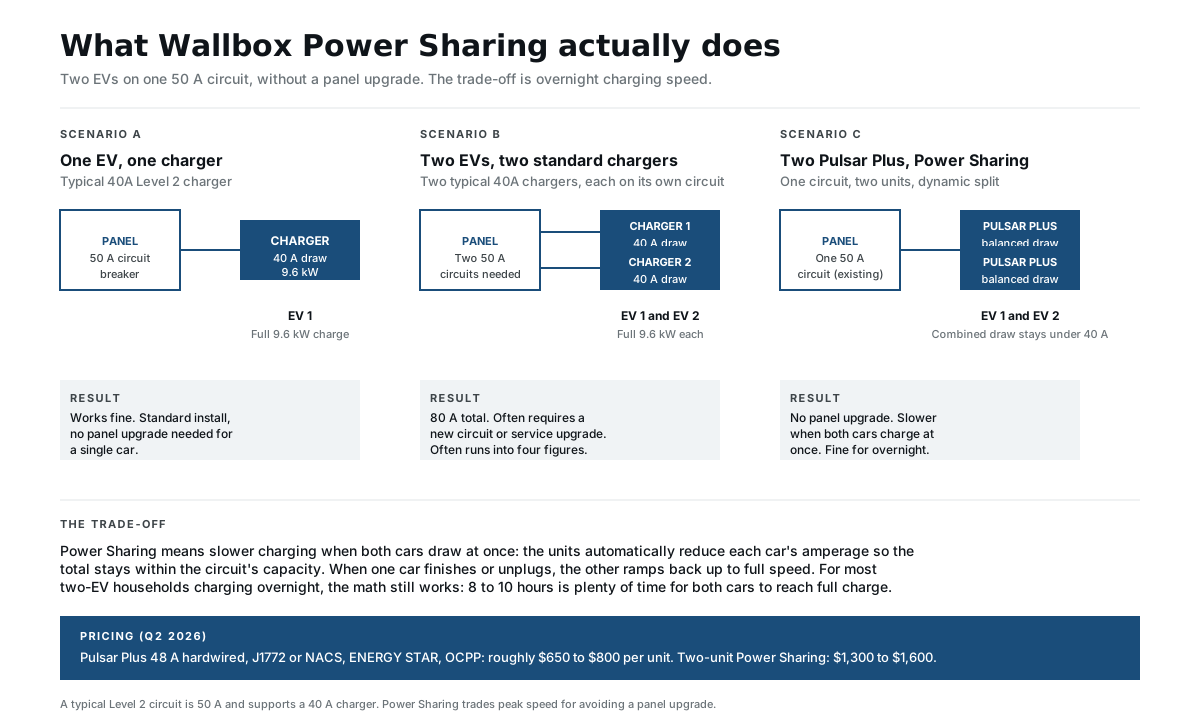
Where it falls short: the app has had occasional firmware update hiccups, and a power-sharing setup means buying two units, so price the full configuration before assuming it beats a panel upgrade. Pricing has run roughly $650 to $800 per unit depending on amperage and connector; charger prices move, so check the current figure before buying.
Emporia Level 2 EV Charger
Best for: homeowners who want whole-home energy monitoring alongside charging, or a capable charger at a lower price.
Emporia makes a Level 2 charger that reaches 48 amps (11.5 kW) when hardwired, is ENERGY STAR and UL listed, and comes in either a J1772 or a NACS connector version. If you already use Emporia's home energy monitor to track solar production, appliance loads, or time-of-use rates, the charger feeds EV data into the same dashboard, which is a genuine convenience for that ecosystem.
Even setting the ecosystem aside, it is a strong value. It has historically priced well below the Home Flex and the Wallbox while matching their core capabilities. The plug-in configuration is capped at 40 amps, as code requires for a NEMA 14-50 outlet; hardwiring unlocks the full 48 amps.
Where it falls short: the broader Emporia ecosystem is the draw, and if you do not use it, the charger competes on price and specs alone, where it does well but does not stand out on brand maturity the way ChargePoint does. Pricing has run around $400 to $450; verify the current figure before buying.
Grizzl-E Smart and Classic Connect
The Grizzl-E Classic is the go-to no-frills, no-subscription charger: a rugged 40-amp unit (adjustable to 16, 24, 32, or 40 amps) with a 25-foot cable and a metal enclosure built for harsh conditions. The smart variants add connectivity without adding a paywall.
The Grizzl-E Smart and the newer Classic Connect add Wi-Fi, scheduling, energy monitoring, and OCPP support, with no subscription requirement and no features locked behind a recurring fee. A NACS-connector option is also available on the Connect.
OCPP matters if you want to link the charger to a third-party energy management platform, a home automation system, or a utility program. OCPP (Open Charge Point Protocol) is the open standard for charger-to-network communication. Many consumer chargers use proprietary protocols, so Grizzl-E's OCPP support gives you more flexibility and reduces the risk of being stranded if a vendor changes course.
Pricing has run roughly $300 for the Classic and around $350 for the connected versions; confirm current pricing before buying.
Enel X JuiceBox: no longer recommended
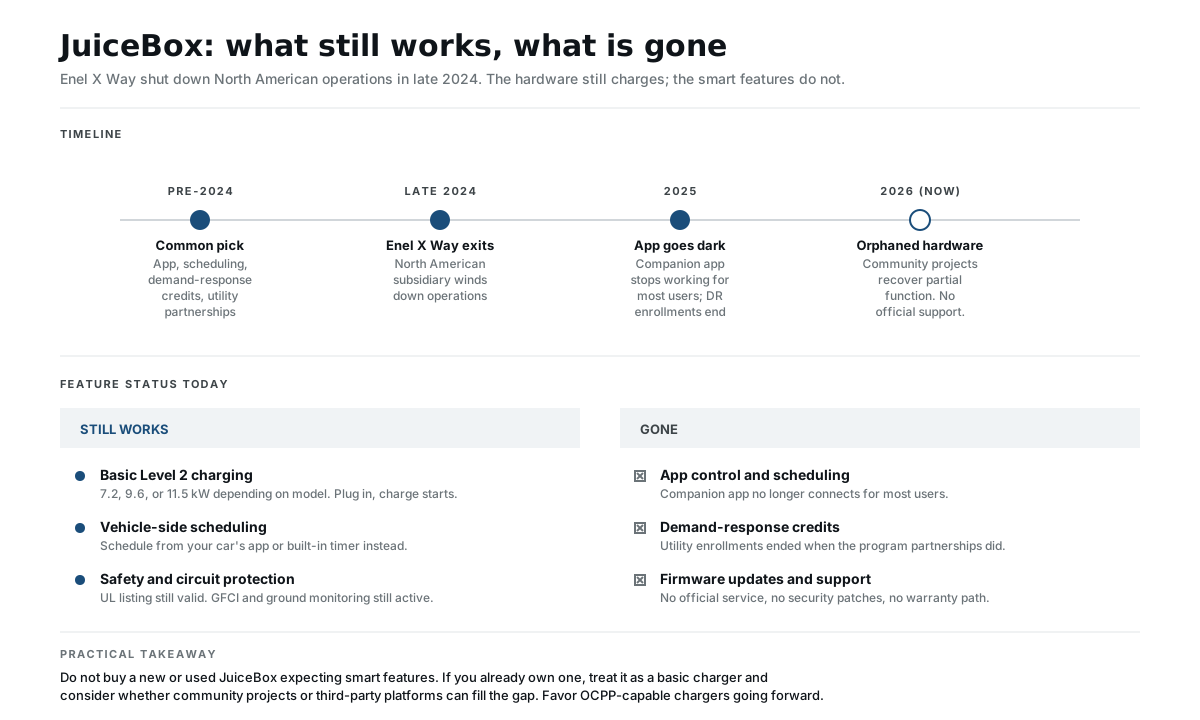
The JuiceBox used to be a common recommendation, and you will still find older articles praising its app, energy monitoring, and utility demand-response partnerships. That advice is now out of date, and following it would be a mistake.
Enel X Way, the North American subsidiary behind the JuiceBox, shut down its operations in this region (effective in late 2024), and the connected services that made the JuiceBox a smart charger were turned off. The companion app stopped working for most users in 2025, and the demand-response enrollments that were once a selling point went away with it. The hardware still charges a car as a basic Level 2 unit, but the smart features, support, and firmware updates are gone, and a community effort sprang up specifically to recover some functionality for stranded owners.
The practical takeaways:
- Do not buy a new or used JuiceBox expecting app control, scheduling, or demand-response credits. Those depend on services that no longer exist.
- If you already own one, it will still charge your car, but treat it as a basic charger and watch for community projects or third-party platforms if you want any smart functionality back.
- The broader lesson: a smart charger is only as durable as the company keeping its servers running. Favor units with open standards like OCPP, or with a clear path to basic functionality if the cloud goes dark.
What to avoid
No-name chargers under $200. The market has a long tail of unbranded or obscure units. Many fail UL listing requirements, use undersized wiring, or will not pass electrical inspection. Saving $150 on a charger that fails inspection is not a saving.
Subscription-gated features. Some chargers put scheduling or monitoring behind a monthly fee. Read the terms before buying. ChargePoint, Grizzl-E, Wallbox, and Emporia do not charge a subscription for standard home features.
Discontinued or unsupported models. As the JuiceBox showed, software support disappears when a brand exits. Buying a charger that is no longer maintained means losing app functionality and firmware updates over time.
The decision tree
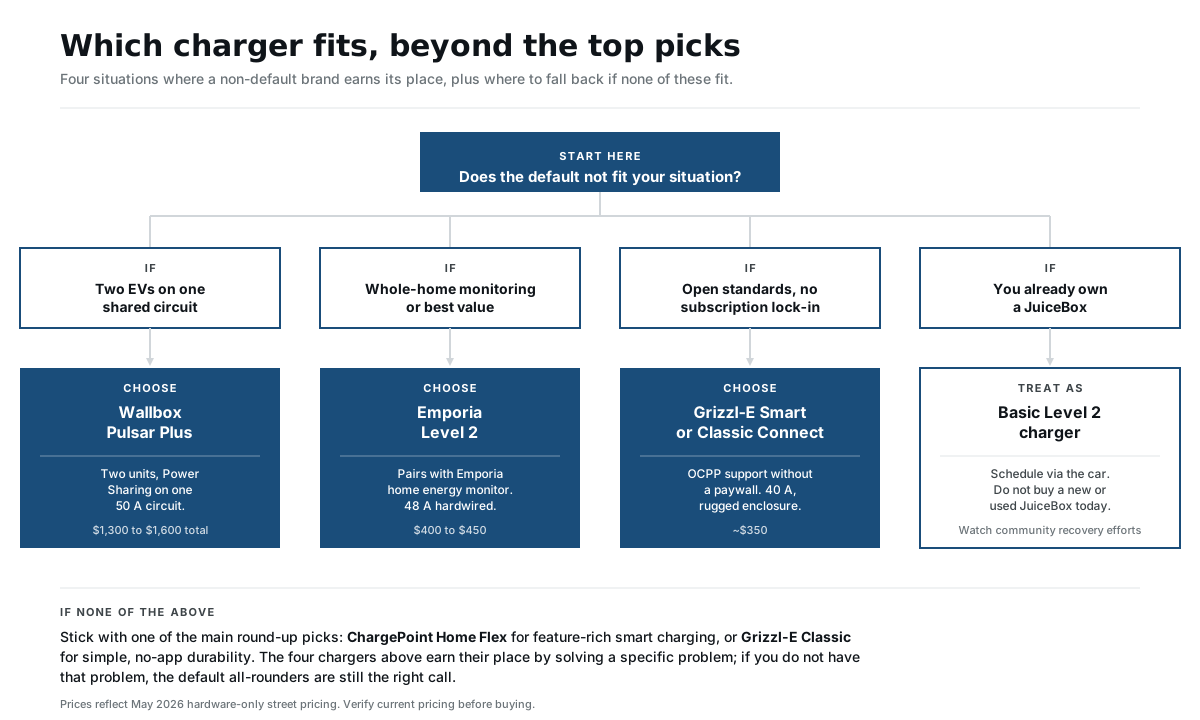
- Two EVs on a shared circuit: Wallbox Pulsar Plus (power sharing).
- Whole-home energy monitoring, or best value at strong specs: Emporia.
- Open-standard flexibility without a subscription: Grizzl-E Smart or Classic Connect (OCPP).
- Everything else: ChargePoint Home Flex (feature-rich) or Grizzl-E Classic (simple and durable).
For the full field, see our overview of home EV chargers worth considering, and our reviews of the ChargePoint Home Flex and the Tesla Wall Connector.
Last factually verified: 2026-05-24 against Wallbox Pulsar Plus product and datasheet pages (wallbox.com), Emporia EV charger product pages (emporiaenergy.com), Grizzl-E product pages (grizzl-e.com), and reporting on the Enel X Way North American shutdown (InsideEVs, Consumer Reports, LF Energy). Pricing changes frequently; verify current pricing directly with the manufacturer or an authorized retailer. We have no affiliate or referral relationship with any charger manufacturer; this assessment reflects independent judgment.