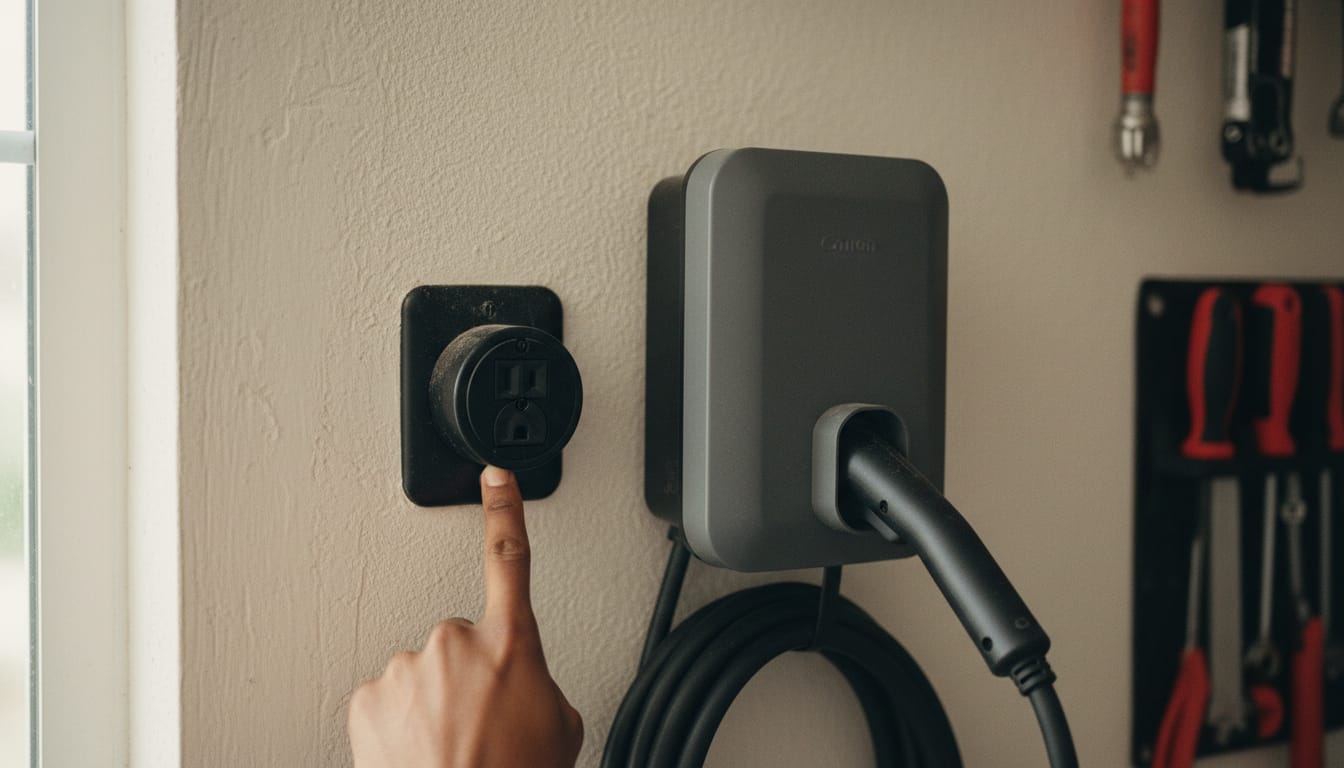
When you install a Level 2 home charger, there are two ways to connect it to your home's electrical system: hardwired straight into a junction box, or plugged into a 240-volt receptacle (almost always a NEMA 14-50). Both deliver the same voltage and, for most cars, the same daily charging speed. The differences are practical, and a few of them come down to specific National Electrical Code rules that affect what your installation costs and how reliable it is over time.
The short answer
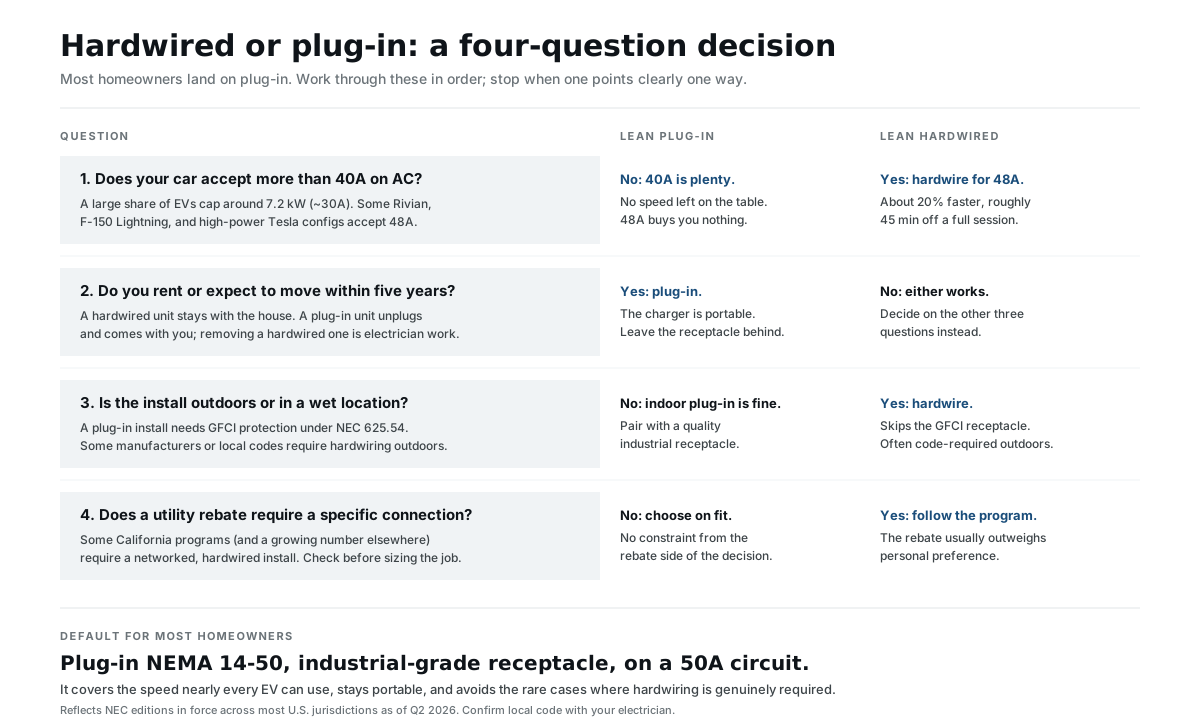
For a renter, a recent buyer who may move soon, or anyone whose car tops out at 40 amps or less, a plug-in setup is usually the better call: it is flexible, the charger comes with you, and the speed is more than enough. For a homeowner staying put who wants the maximum 48-amp charging rate, hardwiring is increasingly the cleaner choice. (Do not count on hardwiring to avoid GFCI outdoors: under the 2026 NEC, outdoor circuits rated 60 amps or less need GFCI protection whether the charger is hardwired or plugged in.) Most people land on plug-in. Both are correct answers for different situations.
Hardwired: direct connection, no receptacle
A hardwired charger is connected directly to a dedicated circuit, with no receptacle in between. The unit becomes a permanent fixture on the wall.
Strengths
- Supports the higher continuous draw of 48 amps on a 60-amp circuit (and up to 80 amps on a 100-amp circuit for the rare vehicle that can use it). This is the only way to get the fastest Level 2 home charging.
- Under some NEC editions, avoids the receptacle GFCI requirement that applies to plug-in installs (more on this below), which can mean fewer nuisance trips and a slightly lower parts cost on the receptacle side. Under the 2026 code, outdoor installs need GFCI protection either way.
- Slightly cleaner look, with no receptacle box exposed on the wall.
- Required by some local jurisdictions and some manufacturers for outdoor installations.
Trade-offs
- Not portable. If you move, the charger stays unless you pay an electrician to disconnect it.
- Replacing or upgrading the unit means an electrician disconnects and reconnects it rather than you simply unplugging it.
- Installation and removal both call for a licensed electrician.
Plug-in (NEMA 14-50): the flexible option
A plug-in charger connects to a NEMA 14-50 receptacle, the same configuration used for electric ranges and RV hookups. The electrician installs the receptacle on a 50-amp circuit; the charger plugs in like an appliance.
Strengths
- Portable. You can unplug it and take it with you when you move.
- Easy to replace or upgrade: unplug the old unit, plug in the new one.
- Most Level 2 chargers ship with a NEMA 14-50 plug or offer it as an option.
- The receptacle can serve other 240-volt equipment if you ever need it to.
Trade-offs
- Capped at a 50-amp circuit, which means 40 amps of continuous charging under the code rule below. That is enough for nearly every vehicle sold today, but it is not the 48-amp maximum.
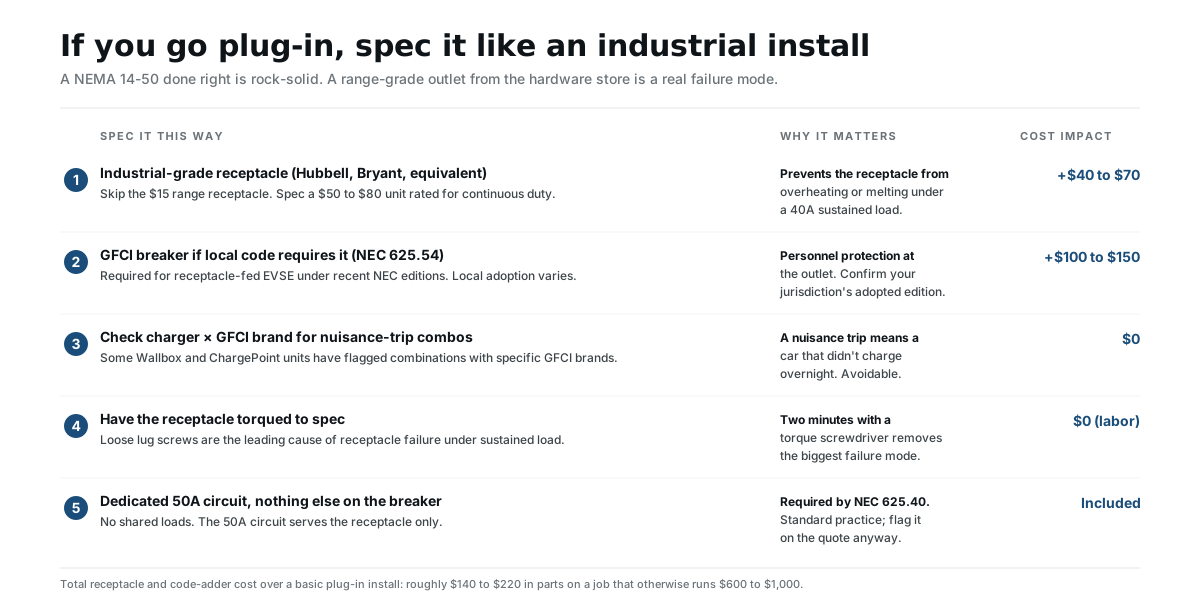
- Current code requires GFCI protection on the receptacle, which adds cost and can cause occasional nuisance trips with some charger and breaker combinations.
- A receptacle is one more connection point. With a quality unit installed correctly this rarely matters, but a cheap range-grade receptacle is a real failure risk under sustained EV load (see below).
Why plug-in stops at 40 amps: the 80% rule
Under the National Electrical Code, EV charging equipment is a continuous load, and a circuit serving a continuous load is limited to 80% of its rating for that load (the flip side of the 625.41 requirement to size the circuit at 125% of the charger's draw). A NEMA 14-50 receptacle lives on a 50-amp circuit, so the most a plug-in charger can draw continuously is 40 amps. To draw 48 amps you need a 60-amp circuit, and in practice 48-amp chargers are hardwired: Article 625 does permit specified cord-and-plug arrangements above 40 amps (up to 60 amps under conditions), but product listings and the receptacle configurations actually available mean manufacturers ship 48-amp units for hardwired connection. (As of Q2 2026, under the NEC editions in force across most of the U.S.)
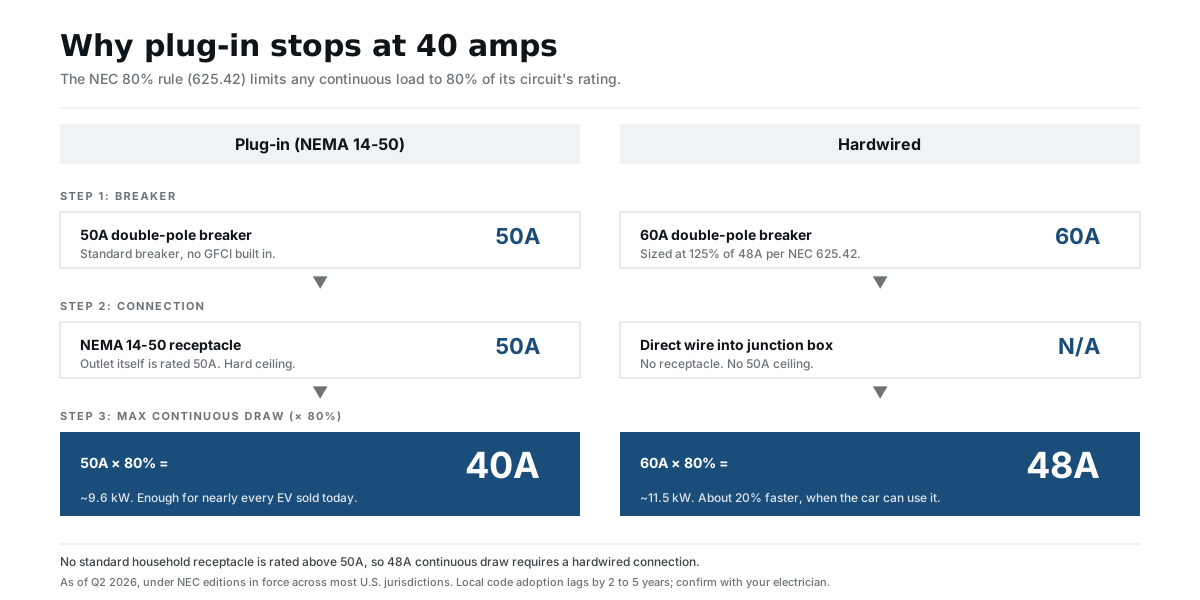
This is the single rule that explains most of the hardwired-versus-plug-in difference. If you want 48 amps, you are hardwiring. If 40 amps is enough, plug-in is on the table.
The GFCI rules (NEC 625.54 and 210.8(F))
Recent NEC editions require that any receptacle installed for EV charging have ground-fault circuit-interrupter protection for personnel (NEC 625.54). What hardwired equipment needs depends on the edition. Under earlier editions, direct-connected equipment is not subject to the receptacle GFCI requirement unless the manufacturer's instructions call for it. The 2026 NEC changes the outdoor picture: Section 210.8(F) requires GFCI protection for outdoor outlets rated 60 amps or less, which covers a hardwired charger's connection point, so in a jurisdiction on the 2026 code hardwiring does not avoid GFCI outdoors.
Two practical consequences:
- A plug-in install needs GFCI protection, usually a GFCI breaker, which costs more than a standard breaker and occasionally trips when paired with a charger that already has its own internal ground-fault detection.
- Indoors, and under pre-2026 editions, a hardwired install can avoid the receptacle GFCI requirement, which is one reason electricians have favored hardwiring for higher-amperage jobs. Outdoors under the 2026 code, both connection types need GFCI, so this advantage is edition-dependent, not universal.
Code adoption varies by state and local jurisdiction, so confirm what edition your area enforces with your electrician before assuming either way.
A receptacle is only as good as the receptacle
If you go plug-in, the quality of the receptacle matters more than people expect. A standard, inexpensive NEMA 14-50 receptacle sold for electric ranges is designed for a load that cycles on and off, not for a car pulling 40 amps continuously for hours overnight. Under that sustained thermal load, low-grade receptacles can overheat and, in the worst cases, melt. Specify an industrial-grade receptacle (commonly cited brands include Hubbell and Bryant) and have it torqued to spec. This is a known, avoidable failure mode, and it is the main reason some electricians steer continuous 40-amp loads toward hardwiring.
Speed comparison: smaller than it sounds
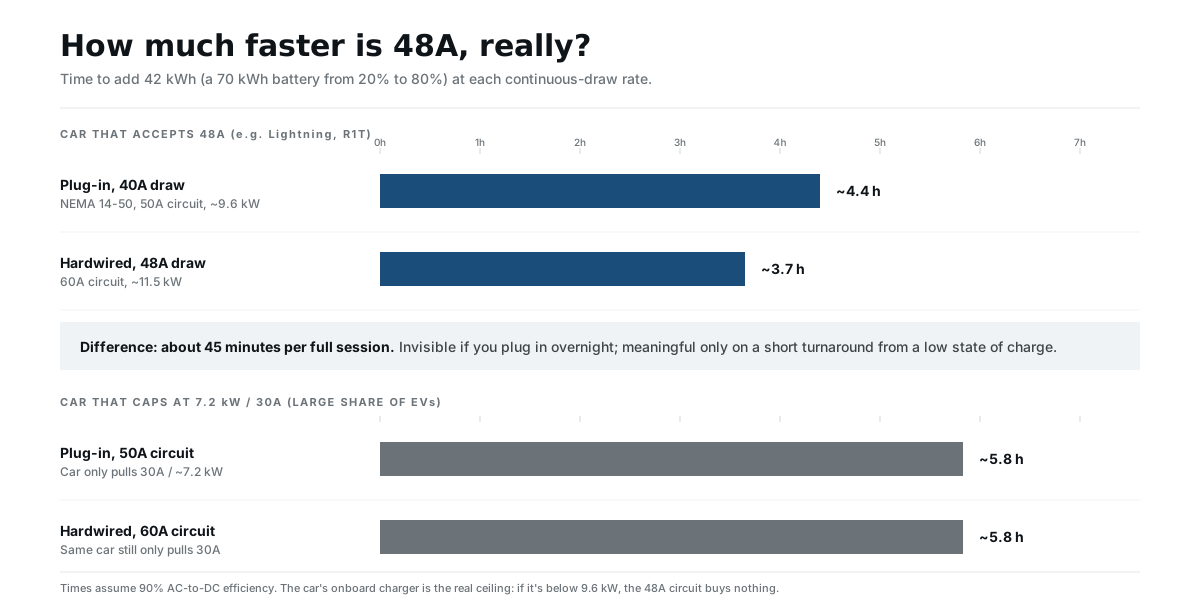
For a car that can actually accept 48 amps, hardwiring shaves about 45 minutes off a full 20-to-80% session. For the much larger group of cars that cap at 7.2 kW or so, the two setups deliver identical times. If you charge overnight and top off rather than refill from near empty, that gap is invisible: both finish with hours to spare. The 48-amp advantage only becomes meaningful if you routinely run the battery low and need it full again on a short turnaround, or if your car has a high-capacity onboard charger that can actually use the extra amps.
The car is still the real ceiling
None of this matters past the limit built into your vehicle. Every EV has an onboard charger with a maximum AC input rate. A very large share of EVs accept around 7.2 kW (roughly 30 amps), in which case both a 40-amp plug-in and a 48-amp hardwired unit charge at the same speed, because the car will not pull more. Look up your vehicle's onboard AC charging rate in kW before you decide; if it is at or below about 9.6 kW, the 48-amp ceiling buys you nothing today. See our companion article on amperage and charging speed for the full breakdown.
Choose hardwired if
- Your vehicle's onboard charger accepts more than 40 amps and you want to use it (some Rivian, Ford F-150 Lightning, and high-power Tesla configurations).
- You are installing outdoors and your jurisdiction or the manufacturer requires hardwiring. (Under the 2026 NEC, outdoor installs need GFCI protection whether hardwired or plug-in, so hardwiring is not a way around it.)
- You are confident you will not move the charger.
- Your electrician recommends it for your specific panel, run, or load situation.
Choose plug-in if
- Your car tops out at or below 40 amps (which covers most EVs on the road today).
- You rent, expect to move, or want the option to take the charger with you.
- You value being able to swap chargers yourself without an electrician.
- You want the simplest, most flexible install and are fine specifying a quality industrial receptacle.
California note (as of Q2 2026): Some California utility rebates and managed-charging programs require a networked charger and may specify a minimum charging level or a hardwired connection. The connection type that qualifies for a rebate can differ from what your car can use, so confirm the program rules before you choose between plug-in and hardwired. See our smart-features article for more on networked-charger requirements.
Checklist before you decide
- Look up your vehicle's onboard AC charging rate in kW.
- Decide whether 48-amp speed is worth giving up portability for your situation.
- Ask your electrician which NEC edition your jurisdiction enforces and whether GFCI protection is required for your install, plug-in or hardwired.
- If going plug-in, specify an industrial-grade NEMA 14-50 receptacle, not a hardware-store range receptacle.
- Confirm any utility rebate's requirements on connection type and networking before sizing the job.
For most homeowners, a quality plug-in setup is more than enough and keeps your options open. Hardwiring earns its keep when you genuinely need 48 amps, when code or the install location pushes you there, or when you simply want the most permanent, lowest-fuss connection.
Last factually verified: 2026-05-24 against the NEC continuous-load and circuit-sizing rule (NEC 625.41), the NEC receptacle GFCI requirement for EV charging (NEC 625.54) as summarized by NSSL and Leviton/Captain Code, and plug-in versus hardwired amperage and charging-speed figures from Emporia Energy and Bees Lighting.
Corrections (August 11, 2026): An earlier version described hardwiring as a way to avoid GFCI protection, including outdoors. Under the 2026 NEC, Section 210.8(F) requires GFCI for outdoor outlets rated 60 amps or less whether the equipment is hardwired or plug-in, so any GFCI difference depends on the NEC edition your jurisdiction enforces. The earlier version also stated that a 48-amp charger must be hardwired as a code rule; NEC Article 625 permits specified cord-and-plug arrangements above 40 amps, and 48-amp units are hardwired in practice because of product listings and available receptacle configurations. The circuit-sizing citation was corrected from NEC 625.42 to 625.41.