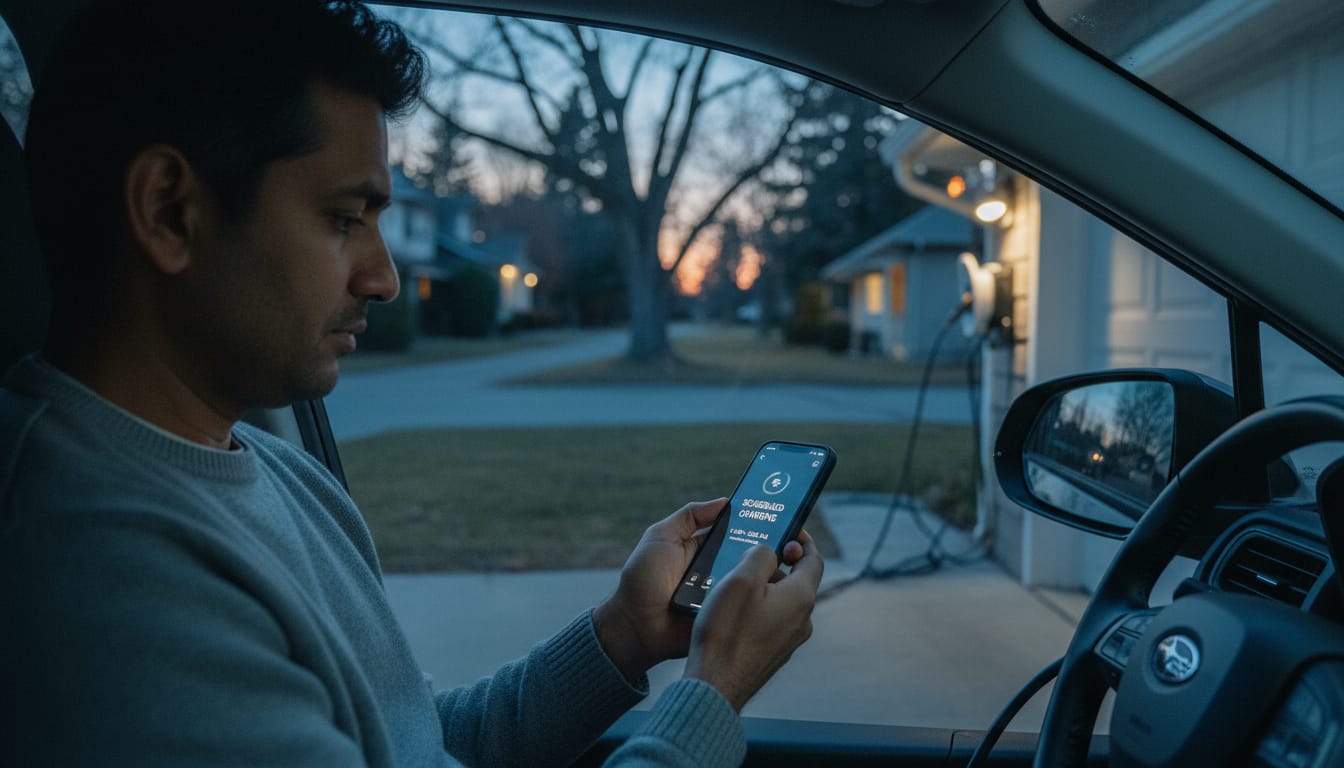
Charger makers have piled on features, and it is hard to tell which ones justify a higher price. Some genuinely save money or solve a real electrical problem; others are marketing. This article sorts them, and it flags the place where the decision is partly taken out of your hands: utility rebates that require a specific kind of "smart" charger.
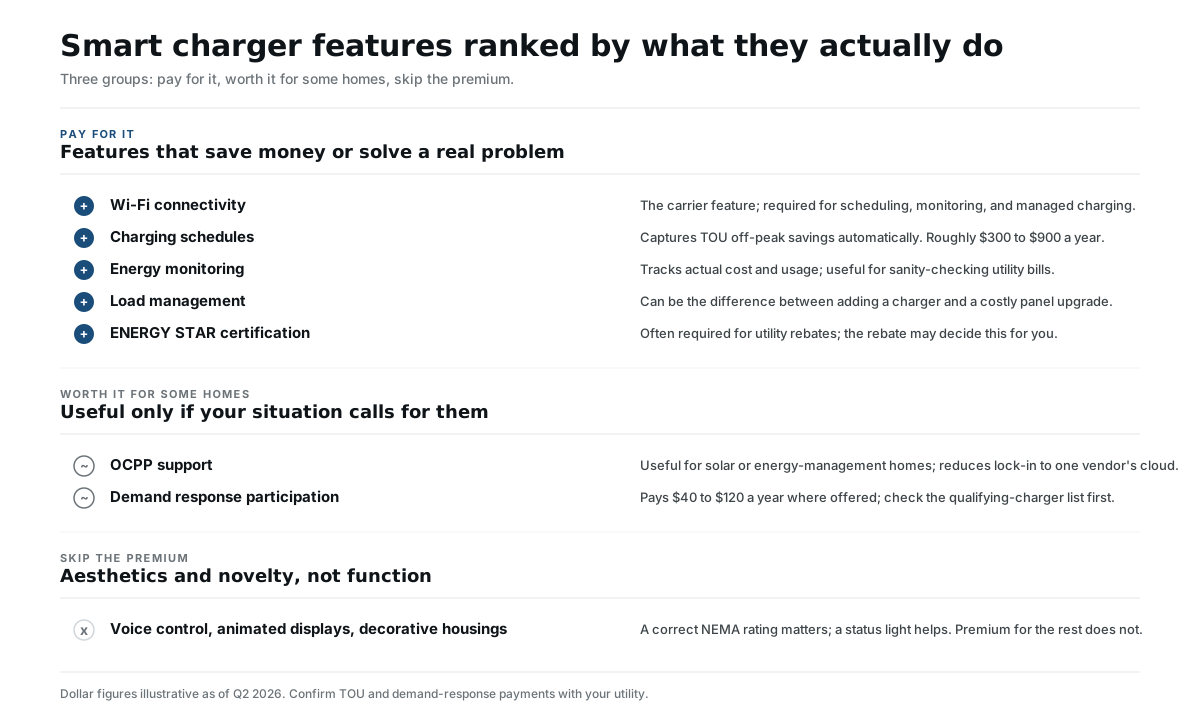
Features worth paying for
Charging schedules
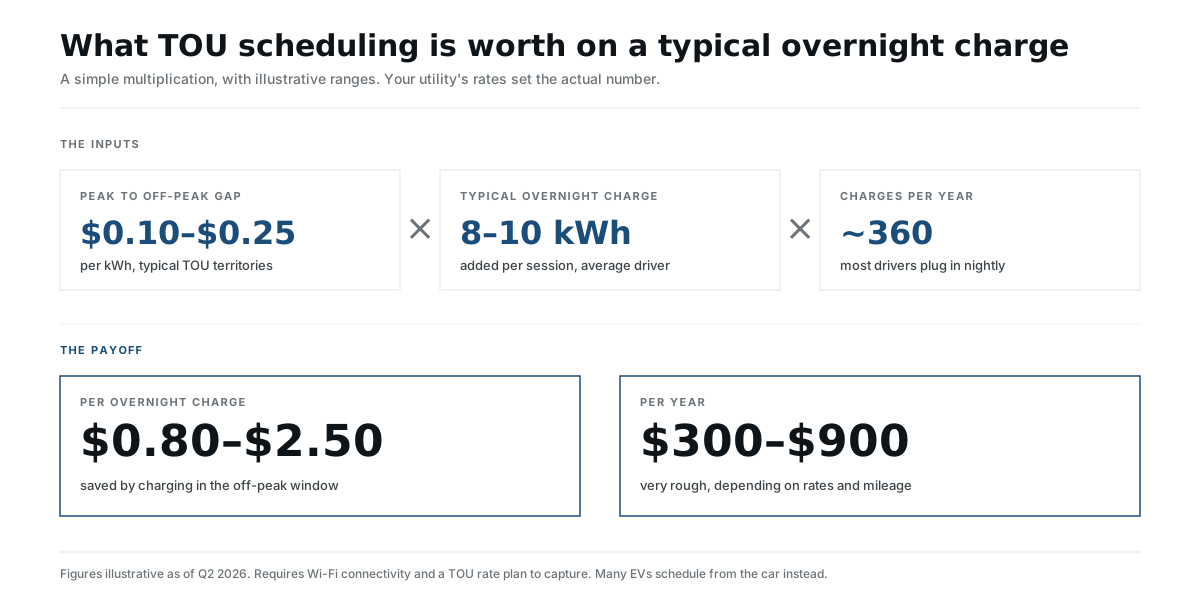
If your utility offers time-of-use (TOU) pricing, with cheaper rates during overnight off-peak windows, a charger with scheduling lets you charge during the cheap hours automatically. Set it once and save on every overnight charge without thinking about it.
The dollar impact: in TOU territories, the gap between peak and off-peak rates is often in the range of $0.10 to $0.25 per kWh. For a typical driver adding 8 to 10 kWh a night, that is roughly $0.80 to $2.50 saved per charge, or very roughly $300 to $900 a year, depending on your rates and mileage (figures illustrative, as of Q2 2026). Scheduling needs Wi-Fi connectivity and a TOU rate plan to be worth anything.
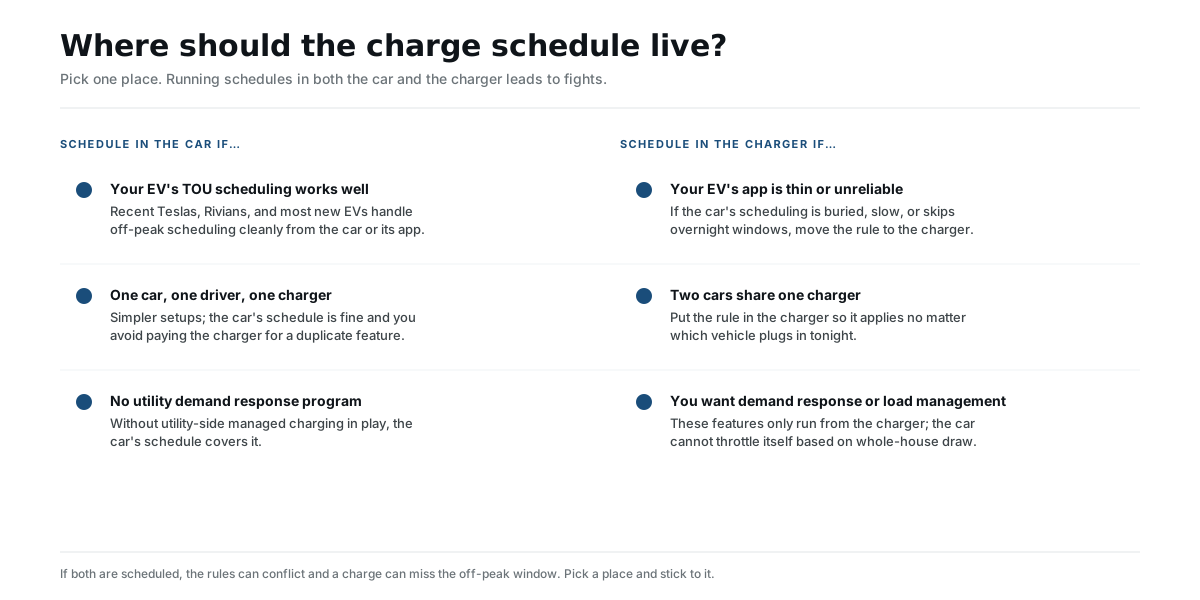
A note on overlap: many EVs can schedule charging from the car or its app, which can do the same job without a smart charger. Decide where you want the schedule to live before paying twice for it. Whichever you choose, see the best time to charge your EV at home for how to find your own utility's actual off-peak window rather than guessing at a generic overnight schedule.
Energy monitoring
A charger that tracks how many kWh it has delivered, and when, lets you see your actual charging cost, sanity-check utility billing, and separate EV electricity use for record-keeping. It is a plain, useful feature with real value, and it is usually bundled with the same connectivity that enables scheduling.
Load management
This is the feature most worth understanding, because it can solve an electrical problem rather than just add convenience. Load management (sometimes "power sharing" or "dynamic load management") lets a charger reduce its draw when the rest of the house is pulling a lot of power, or split capacity between two chargers on one circuit. For a home with a panel near its limit, a charger that throttles itself can be the difference between adding a charger now and paying for a costly service upgrade first. If your electrician flags tight panel capacity, ask specifically about chargers with built-in load management.
Demand response and utility program compatibility
Some utilities pay you to let them briefly pause or dial back your charging during grid peak events. These programs commonly pay on the order of $40 to $120 a year (varies widely by utility, as of Q2 2026). To participate, your charger has to be compatible with the specific program, which usually means a networked, "managed charging" capable unit. Many of these programs communicate over open standards such as OpenADR. Check your utility's exact requirements before buying, because the qualifying-charger list is often short and specific.
OCPP compatibility (for solar and energy-management setups)
OCPP, the Open Charge Point Protocol, is an open standard that lets a charger talk to management software rather than being locked to one manufacturer's cloud. For a home with solar and an energy-management system, an OCPP-capable charger can be coordinated to favor charging from your own solar generation, and it reduces the risk of being stranded if a manufacturer shuts down its app. For a simple single-charger home without solar, OCPP is a nice-to-have rather than a requirement.
The feature your rebate may choose for you
Here is the part that often overrides personal preference. Many utility and state rebate programs require a networked, often ENERGY STAR certified, charger that can participate in managed charging. The EPA's ENERGY STAR specification for EV chargers requires connectivity and the ability to respond to managed-charging signals, and certified units also use markedly less energy in standby. Some programs, including California's, specifically point to ENERGY STAR certification.
The practical consequence: if you are claiming a utility rebate, the rebate's eligibility list may dictate that you buy a networked, certified, smart charger whether or not you wanted those features for your own reasons. Always read the rebate's requirements before you buy hardware, not after. The cheapest "dumb" charger can end up costing more once it disqualifies you from a few hundred dollars of rebate.
California note (as of Q2 2026): California utility EV charging rebates and managed-charging programs commonly require an ENERGY STAR certified, networked charger, and may specify managed-charging participation. CALeVIP and several utility programs reference ENERGY STAR certification. Confirm the current eligibility list with your specific utility before purchasing, because program rules and approved-product lists change.
On connector type: NACS, J1772, and J3400
A quick word on the plug, since buyers ask about it alongside smart features. The North American Charging System (NACS), now standardized as SAE J3400, is the Tesla-style connector that most major automakers have adopted for new vehicles. For home Level 2 charging this matters less than it does for fast charging: many home chargers ship with a J1772 connector and a J1772-to-NACS adapter handles a NACS car, or you can buy a unit with a native NACS connector. Match the home charger's connector (plus any adapter) to the car you own now and the one you are likely to buy next. It is a compatibility question, not a smart-feature question, and an adapter is an inexpensive fix either way.
Features that don't add much value
Thin companion apps
Many charger apps just show status and let you start or stop a session. Unless the app actually enables scheduling, energy monitoring, or utility integration, it is a convenience, not a reason to pay more.
Voice assistant integration
"Alexa, start charging" works on a handful of units. For nearly everyone this is a novelty. Do not pay a premium for it.
Animated displays and decorative enclosures
A correct enclosure rating (NEMA 4 for outdoor use) is what matters for durability. A simple status light that confirms charging has started from across the garage is genuinely handy. Animated screens and decorative housings are aesthetics, not function.
Watch for subscriptions
Some manufacturers put scheduling, energy monitoring, or utility features behind a monthly subscription after a free trial. That is a real long-term cost: a charger that charges $5 a month to keep its useful features costs $60 a year, which can exceed the price difference between two charger models over the life of the unit. Confirm the subscription model, and which features are gated, before you buy.
Minimum useful feature set for most buyers
| Priority | Feature | Why |
|---|
| Required for most | Wi-Fi connectivity | Enables scheduling, monitoring, and managed charging |
| Required for most | Charging schedule support | Captures TOU savings automatically |
| Worth having | Energy monitoring | Tracks real cost and usage |
| Worth having | Load management | Can avoid a panel upgrade in tight homes |
| Often required by rebate | ENERGY STAR certification | Frequently mandated for utility rebates |
| Situational | OCPP support | Useful for solar and energy-management homes |
| Skip the premium | Voice control, animated displays | Novelty, not function |
Checklist before you buy
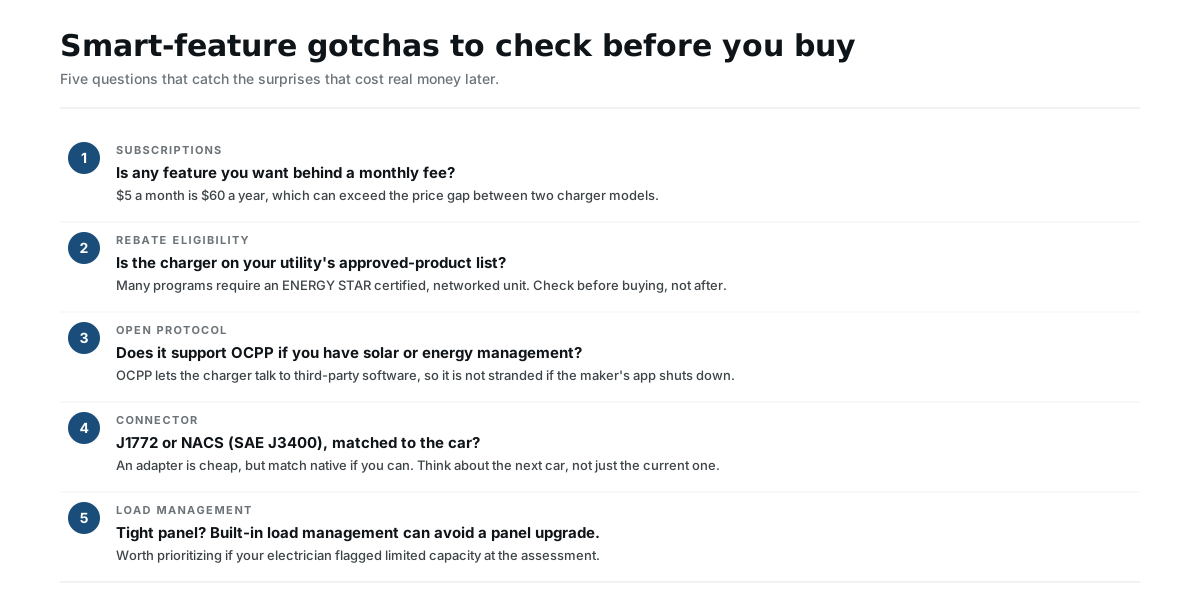
- Read your utility or state rebate requirements first; they may dictate a networked, ENERGY STAR certified unit.
- Decide where you want charge scheduling to live: in the car or in the charger, not both.
- If your panel is tight, prioritize a charger with load management.
- Match the connector (or adapter) to your current and likely next vehicle.
- Confirm whether any feature you care about requires an ongoing subscription.
The chargers that cover the essentials, connectivity, scheduling, monitoring, load management, and ENERGY STAR where a rebate requires it, do not have to be expensive. They just should not be the cheapest, feature-stripped unit on the shelf, especially if a rebate is on the table.
Last factually verified: 2026-05-24 against the EPA ENERGY STAR EV charger program requirements and CALeVIP's ENERGY STAR certification guidance, OCPP and managed-charging/demand-response descriptions from Ampeco and EV Connect, and SAE J3400 (NACS) connector standardization from SAE International. Dollar figures for TOU savings and demand-response payments are illustrative ranges; confirm current rates and program payments with your own utility.