The permit and inspection process is one of the least-understood parts of EV charger installation. Here's how it works and why it matters.
Do you need a permit?
In most US jurisdictions: yes. Adding a new 240V circuit to your home is an electrical alteration that requires a permit under local building codes.
The exception is in a small number of jurisdictions that have simplified or exempted certain EV charging installations. Your electrician will know your local rules.
Tip: Don't take an electrician's word that permits aren't required without verification. Look up your local jurisdiction's permit requirements, or call the building department directly. Some electricians suggest skipping permits to avoid the scheduling complexity. That is their convenience, not yours.
What permitting involves
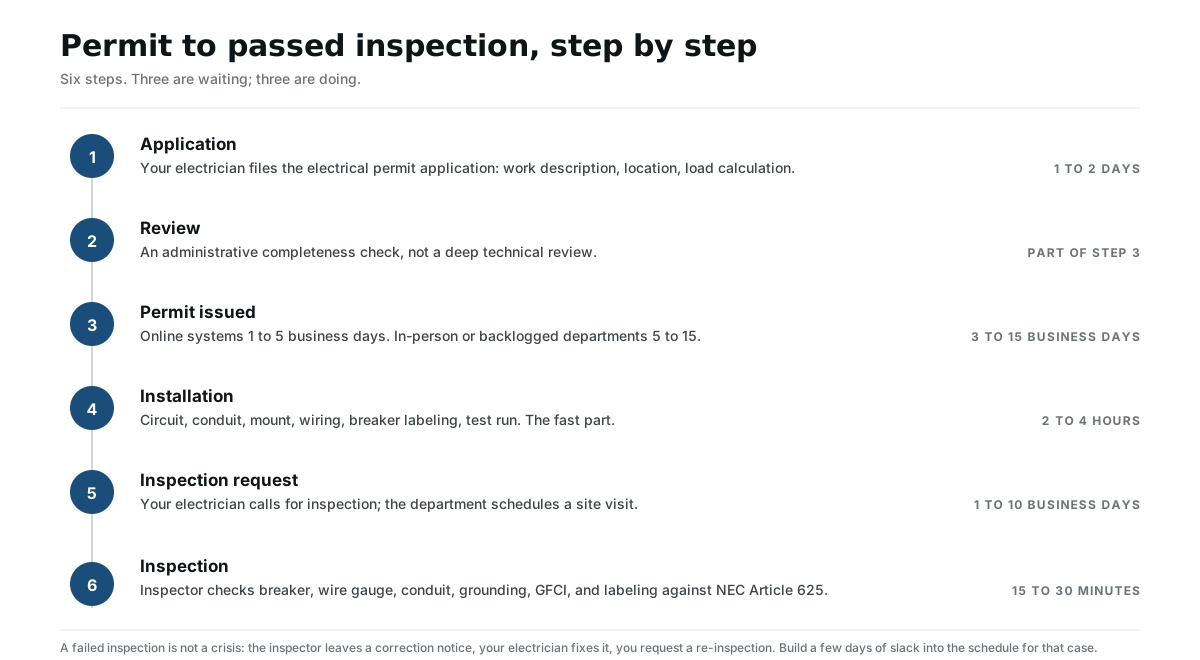
The path from application to a passed inspection is six steps. Three are waiting, three are doing.
The application
Your electrician submits an electrical permit application to your local building or planning department, typically including a description of work (new 240V circuit for EV charger), location, load calculation, and sometimes the charger model and specs. In many jurisdictions, this is now an online process. In others, it is still in-person.
Review and approval
For a straightforward EV charger installation, permit review is usually administrative: someone checks that the application is complete, not a deep technical review. How long that takes depends almost entirely on what kind of building department you are dealing with.
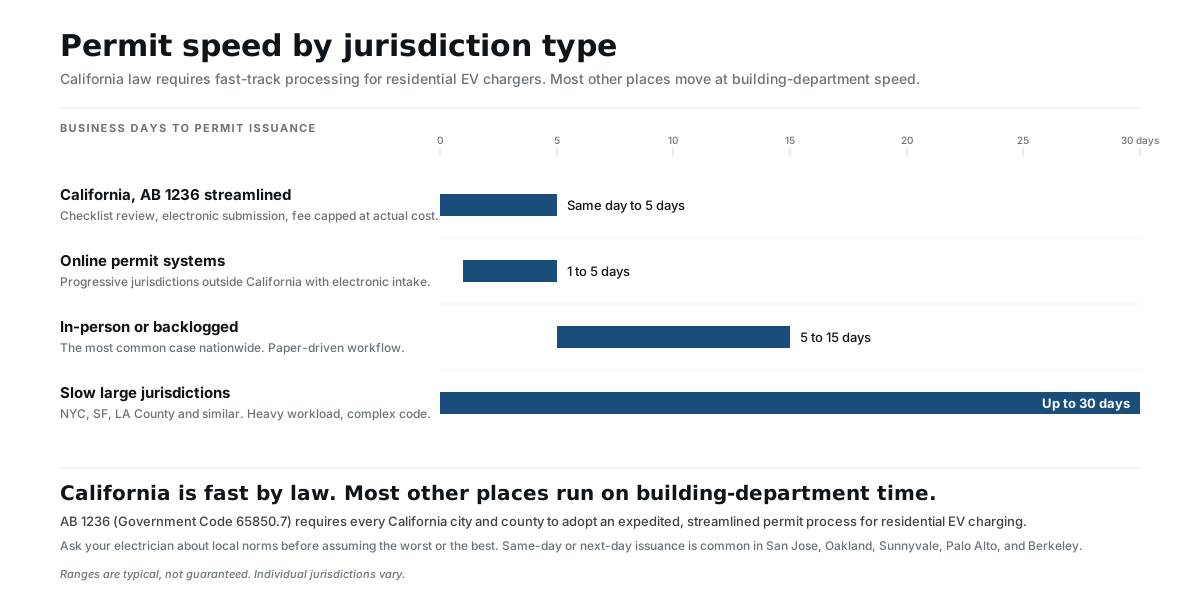
This waiting period is the primary reason EV charger installation takes weeks rather than days.
The inspection
After installation, your electrician calls for an inspection. A building inspector visits and verifies the work against NEC Article 625, which governs EV charging equipment, plus the general wiring rules in the rest of the code. The inspector is confirming the breaker matches the wire gauge, the charger's continuous load was handled correctly, GFCI protection is present where the code requires it (commonly on receptacle-fed plug-in chargers), and a disconnect exists where required for EVSE rated more than 60A or more than 150V to ground under the locally adopted NEC 625.43.
The inspection typically takes 15 to 30 minutes. Pass rate for EV charger installations is high; it is not a complicated job for an experienced electrician. If corrections are needed, the electrician fixes them and schedules a re-inspection.
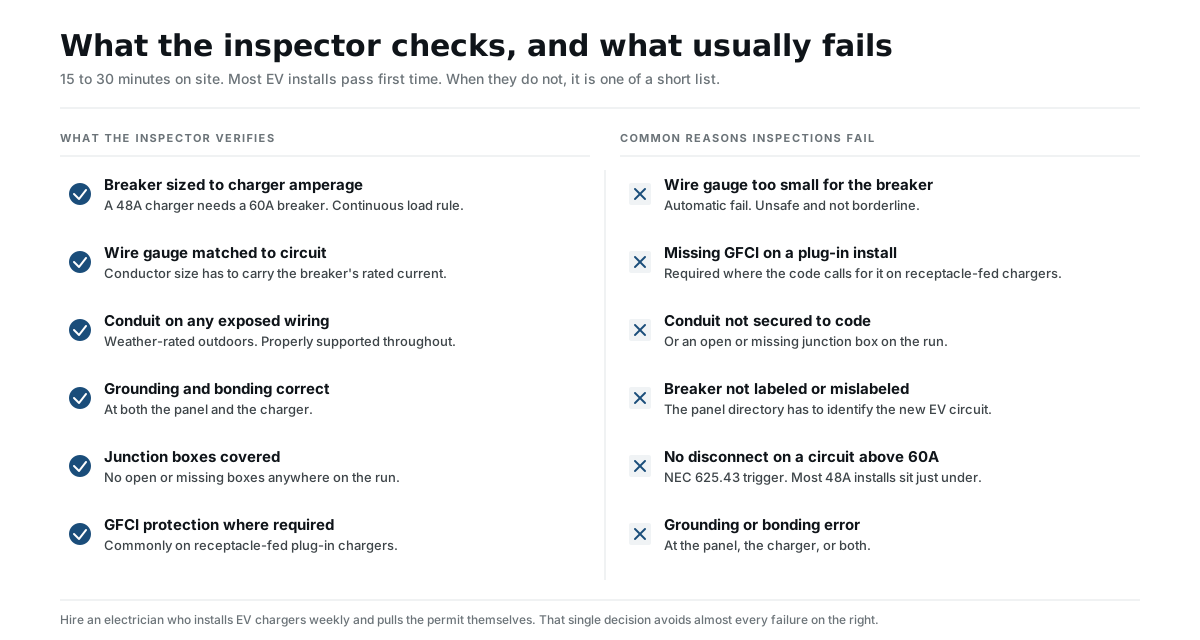
You avoid almost all of these failures by hiring an electrician who installs EV chargers regularly and pulls the permit themselves. An installer who does this work weekly knows the local inspector's expectations and rarely gets surprised.
What happens if it fails
A failed inspection is not a crisis. The inspector leaves a correction notice listing what needs fixing. Your electrician makes the corrections and requests a re-inspection. The main cost is time: a re-inspection adds days to the timeline, and some jurisdictions charge a small re-inspection fee. This is one more reason to build slack into your schedule rather than counting on a first-pass approval on a tight deadline.
Why permits protect you
Insurance: Homeowner's insurance policies typically cover damage from properly permitted and code-compliant electrical work. Unpermitted work can complicate a claim, especially if it caused or contributed to the loss; whether it affects coverage depends on your policy, state law, and the facts of the claim.
Home sale: When you sell your home, the buyer's inspection will typically identify unpermitted work. This creates negotiation leverage for the buyer and potential remediation costs for you. Retrofitting permits after the fact is more expensive and annoying than doing it right the first time.
Rebates: Some utility rebate programs require a permit number to process the rebate. Check your utility's requirements before starting work.
Peace of mind: An inspected installation is a confirmed-safe installation.
California: faster by law
If you are in California, the process is meant to be quicker than the national picture. State law (AB 1236, codified at Government Code section 65850.7) requires every city and county to adopt an expedited, streamlined permitting process for residential EV charging stations. In practice that means:
- The application is reviewed against a checklist, not discretionary case-by-case review.
- Cities must allow electronic submission.
- For 1 to 25 charging stations, the current statewide framework calls for a completeness review within five business days and approval or denial within 20 business days for a complete application. Some cities issue qualifying residential permits faster.
- Permit fees are capped at the jurisdiction's actual processing cost, which is why an EV charger permit in California often costs less than a standard electrical permit.
Many California jurisdictions, including San Jose, Oakland, Sunnyvale, Palo Alto, and Berkeley, offer same-day or next-day issuance for compliant residential installs. The inspection still happens after the work is done; the streamlining applies to getting the permit, not to skipping the inspection. The work must comply with the California Electrical Code, including Article 625.
Full timeline from start to charging
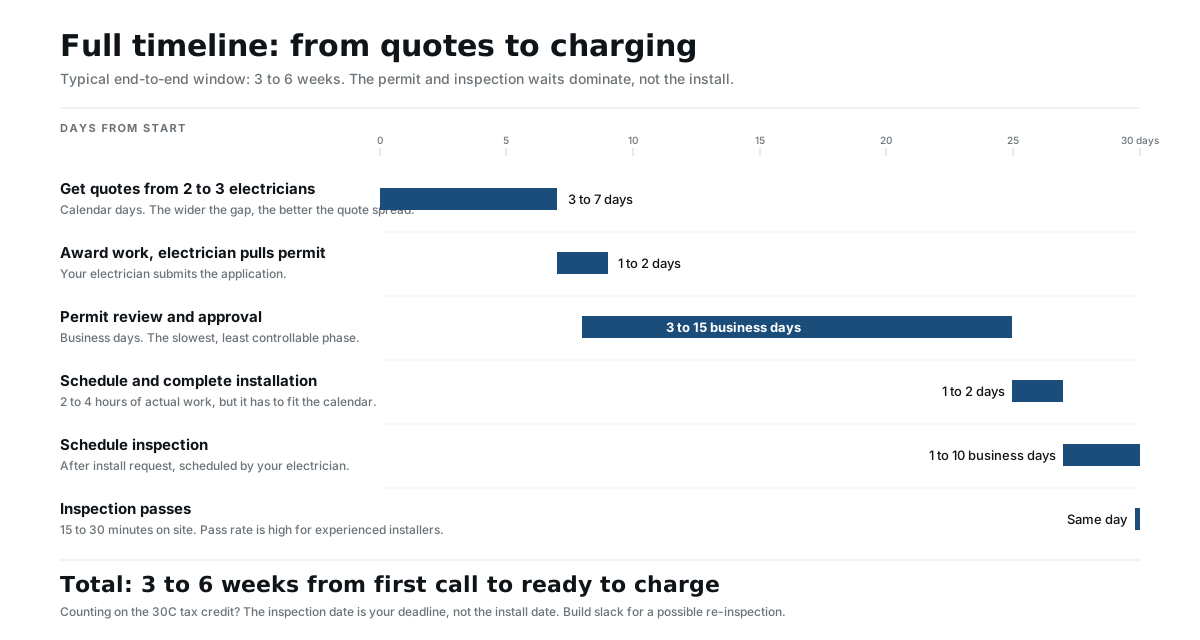
If you order your EV and want to charge it at home from day one, start the electrician process 4 to 6 weeks before delivery.
Expediting the process
A few things that speed things up:
- Choose an electrician familiar with local permit requirements. They know the fastest path through your jurisdiction.
- Have your charger model selected before the electrician visits. Some permits list the specific equipment.
- Ask about expedited permit processing. Some jurisdictions offer it for a fee.
- Submit electronically where available. Many departments, and all California jurisdictions, take online applications that move faster than in-person ones.
- Don't wait until the EV arrives. Start the process as soon as you order.
The 30C tax credit has ended. The federal 30C credit returned 30% of your charger-and-installation cost, capped at $1,000, but it ended for property placed in service after June 30, 2026 (One Big Beautiful Bill Act, Public Law 119-21). The IRS defined "placed in service" for a home charger as installed and operational, and the credit applied only if the home sat in an IRS eligible census tract. A local final inspection may have been separately required; it was not the IRS definition of placed in service. Because the deadline has now passed, a project starting today cannot claim it; plan on the real out-of-pocket cost. See our dedicated 30C article for the historical eligibility rules and the census-tract lookup.
Last factually verified: 2026-05-24 against California Government Code section 65850.7 / AB 1236 as summarized by the Governor's Office of Business and Economic Development (GO-Biz) and Permitio's 2026 California EV charger permit guide, NEC Article 625 inspection requirements (EC&M code-basics), IRS Section 30C "placed in service" and eligible-census-tract guidance, and 2026 permit and installation cost surveys. Timelines are typical ranges and vary by jurisdiction.
Corrections (August 11, 2026): This article previously said California required qualifying residential EV charger permits to be issued the same day, or within 5 business days when additional review was needed; the current statewide framework for 1 to 25 charging stations calls for completeness review within five business days and approval or denial within 20 business days for a complete application, with some cities issuing qualifying residential permits faster.