If you want to know what EV charging incentives you can actually claim, the single most important variable is where you live. The federal 30C credit applied nationwide while it existed, but it ended June 30, 2026, and everything that used to layer on top of it, state rebates, utility programs, building-code requirements, is intensely local. Two homeowners with identical trucks and identical installs can face very different net costs depending only on their zip code.
This piece is current as of Q2 2026. Program funding, amounts, and application windows change throughout the year, so the named programs below are examples of the landscape, not a guarantee of current availability. Always confirm with the program directly.
An important correction on how "state" incentives work
Coverage of "state EV incentives" often blurs two different things: programs run by a state government, and programs run by the regulated utilities operating in that state. For home charger costs specifically, most of the real money now flows through utilities, not direct state tax credits. Several of the states people think of as generous (California is the clearest case) have no statewide tax credit for a home charger; the help comes from the utilities operating there. Keep that distinction in mind as you read, see our per-state pages for the named programs by state, and see our companion piece on utility EV charger rebates for that layer.
The most active states in 2026
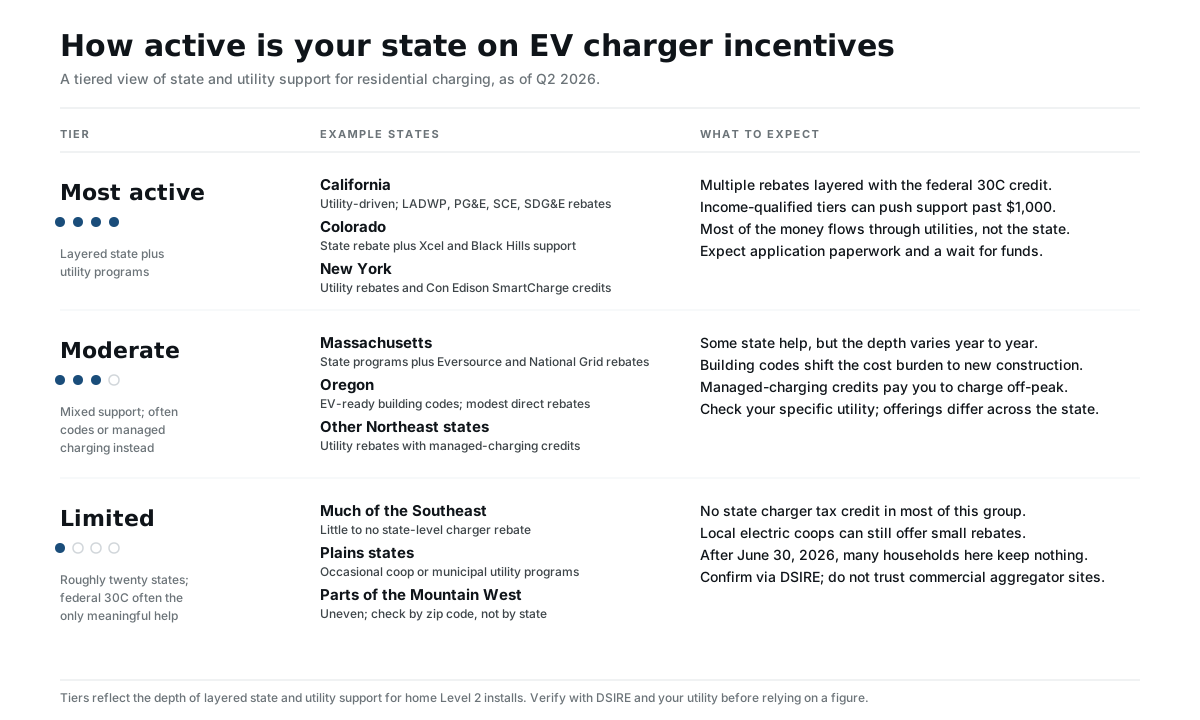
These states combine some mix of state programs, strong utility offerings, and supportive policy. The depth, not just the existence, of programs is what sets them apart.
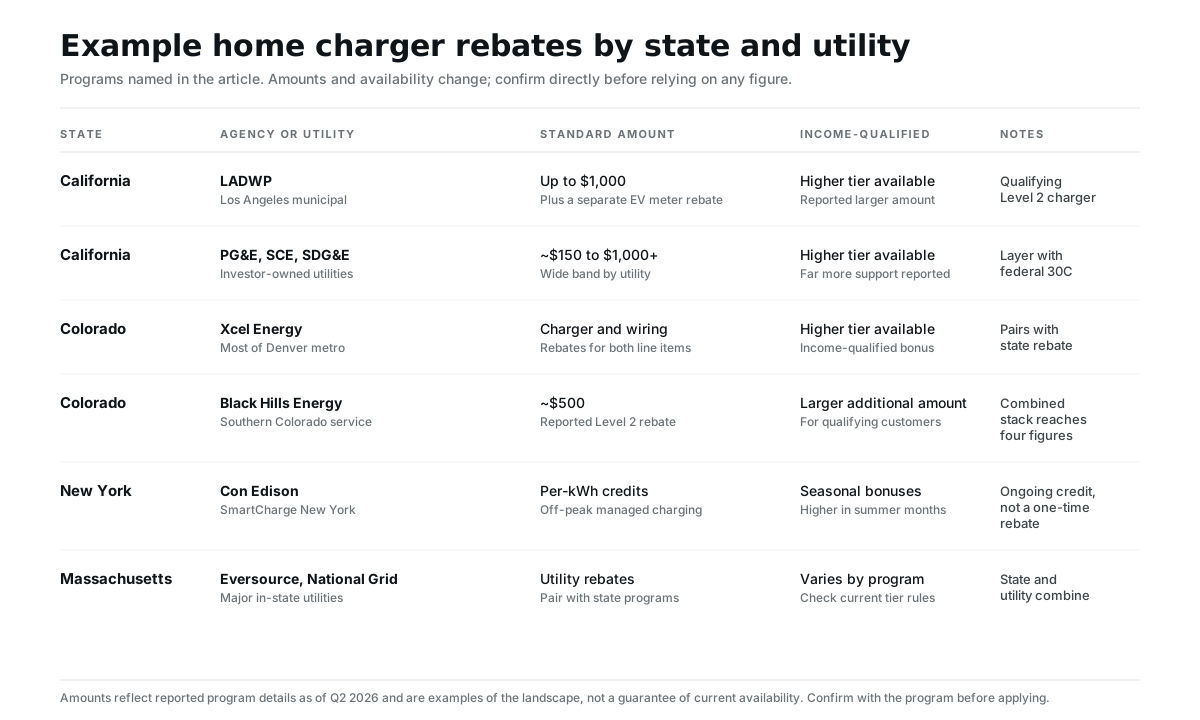
California. The most layered environment in the country, though notably through utilities rather than a state charger tax credit. A large number of California utilities offer home charger rebates, reported across a wide band from roughly $150 up toward $1,000 or more depending on the utility and the customer's income tier. LADWP, for example, has offered a rebate reported up to $1,000 for a qualifying Level 2 charger, plus a separate amount toward a dedicated EV meter. Income-qualified households can see far more support than higher-income buyers.
Colorado. Strong on both the state and utility side. Xcel Energy, which serves most of the Denver metro, runs residential charger and wiring rebates, and Black Hills Energy has offered a reported $500 residential Level 2 rebate with a larger additional amount for income-qualified customers. Combined state and utility support for a residential install can reach into the four figures.
New York. The state-level picture for home chargers specifically is thinner than its reputation suggests, but utility programs fill part of the gap. Con Edison's SmartCharge New York rewards off-peak managed charging through per-kWh credits and seasonal bonuses, and other New York utilities have offered modest home-charger rebates, with higher amounts in designated disadvantaged communities.
Massachusetts and the Northeast. Massachusetts has funded EV programs across multiple legislative cycles and pairs state-level support with utility programs from Eversource and National Grid. The broader Northeast tends to combine utility rebates with managed-charging incentives.
Oregon and the building-code states. Oregon's distinguishing feature is less about rebates and more about EV-ready building codes that require new construction to include charging infrastructure. That reduces the need for individual rebates by building the expensive part, the wiring and panel capacity, into the structure from the start. Several states are moving in this direction.
States with limited programs
Roughly twenty states, concentrated in the Southeast, the Plains, and parts of the Mountain West, have little or no active state-level EV charger incentive for homeowners. That does not always mean nothing is available; a local electric cooperative or municipal utility may still offer something. But the baseline is lower, and in many of these states the federal 30C credit was the only meaningful incentive.
Why the gap has widened
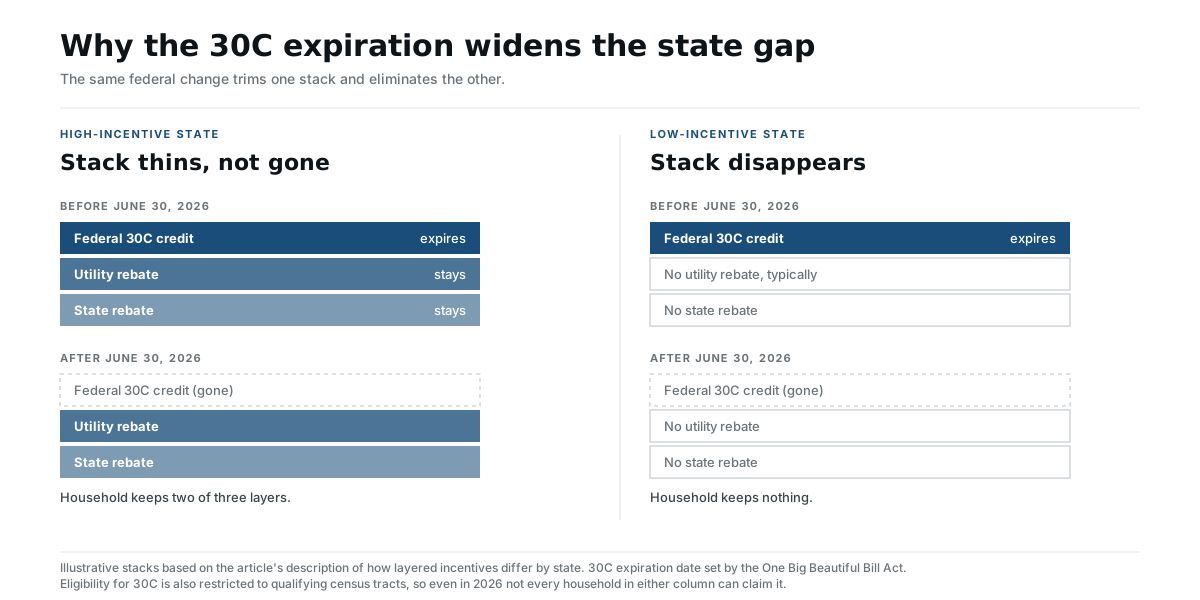
The federal 30C residential credit (30% of equipment and installation, up to $1,000, restricted to eligible census tracts) ended for property placed in service after June 30, 2026 under the One Big Beautiful Bill Act. We cover that in full, including the census-tract eligibility gate and the "placed in service means operational" trap, in Federal 30C EV Charger Tax Credit Ended June 30, 2026.
Here is why that expiration matters for state-level disparity. In high-incentive states, 30C was one layer of several; now that it is gone, state and utility programs remain. In low-incentive states, 30C was often the only layer; now that it is gone, there may be nothing left. The same federal change that trims a high-incentive household's stack can eliminate a low-incentive household's entire incentive. Where you live matters more, not less.
How to find what's actually available in your state
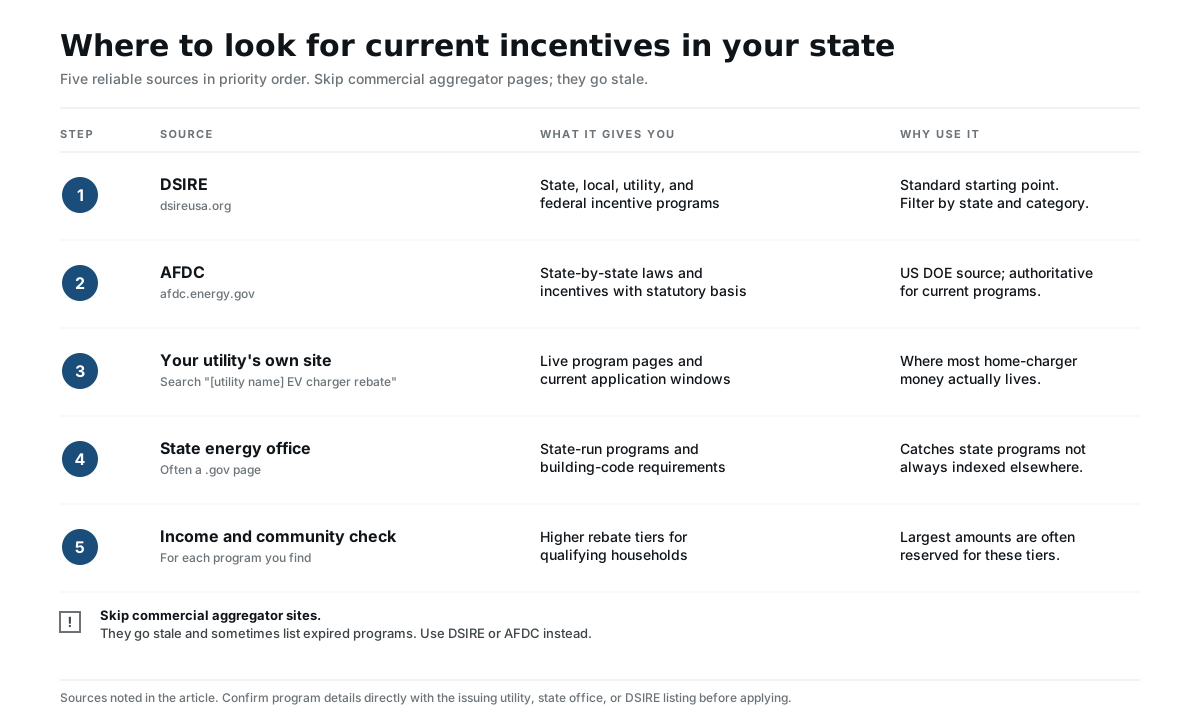
The reliable sources are databases maintained for this purpose, not commercial aggregator pages, which go stale and sometimes list expired programs.
- DSIRE (Database of State Incentives for Renewables and Efficiency). Maintained at dsireusa.org, DSIRE catalogs state, local, utility, and federal incentive programs and is the standard starting point. Search by state and filter for EV or charging programs.
- AFDC (Alternative Fuels Data Center). The US Department of Energy's afdc.energy.gov maintains a state-by-state laws-and-incentives database that is authoritative for current programs and their statutory basis.
- Your utility's own website. Search "[utility name] EV charger rebate" and use the utility's page directly. This is where most home-charger money lives.
- Your state energy office. For state-run programs and building-code requirements.
- Check your income and community eligibility. The largest amounts are frequently reserved for income-qualified households or designated disadvantaged communities. It is always worth checking whether you qualify for the higher tier.
For a step-by-step walk through this research process, see How to Find State and Utility Incentives.
Last factually verified: 2026-05-24 against the DSIRE database (dsireusa.org), the US DOE Alternative Fuels Data Center (afdc.energy.gov), and program descriptions from California utilities including LADWP, Xcel Energy, Black Hills Energy, and Con Edison. State and utility program amounts and availability change throughout the year; named programs are examples of the landscape, not a guarantee of current availability. Verify directly with the program before relying on any amount.